
Who are The Coca-Cola Company's core customers in its global nonalcoholic ready-to-drink market?
Understanding core customers matters because The Coca-Cola Company's pricing, packaging, and channel mix drive its 8 percent organic revenue growth in 2025 and sustain a 43 percent global value share in NARTD; targeting frequent, convenience-driven consumers in 200 markets converts brand equity into cash flow. See product-level strategy in Coca-Cola BCG Matrix Analysis
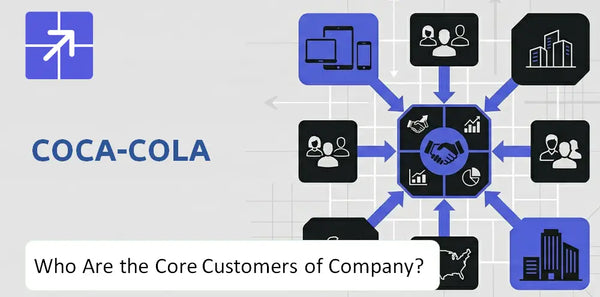
Practical insight: focus on urban commuters, family shoppers, and on-premise outlets – these cohorts account for most volume and margin; optimize single-serve packaging, low-sugar SKUs, and cold-chain distribution to protect share.
Who Is Coca-Cola Trying to Win?
The Coca-Cola Company tries to win younger urban consumers (Gen Z and Alpha) for long-term brand equity while keeping mass-market families for steady volume; it also pursues health-conscious professionals and away-from-home foodservice buyers who drive large share of revenue.
 Main customer: younger urban consumers
Young adult beverage consumers in cities – Gen Z and Alpha – are the primary growth engine for Sparkling and Energy lines through digital-first marketing, social media activation, and limited-edition drops; this cohort influences trends and lifetime loyalty.
Secondary customers: families and health-conscious professionals
Family soda buyers supply consistent volume across markets, while health-conscious professionals shift into Nutrition, Juice, Dairy, and Plant-Based categories; Fairlife surpassed 2,000,000,000 dollars in annual retail sales by early 2025, underscoring this segment's revenue importance.
Customer type and market role: mixed consumer and business base
The Coca-Cola Company serves both individual consumers and business customers – retail, convenience, and institutional partners – with nearly 50% of revenue derived from away-from-home channels (fountain, foodservice, travel) in recent reporting, so it targets B2C and B2B buyers simultaneously.
Most important segment by revenue and scale: away-from-home and sparkling buyers
Away-from-home foodservice and fountain buyers plus sparkling beverage consumers drive scale and margins; fountain and food-service partnerships contribute nearly 50% of total revenue, and sparkling remains the largest category by unit volume globally.
For distribution and competitive context see Competitive Landscape of Coca-Cola Company
Coca-Cola SWOT Analysis
- Complete SWOT Breakdown
- Fully Customizable
- Editable in Excel & Word
- Professional Formatting
- Investor-Ready Format

What Do Coca-Cola's Customers Care About Most?
Customers care most about taste, refreshment, value, and easy access; emotional connection to brand marketing and rising health concerns shape choices, with affordability and convenience driving purchase frequency across Coca-Cola target customers and Coca-Cola core customers.

Taste and Immediate Refreshment
Core sparkling soda drinkers prioritize consistent taste and immediate refreshment for social and everyday occasions; Coca-Cola consumer segments cite flavor familiarity as the top purchase trigger in impulse and convenience store buys.
Practical Buying Drivers: Price and Convenience
Practical drivers are affordability, wide distribution, and pack formats – 250ml sleek cans and single-serve bottles – favored by young adult beverage consumers and family soda buyers for portability and on-the-go use.
Emotional and Aspirational Appeal
Global campaigns – backed by an annual marketing budget exceeding 4.5 billion dollars – create emotional bonds and lifestyle positioning that attract millennials, Gen Z, and urban demographics.
Health and Wellness Priorities
Health-conscious and low-sugar consumers drove a 12 percent increase in demand for zero-sugar formulations in 2025, shifting purchase share within Coca-Cola consumer segments toward diet and zero-sugar SKUs.
Value in Emerging Markets
In developing countries, price-point architecture matters: refillable glass bottles and small-entry packs keep daily consumption affordable for Coca-Cola target market in developing countries despite inflationary pressure.
Loyalty and Repeat Demand
Repeat demand is driven by routine occasions (meals, socializing), broad retail and foodservice presence, and taste consistency; purchasing frequency and loyalty among consumers remain high where availability is greatest.
Why Customers Choose Coca-Cola
Customers choose the brand for a mix of trusted taste, ubiquitous availability across retail and foodservice and successful marketing – see the company's guiding principles in Mission, Vision, and Values of Coca-Cola Company for context.
Coca-Cola Business Model Canvas
- One-time Payment
- No Research Needed – Save Hours of Work
- Built by Experts, Trusted by Consultants
- Instant Download, Ready to Use
- 100% Editable, Fully Customizable

Where Is Demand Strongest for Coca-Cola?
Demand is strongest in emerging markets – India, Brazil, and parts of Africa – where volume growth outpaced developed regions by 4% in the 2025 fiscal year; digital/e – commerce and on – premise channels also show concentrated activity.
Emerging Markets Lead Volume Growth
India, Brazil, and African markets drove the largest volume gains for Coca-Cola target customers in 2025, with emerging and developing markets recording a 4 percentage point outperformance versus developed regions; population growth and rising disposable incomes matter most.
Digital and E – commerce Channels
Food delivery apps and quick – commerce platforms are the fastest – growing environments for Coca-Cola core customers, capturing impulse buys and boosting online sales penetration – e – commerce contribution rose noticeably in 2025 versus 2024.
Strength in Developed Premium & Functional Segments
In the United States and Western Europe, demand is strongest for premium and functional products – high – protein dairy and enhanced hydration brands like BodyArmor – helping shift the Coca-Cola consumer segments toward higher – margin SKUs in 2025.
On – Premise Channel Remains High – Margin
Restaurants, cinemas, and stadiums (foodservice and retail buyers) showed 5% value growth through 2025 as social spending held up; on – premise continues to deliver higher average selling prices and frequency among young adult beverage consumers and family soda buyers.
Fastest growth areas into 2026 include e – commerce integrations and emerging markets penetration, especially urban centers in India and Brazil; see Growth Outlook of Coca-Cola Company for fuller context: Growth Outlook of Coca-Cola Company
Coca-Cola Marketing Mix
- Complete Marketing Mix Analysis
- Effortlessly Communicate Your Business Strategy
- Investor-Ready Format
- 100% Editable and Customizable
- Clear and Structured Layout

How Does Coca-Cola Keep Its Audience Growing?
The Coca-Cola Company grows its audience by combining an innovation pipeline, AI-driven consumer insights, and disciplined capital allocation to reach adjacent segments, boost retention, and deepen customer relationships via targeted low-sugar ranges and digital engagement.
How the Company Expands Its Customer Base
The Coca-Cola Company adds customers by expanding Zero Sugar variants across major brands and entering alcohol-ready-to-drink (ARTD) channels, targeting young adult beverage consumers and family soda buyers to broaden Coca-Cola target customers and Coca-Cola consumer segments.
Customer Retention Drivers
Retention rises from hyper-personalized digital engagement informed by AI insights, loyalty programs, and wide availability in foodservice and retail buyers; in 2025 AI delivered a 15 percent improvement in marketing ROI, improving repeat purchases.
Loyalty, Repeat Demand, or Customer Depth
Loyalty programs and ecosystem stickiness drive frequency among Coca-Cola core customers; Zero Sugar now represents nearly 30 percent of sparkling volume, lifting purchasing frequency among health-conscious and low-sugar consumers and families.
The Strongest Customer-Base Growth Lever
The single biggest lever is data-driven personalization combined with product innovation – AI-enabled targeting plus Zero Sugar and ARTD expansion – supporting a projected mid-single-digit volume growth through 2026 and access to the 1.3 trillion dollar NARTD industry while maintaining a projected free cash flow conversion of 95 percent. Read more on corporate evolution in this History and Background of Coca-Cola Company
Coca-Cola Boston Consulting Group Matrix
- Built by Experts, Trusted by Consultants
- Structured for Consultants, Students, and Founders
- 100% Editable in Microsoft Word & Excel
- Instant Digital Download – Use Immediately
- Compatible with Mac & PC – Fully Unlocked

Related Blogs
- What Is the History of Coca-Cola Company and How Did It Evolve?
- What Is the Competitive Landscape of Coca-Cola Company and How Does It Compete?
- What Is the Growth Outlook of Coca-Cola Company and Where Is It Heading?
- How Does Coca-Cola Company Work and What Drives Its Business Model?
- How Does Coca-Cola Company Reach Customers and Turn Demand into Sales?
- What Do the Mission, Vision, and Core Values of Coca-Cola Company Reveal?
- Who Owns Coca-Cola Company Today and Who Holds Control?
Frequently Asked Questions
Coca-Cola's core customers include younger urban consumers, especially Gen Z and Alpha, as well as mass-market families, health-conscious professionals, and away-from-home foodservice buyers. The company serves both individual consumers and business partners, so its target market blends B2C and B2B demand across retail, convenience, travel, and institutional channels.
Disclaimer
All information, articles, and product details provided on this website are for general informational and educational purposes only. We do not claim any ownership over, nor do we intend to infringe upon, any trademarks, copyrights, logos, brand names, or other intellectual property mentioned or depicted on this site. Such intellectual property remains the property of its respective owners, and any references here are made solely for identification or informational purposes, without implying any affiliation, endorsement, or partnership.
We make no representations or warranties, express or implied, regarding the accuracy, completeness, or suitability of any content or products presented. Nothing on this website should be construed as legal, tax, investment, financial, medical, or other professional advice. In addition, no part of this site - including articles or product references - constitutes a solicitation, recommendation, endorsement, advertisement, or offer to buy or sell any securities, franchises, or other financial instruments, particularly in jurisdictions where such activity would be unlawful.
All content is of a general nature and may not address the specific circumstances of any individual or entity. It is not a substitute for professional advice or services. Any actions you take based on the information provided here are strictly at your own risk. You accept full responsibility for any decisions or outcomes arising from your use of this website and agree to release us from any liability in connection with your use of, or reliance upon, the content or products found herein.