
Who are Ecolab's core customers in food, healthcare, and industrial markets?
Ecolab targets large-scale food processors, hospitals, and industrial facilities that need water, hygiene, and infection-control solutions. This matters because these clients drive recurring, high-margin service contracts; in 2025 Ecolab reported strong bookings tied to regulatory-driven demand.
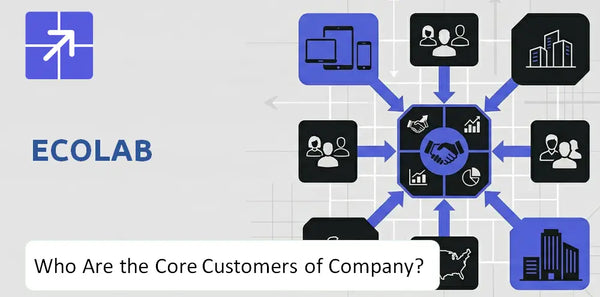
Focus on decision-makers: plant managers, hospital infection-control leads, and sustainability officers – those roles buy long-term service contracts and digital monitoring. See product tie-in: Ecolab BCG Matrix Analysis
Who Is Ecolab Trying to Win?
Ecolab tries to win large, high-volume enterprise accounts where hygiene, water and resource efficiency are mandatory: industrial processors, major hospitality and foodservice chains, and healthcare and life sciences institutions that need standardized global service and data reporting.
 Global Industrial: high-volume processors and manufacturers
Targets food and beverage processors, chemical and manufacturing plants, and power generation – customers that consume large-scale water treatment and process-chemistry solutions. In 2025 Ecolab's industrial-driven water-treatment contracts often exceed $10 million in lifetime value for enterprise accounts.
Global Institutional: hospitality, restaurants, education
Wins major hotel brands, quick-service restaurant chains, and school districts requiring standardized janitorial, laundry and food-safety programs across thousands of sites. Institutional customers drive recurring consumables and services; top QSR and hotel partnerships can represent 20 – 30% of regional service revenue.
Customer type and market role: enterprise B2B and institutional buyers
Primarily serves businesses and institutions – enterprise procurement, facilities and EHS (environment, health, safety) buyers – rather than individual consumers. Buyer personas include global procurement leads, plant managers, hospital C-suite and sustainability officers seeking integrated reporting and compliance.
Most important segment by revenue and strategic value
Global Healthcare and Life Sciences is increasingly vital: hospitals and pharmaceutical manufacturers demand surgical-grade disinfection and sterile-process validation, contributing to higher-margin services. In 2025 healthcare and life sciences grew faster than company average and represent a strategic focus for new product adoption and compliance-driven contracts.
For competitive context and market positioning see Competitive Landscape of Ecolab Company
Ecolab SWOT Analysis
- Complete SWOT Breakdown
- Fully Customizable
- Editable in Excel & Word
- Professional Formatting
- Investor-Ready Format

What Do Ecolab's Customers Care About Most?
Ecolab target customers prioritize risk reduction and total cost of ownership over unit chemical price, seeking solutions that cut operational volatility, protect brands, and meet tightening ESG and regulatory demands while delivering measurable water and energy savings.

Brand protection and operational continuity
Food and beverage buyers demand elimination of foodborne pathogens to avoid recalls and liability; industrial clients need consistent water quality to prevent downtime and contamination. Risk mitigation drives procurement decisions across ecolab core customers.
Practical buying drivers: total cost of ownership
Customers weigh labor, water, energy, and compliance costs; a solution that saves gallons and kilowatt-hours often beats lower per-unit chemical pricing. Ecolab target customers choose measurable ROI and lower operational volatility.
Emotional or aspirational appeal: trust and stewardship
Buyers want partners that bolster brand reputation and ESG credentials. For many corporate sustainability and enterprise customers, choosing a vendor signals commitment to safety and climate goals.
What customers value most: measurable, automated outcomes
Labor efficiency via automated dispensing and digital insights like Ecolab3D, plus verified water and energy reductions, are top priorities. In 2025 many clients target double-digit percentage cuts in freshwater use and 5 – 15% energy reductions.
Loyalty or repeat demand: performance and compliance
Consistent pathogen control, regulatory compliance, and documented cost savings drive renewals. High-turnover sectors such as hospitality and manufacturing favor automated systems that reduce training burden and error rates.
Why customers choose Ecolab
Clients pick a partner that combines chemistry, service, and digital monitoring to lower total cost of ownership and ensure ESG compliance. See a focused view in the Growth Outlook of Ecolab Company for market context and 2025 performance metrics.
Ecolab Business Model Canvas
- One-time Payment
- No Research Needed – Save Hours of Work
- Built by Experts, Trusted by Consultants
- Instant Download, Ready to Use
- 100% Editable, Fully Customizable

Where Is Demand Strongest for Ecolab?
Demand is strongest in industrial water management and high-purity environments, concentrated in North America and fast-growing in Asia-Pacific where food safety and hospitality standards are rising.
Main Market: North America Industrial and High-Purity Facilities
North America accounts for over 50% of Ecolab Company sales in 2025, driven by large-scale industrial water treatment, data center cooling, and semiconductor fabs that need ultra-pure water and validated cleaning – making it the core hub of ecolab target customers and ecolab core customers.
Secondary Markets: Asia – Pacific & Commercial Foodservice
Asia – Pacific shows the fastest growth in 2025, fueled by middle-class expansion and hospitality demand; commercial foodservice and restaurant chains increase spend on food-safety programs, lifting ecolab customer segments and ecolab target market coverage.
Where Ecolab Company Is Strongest: Industrial & Food Safety Solutions
Ecolab Company's revenue mix in 2025 is largest in the Global Industrial segment, with strong penetration in manufacturing facilities and hospitality customers; usage intensity is highest where validated cleaning and water treatment are mandatory, aligning with ecolab buyer personas and which industries are ecolab customers.
Where Demand Is Growing Fastest: Life Sciences and Semiconductor
Life Sciences demand surged in 2025 as pharma reshoring and new regulatory updates for 2026 raise need for validated cleaning and contamination control; semiconductor and data center cooling needs also expand, boosting demand among ecolab clients in water treatment industry and core customers in ecolab target market.
Mission, Vision, and Values of Ecolab Company
Ecolab Marketing Mix
- Complete Marketing Mix Analysis
- Effortlessly Communicate Your Business Strategy
- Investor-Ready Format
- 100% Editable and Customizable
- Clear and Structured Layout

How Does Ecolab Keep Its Audience Growing?
Ecolab keeps its audience growing by cross-selling services around core hygiene clients, expanding IoT deployments, and shifting from chemical supplier to digital service provider to deepen relationships and boost retention above 90%.
Circle the Customer: Expanding Into Adjacent Segments
Ecolab adds customers by cross-selling pest elimination, water treatment, and infection-prevention services into existing accounts across hospitality, foodservice, healthcare, manufacturing, and maritime. Growth also comes from selling IoT-connected controllers and subscription monitoring to janitorial, commercial laundry, and enterprise sustainability buyers, widening the ecolab target market and ecolab customer segments.
Customer Retention Drivers
High switching costs from integrated chemical supply, service contracts, and verified digital data keep churn low; retention stays above 90%. Real-time analytics from IoT controllers create operational dependency for hospitals, restaurant chains, and manufacturing facilities, reinforcing the ecolab core customers and ecolab target customers.
Loyalty, Repeat Demand, and Customer Depth
Repeat demand is driven by service renewals, consumable chemical supply, and multi-year digital subscriptions; cross-selling raises lifetime value and deepens ecolab buyer personas. Ecosystem stickiness is evident in commercial foodservice customers and ecolab customers in hospitality sector who renew integrated hygiene and water-management programs annually.
Strongest Growth Lever in 2025/2026
The critical lever is digital transformation: by early 2026 Ecolab scaled its installed base of IoT-connected controllers substantially, making services indispensable and accelerating sales. Management targets high-single-digit organic sales growth and a 20% adjusted operating margin for the 2025/2026 period, reflecting the shift from products to recurring, data-driven services.
For operational and revenue context see How Ecolab Company Works and Makes Money
Ecolab Boston Consulting Group Matrix
- Built by Experts, Trusted by Consultants
- Structured for Consultants, Students, and Founders
- 100% Editable in Microsoft Word & Excel
- Instant Digital Download – Use Immediately
- Compatible with Mac & PC – Fully Unlocked

Related Blogs
- What Is the History of Ecolab Company and How Did It Evolve?
- What Is the Competitive Landscape of Ecolab Company and How Does It Compete?
- What Is the Growth Outlook of Ecolab Company and Where Is It Heading?
- How Does Ecolab Company Work and What Drives Its Business Model?
- How Does Ecolab Company Reach Customers and Turn Demand into Sales?
- What Do the Mission, Vision, and Core Values of Ecolab Company Reveal?
- Who Owns Ecolab Company Today and Who Holds Control?
Frequently Asked Questions
Ecolab's core customers are large enterprise and institutional buyers. The article highlights industrial processors, major hospitality and foodservice chains, and healthcare and life sciences institutions. These customers need standardized service, compliance support, and measurable efficiency across many sites rather than one-off consumer products.
Disclaimer
All information, articles, and product details provided on this website are for general informational and educational purposes only. We do not claim any ownership over, nor do we intend to infringe upon, any trademarks, copyrights, logos, brand names, or other intellectual property mentioned or depicted on this site. Such intellectual property remains the property of its respective owners, and any references here are made solely for identification or informational purposes, without implying any affiliation, endorsement, or partnership.
We make no representations or warranties, express or implied, regarding the accuracy, completeness, or suitability of any content or products presented. Nothing on this website should be construed as legal, tax, investment, financial, medical, or other professional advice. In addition, no part of this site - including articles or product references - constitutes a solicitation, recommendation, endorsement, advertisement, or offer to buy or sell any securities, franchises, or other financial instruments, particularly in jurisdictions where such activity would be unlawful.
All content is of a general nature and may not address the specific circumstances of any individual or entity. It is not a substitute for professional advice or services. Any actions you take based on the information provided here are strictly at your own risk. You accept full responsibility for any decisions or outcomes arising from your use of this website and agree to release us from any liability in connection with your use of, or reliance upon, the content or products found herein.