
Who are Equity Bancshares, Inc. core customers in the Mid-American commercial lending and deposit market?
Equity Bancshares, Inc. targets small – to – mid – sized businesses, owner – occupied commercial real estate borrowers, and retail depositors in secondary and tertiary markets across Kansas, Missouri, Arkansas, and Oklahoma. This matters because in 2025 the bank preserved a resilient net interest margin amid regional stress, driven by granular deposits and localized underwriting.
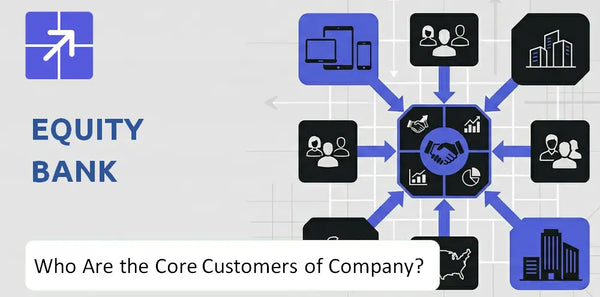
Focus on owner – operators and community SMEs for higher yield and lower churn; cross – sell treasury and commercial services. See product detail: Equity Bank BCG Matrix Analysis
Who Is Equity Bank Trying to Win?
Equity Bancshares, Inc. targets small-to-medium enterprises (SMEs) with revenues of $5 million – $50 million, owner-operated firms needing treasury and credit; plus suburban/rural retail depositors and regional agricultural producers displaced by larger banks.
 Core commercial SME clients
Equity Bank target customers focus on SMEs in manufacturing, healthcare, and professional services that generate most commercial loan volume; these clients drive fee income and require cash management, lending lines, and relationship banking.
Secondary: HNW, agriculture, retail depositors
Secondary targets include high-net-worth individuals for private lending, agricultural producers for seasonal and equipment loans, and suburban/rural retail customers who supply stable low-cost deposits funding commercial growth.
Customer type and market role
Equity Bancshares, Inc. serves a mixed base: primarily businesses (SMEs) plus retail consumers and niche institutional-like clients (HNW, agribusiness), blending commercial banking services with retail deposit gathering.
Most important segment by revenue
The SME commercial segment is most important: in 2025 commercial loans constituted a majority of total loan book, with commercial real estate and business lending driving net interest income and fee revenue as the bank pursues displaced mid-market accounts.
See the bank's cultural positioning and client focus in this piece: Mission, Vision, and Values of Equity Bank Company
Equity Bank SWOT Analysis
- Complete SWOT Breakdown
- Fully Customizable
- Editable in Excel & Word
- Professional Formatting
- Investor-Ready Format

What Do Equity Bank's Customers Care About Most?
Customers of Equity Bancshares, Inc. prioritize fast execution, direct access to decision-makers, and certainty of closing; commercial clients want flexible credit structures and relationship managers who know local markets, plus integrated digital tools and proactive liquidity and risk advice in the 2026 rate environment.

Certainty of closing and speed
Commercial borrowers choose Equity Bank target customers for the bank's ability to close deals quickly with direct lender decisions, reducing execution risk versus automated national platforms.
Practical buying drivers: credit flexibility and tools
Clients value tailor-made credit structures, competitive pricing, and integrated digital banking that streamlines payroll and cash flow; in 2025 the bank reported growth in commercial loan originations supporting SME lending demand.
Emotional and aspirational appeal: community reinvestment
Business owners and local leaders prefer a partner that acts as a financial consultant and reinvests locally, aligning with Equity Bank core customers who seek community impact and reputational alignment.
What customers value most: relationship management
Clients prioritize a dedicated relationship manager who understands industry cycles and local market dynamics; this drives higher-value commercial relationships and repeat business.
Loyalty and repeat demand drivers
Repeat demand is supported by consistent execution, flexible credit terms, and advisory services – especially liquidity management guidance amid variable 2026 interest rates.
Why customers choose Equity Bancshares, Inc.
Equity Bank core customers pick the bank for speed, certainty of closing, local decision authority, and integrated digital tools that simplify operations for SMEs, agribusinesses, and retail segments; see How Equity Bank Company Works and Makes Money for context.
Equity Bank Business Model Canvas
- One-time Payment
- No Research Needed – Save Hours of Work
- Built by Experts, Trusted by Consultants
- Instant Download, Ready to Use
- 100% Editable, Fully Customizable

Where Is Demand Strongest for Equity Bank?
Demand is strongest along the Wichita – Kansas City corridor and Northwest Arkansas, where metropolitan-fringe growth and industrial expansion drive the highest need for Equity Bancshares, Inc. products; commercial and industrial lending and digital banking adoption lead customer activity.
Main Market: Wichita – Kansas City corridor and Northwest Arkansas
Equity Bank target customers concentrate in metropolitan-fringe markets tied to manufacturing, logistics, and population growth; C&I loan demand is strongest here, supported by steady industrial job gains and rising CRE needs.
Secondary Markets: Growing secondary hubs and regional SMEs
Secondary demand centers include smaller regional hubs along transportation corridors and Northwest Arkansas; Equity Bank core customers here are SMEs, modern agtech firms, and healthcare-related real estate borrowers.
Where Equity Bancshares, Inc. Is Strongest: C&I lending and digital acquisition
Equity Bank is strongest in commercial and industrial (C&I) lending, which as of Q1 2026 led portfolio growth; digital channels convert fastest, with mobile adoption exceeding 85 percent among commercial clients and boosting customer acquisition.
Fastest-Growing Demand: Specialized lending niches
Demand is expanding fastest in healthcare-related real estate and modern agricultural technology lending, where Equity Bank target market segmentation shows higher average loan sizes and dedicated vertical expertise driving market share gains; C&I growth remained a standout in Q1 2026.
Read more on market positioning and competitors in this analysis: Competitive Landscape of Equity Bank Company
Equity Bank Marketing Mix
- Complete Marketing Mix Analysis
- Effortlessly Communicate Your Business Strategy
- Investor-Ready Format
- 100% Editable and Customizable
- Clear and Structured Layout

How Does Equity Bank Keep Its Audience Growing?
Equity Bancshares, Inc. grows its audience by combining disciplined organic relationship expansion with targeted acquisitions, cross-selling upgraded wealth and treasury products, and preserving high deposit loyalty through a high-touch service model.
Market expansion via M&A and cross-sell
Equity Bancshares, Inc. buys smaller community banks, upgrades their product suites, and cross-sells wealth management and treasury services to captured deposit bases, broadening the Equity Bank target market across retail, SME, and agribusiness segments.
Customer Retention Drivers
Retention rests on a high-touch branch and relationship model, historically high non-interest-bearing deposit ratios, and tailored business banking solutions – factors that lower churn among Equity Bank core customers and salaried professionals.
Loyalty and customer depth
Deep relationships drive repeat demand: deposit stickiness enables cross-selling of loans, treasury, and wealth products, increasing lifetime value among Equity Bank customer segments such as SMEs, women entrepreneurs, and farmers.
Strongest growth lever in 2025/2026
With a strong capital position and ROAA trending toward 1.20 percent in 2025/2026, Equity Bancshares, Inc. can pursue consolidation when peers are defensive; M&A-led expansion plus immediate product upgrades is the primary driver of Equity Bank target customers growth. Read more on the bank's sales approach Sales and Marketing Strategy of Equity Bank Company.
Equity Bank Boston Consulting Group Matrix
- Built by Experts, Trusted by Consultants
- Structured for Consultants, Students, and Founders
- 100% Editable in Microsoft Word & Excel
- Instant Digital Download – Use Immediately
- Compatible with Mac & PC – Fully Unlocked

Related Blogs
- What Is the History of Equity Bank Company and How Did It Evolve?
- What Is the Competitive Landscape of Equity Bank Company and How Does It Compete?
- What Is the Growth Outlook of Equity Bank Company and Where Is It Heading?
- How Does Equity Bank Company Work and What Drives Its Business Model?
- How Does Equity Bank Company Reach Customers and Turn Demand into Sales?
- What Do the Mission, Vision, and Core Values of Equity Bank Company Reveal?
- Who Owns Equity Bank Company Today and Who Holds Control?
Frequently Asked Questions
Equity Bank's core customers are small-to-medium enterprises, especially those in manufacturing, healthcare, and professional services. The bank also serves suburban and rural retail depositors, high-net-worth individuals, and agricultural producers. Its main focus is on business clients that need cash management, lending lines, and relationship banking.
Disclaimer
All information, articles, and product details provided on this website are for general informational and educational purposes only. We do not claim any ownership over, nor do we intend to infringe upon, any trademarks, copyrights, logos, brand names, or other intellectual property mentioned or depicted on this site. Such intellectual property remains the property of its respective owners, and any references here are made solely for identification or informational purposes, without implying any affiliation, endorsement, or partnership.
We make no representations or warranties, express or implied, regarding the accuracy, completeness, or suitability of any content or products presented. Nothing on this website should be construed as legal, tax, investment, financial, medical, or other professional advice. In addition, no part of this site - including articles or product references - constitutes a solicitation, recommendation, endorsement, advertisement, or offer to buy or sell any securities, franchises, or other financial instruments, particularly in jurisdictions where such activity would be unlawful.
All content is of a general nature and may not address the specific circumstances of any individual or entity. It is not a substitute for professional advice or services. Any actions you take based on the information provided here are strictly at your own risk. You accept full responsibility for any decisions or outcomes arising from your use of this website and agree to release us from any liability in connection with your use of, or reliance upon, the content or products found herein.