
Who are Grupo Casas Bahia's core customers within Brazil's middle and lower-income segments?
Grupo Casas Bahia targets Brazil's mass-market consumers – working-class and lower-middle-income households – relying on in-house credit. This matters because in 2025 the company shifted toward a marketplace model to reduce credit exposure, signaling a strategic pivot amid rising interest rates.
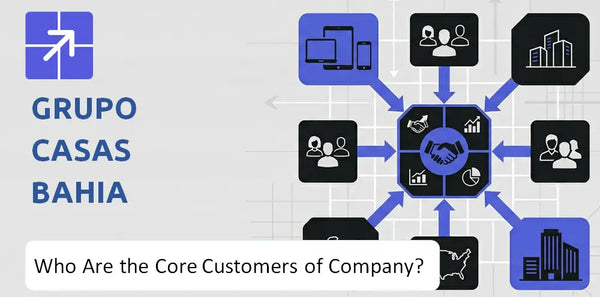
Focus on customers with irregular income and limited bank access; they drive sales and credit risk. See product analysis: Grupo Casas Bahia BCG Matrix Analysis
Who Is Grupo Casas Bahia Trying to Win?
Grupo Casas Bahia targets Brazil's budget-conscious Classes C, D, and E – families needing durable goods with predictable monthly income but limited liquidity – plus unbanked customers who rely on the retailer's credit. Secondary targets are younger, tech-savvy urban buyers using mobile e-commerce for electronics and fast pickup.
 Main customer group: Aspiration-driven lower-income households
Clients Casas Bahia primarily serve are Classes C, D, and E – roughly 60 – 70% of retail volume in mass-market categories – buying refrigerators, stoves, TVs, and furniture on credivenda (store credit) and installment plans.
Secondary groups: Urban digital shoppers and electronics buyers
Consumidores de eletrodomésticos Brasil also include younger, mobile-first customers in cities who use Casas Bahia's omni-channel network and localized pickup points for phones, TVs, and small appliances; this segment drives online growth and higher AOVs (average order values).
Customer type and market role: Consumer retail with in-house credit
Grupo Casas Bahia mainly serves retail consumers, acting also as a lender: credit sales (crediário) historically account for a significant share – retail finance raises affordability and reduces upfront-barrier to purchase for underbanked segments.
Most important segment by revenue: Credivenda-dependent households
The segment that matters most is low-to-middle income buyers using installment credit; credivenda-driven sales represent a large portion of revenue and repeat purchases, with penetration highest in the periphery and smaller cities – see Mission, Vision, and Values of Grupo Casas Bahia Company for corporate context.
Grupo Casas Bahia SWOT Analysis
- Complete SWOT Breakdown
- Fully Customizable
- Editable in Excel & Word
- Professional Formatting
- Investor-Ready Format

What Do Grupo Casas Bahia's Customers Care About Most?
Clientes Casas Bahia priorizam acesso ao crediário acima do preço total; parcelar um eletrodoméstico de R$ 3.500 em 24 vezes via carnê é o fator decisivo, junto com confiança na marca, loja física para ver o produto e entrega ou Retira Rápido imediata para conveniência urbana.

A necessidade principal: compra parcelada acessível
O público-alvo Casas Bahia busca comprar eletrodomésticos e móveis com crédito parcelado (crediário), transformando uma despesa de R$ 3.500 em parcelas que cabem no orçamento mensal da classe trabalhadora urbana.
Motivações práticas de compra
Clientes Casas Bahia escolhem pela combinação de preço competitivo, disponibilidade de carnê/parcelamento e presença física que garante prova tátil do produto; logística rápida e Retira Rápido reduz risco de espera.
Apego emocional e aspiracional
Comprar na rede significa status de inclusão no consumo moderno: ter uma TV ou geladeira parcelada melhora autoestima e sinaliza mobilidade social percebida entre consumidores de baixa renda.
O que é mais valorizado
Segurança na compra (garantia e assistência), facilidade de pagamento e retirada imediata são as prioridades; ênfase em marca confiável e estoque local supera ofertas online quando entregas atrasam.
Fatores que sustentam fidelidade
Programas de crediário recorrente, histórico de aprovação de crédito e boa experiência de loja/entrega mantêm clientes; retenção cresce quando prazo de financiamento e atendimento pós-venda são previsíveis.
Por que clientes escolhem Grupo Casas Bahia
A rede vence por oferecer crediário acessível, presença física extensa e serviços como Retira Rápido; para o perfil demográfico clientes Casas Bahia – renda média baixa a média-baixa – essas vantagens pesam mais que desconto pontual. Veja também Competitive Landscape of Grupo Casas Bahia Company.
Grupo Casas Bahia Business Model Canvas
- One-time Payment
- No Research Needed – Save Hours of Work
- Built by Experts, Trusted by Consultants
- Instant Download, Ready to Use
- 100% Editable, Fully Customizable

Where Is Demand Strongest for Grupo Casas Bahia?
Demand is strongest in the industrialized Southeast – especially the São Paulo and Rio de Janeiro metro corridors – where more than 50 percent of Grupo Casas Bahia revenue concentrates; phygital purchases and proximity to stores drive most activity.
Main Market: Southeast Metro Corridors
The São Paulo and Rio de Janeiro metropolitan corridors remain the primary market for Casas Bahia público-alvo, supplying over 50 percent of revenue because of dense urban populations, higher retail penetration, and deep crediário (store credit) usage among mass market consumidores de eletrodomésticos Brasil.
Secondary Markets: Northeast and Midwest Interior
The Northeast and Midwest show fastest regional uplift as interior development raises renda média dos clientes Casas Bahia; internal cities are expanding demand for móveis e eletrônicos in peripheral bairros and for consumers de baixa renda moving into formal credit.
Where Grupo Casas Bahia Is Strongest
Grupo Casas Bahia is strongest in its phygital model: roughly 45 – 50 percent of digital sales are fulfilled or influenced by physical store proximity, boosting conversion and retention among clientes Casas Bahia who prefer mixed online-offline compra behavior.
Fastest Growing Demand: Marketplace (3P) and Interior Cities
As of early 2026, marketplace (3P) growth is the company's fastest channel: third-party sellers expand complementary categories to an active base of 30 million clientes Casas Bahia, increasing SKU breadth in home decor and small electronics and accelerating online purchase habits.
How Grupo Casas Bahia Company Works and Makes Money
Grupo Casas Bahia Marketing Mix
- Complete Marketing Mix Analysis
- Effortlessly Communicate Your Business Strategy
- Investor-Ready Format
- 100% Editable and Customizable
- Clear and Structured Layout

How Does Grupo Casas Bahia Keep Its Audience Growing?
Grupo Casas Bahia grows its audience by shifting from pure retail to a financial-service ecosystem, expanding banQi digital banking and optimizing its store footprint to reach adjacent mass-market segments while improving retention through credit and payments integration.
Expanding reach via financial services and footprint
Grupo Casas Bahia adds customers by cross-selling appliances, furniture, and financial products; banQi serves over 6,000,000 active accounts in 2025, bringing consumers de eletrodomésticos Brasil and compradores de móveis e eletrônicos nas periferias into the ecosystem.
Customer retention drivers
Retention hinges on integrated credit (crediário), cashback, and simplified bill payments via banQi; AI-driven risk scoring in 2025 reduces delinquency and improves comportamento de compra varejo brasileiro metrics while stabilizing EBITDA margins near 6 – 8%.
Loyalty, repeat demand, and customer depth
Loyalty comes from repeat purchases financed through tailored credit limits and cashback incentives, increasing inventory turnover by 15% after the 2025 transformation and deepening perfil de clientes Casas Bahia across faixa etária predominante clientes Casas Bahia and renda média dos clientes Casas Bahia segments.
Strongest growth lever in 2025/2026
The key lever is banQi-driven financial engagement: with > 6 million active users and AI credit scoring, Grupo Casas Bahia captures recovering Brazilian credit demand while focusing on quality of growth and a streamlined network of ~1,050 high-performing stores.
Sales and Marketing Strategy of Grupo Casas Bahia Company
Grupo Casas Bahia Boston Consulting Group Matrix
- Built by Experts, Trusted by Consultants
- Structured for Consultants, Students, and Founders
- 100% Editable in Microsoft Word & Excel
- Instant Digital Download – Use Immediately
- Compatible with Mac & PC – Fully Unlocked

Related Blogs
- What Is the History of Grupo Casas Bahia Company and How Did It Evolve?
- What Is the Competitive Landscape of Grupo Casas Bahia Company and How Does It Compete?
- What Is the Growth Outlook of Grupo Casas Bahia Company and Where Is It Heading?
- How Does Grupo Casas Bahia Company Work and What Drives Its Business Model?
- How Does Grupo Casas Bahia Company Reach Customers and Turn Demand into Sales?
- What Do the Mission, Vision, and Core Values of Grupo Casas Bahia Company Reveal?
- Who Owns Grupo Casas Bahia Company Today and Who Holds Control?
Frequently Asked Questions
Grupo Casas Bahia mainly serves Brazil's Classes C, D, and E. These are budget-conscious households that need durable goods like refrigerators, stoves, TVs, and furniture, often with limited liquidity. The company also attracts underbanked customers who depend on store credit and installment plans to make purchases more affordable.
Disclaimer
All information, articles, and product details provided on this website are for general informational and educational purposes only. We do not claim any ownership over, nor do we intend to infringe upon, any trademarks, copyrights, logos, brand names, or other intellectual property mentioned or depicted on this site. Such intellectual property remains the property of its respective owners, and any references here are made solely for identification or informational purposes, without implying any affiliation, endorsement, or partnership.
We make no representations or warranties, express or implied, regarding the accuracy, completeness, or suitability of any content or products presented. Nothing on this website should be construed as legal, tax, investment, financial, medical, or other professional advice. In addition, no part of this site - including articles or product references - constitutes a solicitation, recommendation, endorsement, advertisement, or offer to buy or sell any securities, franchises, or other financial instruments, particularly in jurisdictions where such activity would be unlawful.
All content is of a general nature and may not address the specific circumstances of any individual or entity. It is not a substitute for professional advice or services. Any actions you take based on the information provided here are strictly at your own risk. You accept full responsibility for any decisions or outcomes arising from your use of this website and agree to release us from any liability in connection with your use of, or reliance upon, the content or products found herein.