
Who are HNI Corporation's core customers in the commercial and residential furniture markets?
HNI Corporation targets corporate clients in office and specialized verticals plus affluent homeowners seeking design-led residential hearth products. This matters because the Kimball International acquisition finished integration by March 2026, shifting revenue toward higher-margin, specialty segments and lifting margins.
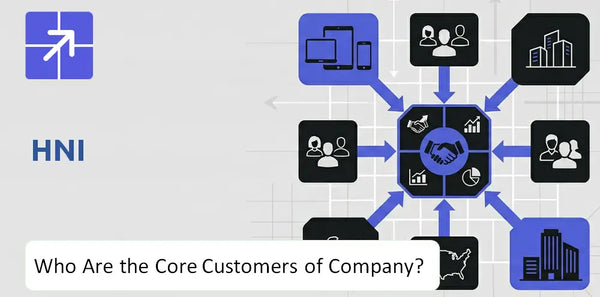
Focus on facility managers, corporate real estate teams, design firms, and premium homeowners; prioritize product customization and after-sales service to retain contracts and drive margin expansion. See HNI BCG Matrix Analysis.
Who Is HNI Trying to Win?
HNI Corporation targets two primary buyer groups: commercial buyers in Workplace Furnishings and production homebuilders plus affluent remodelers in Residential Building Products, focusing on product durability, design, and channel partnerships to win specification and repeat purchases.
 Main customer group: Small-to-medium businesses and healthcare/education specifiers
HNI target customers center on small-to-medium-sized businesses (SMBs) and specialized verticals – notably healthcare and education – which together drive volume in the Workplace Furnishings segment that accounted for approximately 65% of revenue in early 2026. These buyers value clinical-grade durability, hospitality-level aesthetics, and local dealer support.
Secondary groups: Homebuilders, affluent remodelers, and premium dealers
HNI core customers in Residential Building Products include large-scale production homebuilders for new construction and affluent homeowners reached via a premium dealer network for high-end remodeling and outdoor living projects. This dual-track approach supports stable backlog and higher-margin retrofit sales.
Customer type and market role: Mixed B2B and affluent B2C channels
HNI customer profiles reflect a mixed market: institutional and business buyers (corporate procurement managers, facility managers, healthcare administrators) plus direct high-end consumer buyers via dealers. The mix preserves scale while allowing premium positioning and specification wins.
Most important segment: Workplace Furnishings by revenue share
Workplace Furnishings is the most important segment by revenue, representing roughly 65% of total company revenue in early 2026; it drives specification relationships with interior designers, co – working operators, and commercial real estate developers and anchors recurring procurement contracts.
Relevant buyer personas include corporate procurement managers purchasing HNI products, healthcare facility administrators choosing HNI seating, school and university facilities managers sourcing HNI furniture, co – working space operators buying HNI modular furniture, and production homebuilder purchasing teams; see Growth Outlook of HNI Company for deeper context: Growth Outlook of HNI Company
HNI SWOT Analysis
- Complete SWOT Breakdown
- Fully Customizable
- Editable in Excel & Word
- Professional Formatting
- Investor-Ready Format

What Do HNI's Customers Care About Most?
Workplace and residential HNI target customers care about adaptability, durability, and measurable ROI: employers want ergonomic, collaborative products that boost retention; homeowners want lifestyle, energy efficiency, and smart-home compatibility. Fast, reliable delivery and North American manufacturing reduce downtime and support procurement requirements.

Adaptable office environments
HNI core customers need furniture and architectural products that support hybrid work and flexible layouts; modularity and ergonomic seating solve space reconfiguration and employee well-being use cases.
Practical buying drivers: reliability and lead time
Procurement favors vendors with short lead times and predictable logistics; HNI target customers value North American manufacturing for faster delivery and lower supply-chain risk versus import-heavy competitors.
Emotional appeal: status and workplace pride
Facility managers and corporate buyers seek brands that signal care for employees; high-quality seating and curated office design support employer branding and staff morale.
What customers value most: performance and efficiency
Buyers prioritize ergonomics, durability, and energy-efficient residential hearths; for hearth brands, customers demand smart-home integration and low-emissions options to meet regulations and suburban market tastes.
Loyalty and repeat demand drivers
Specification-focused buyers (corporate procurement managers, healthcare administrators, school facilities) repurchase when warranty coverage, service response times, and consistent quality lower total cost of ownership.
Why customers choose HNI Corporation
HNI target customers favor simplified logistics, a North American footprint, and integrated product families that reduce vendor count and installation complexity; see Sales and Marketing Strategy of HNI Company for more.
HNI Business Model Canvas
- One-time Payment
- No Research Needed – Save Hours of Work
- Built by Experts, Trusted by Consultants
- Instant Download, Ready to Use
- 100% Editable, Fully Customizable

Where Is Demand Strongest for HNI?
Demand for HNI Corporation is strongest in North American secondary markets and suburban office corridors, with notable concentration in the Sun Belt for residential products and healthcare for Workplace solutions.
Primary Market: North American Secondary and Suburban Corridors
HNI target customers cluster in secondary metros and suburban office corridors where vacancy-adjusted leasing and fit-out activity outpaced urban cores in 2025; these environments drive the bulk of Workplace orders and short-cycle procurement from small business owners who buy HNI office furniture.
Secondary Demand Areas: Sun Belt and Healthcare Vertical
Residential Building Products volumes are concentrated in Sun Belt states, where migration and new housing starts rose in 2025; within Workplace, healthcare facility administrators choosing HNI seating fueled the fastest vertical growth, supported by demographic aging and outpatient expansion.
Where HNI Corporation Is Strongest
HNI core customers include commercial real estate developers specifying HNI furniture and facility managers looking for HNI ergonomic chairs; the company's reach is strongest in mid-market commercial accounts and residential channel partners, accounting for a majority of 2025 revenue mix in Building Products.
Where Demand Is Growing Fastest
Demand grew fastest in 2025 through digital-first channels – HNI saw a 12 percent year-over-year increase – driven by small business owners bypassing dealers; healthcare fit-outs and Sun Belt housing starts also showed the steepest year-over-year volume gains.
For context on competitive positioning and buyer personas, see Competitive Landscape of HNI Company.
HNI Marketing Mix
- Complete Marketing Mix Analysis
- Effortlessly Communicate Your Business Strategy
- Investor-Ready Format
- 100% Editable and Customizable
- Clear and Structured Layout

How Does HNI Keep Its Audience Growing?
HNI Corporation grows its audience by launching new high-margin architectural glass and acoustic products, cross-selling across an expanded brand portfolio, and leaning on a dominant dealer network for high-touch local engagement; these moves broaden HNI target market segments, boost retention, and deepen customer relationships.
Expanding Reach into Adjacent Segments
HNI adds customers by leveraging the Kimball merger synergies – realized at over $50,000,000 annualized by 2026 – to fund product innovation in architectural glass and acoustic solutions that appeal to interior designers and commercial real estate developers; this targets HNI core customers beyond traditional corporate offices, including co – working operators, healthcare facility administrators, and school and university facilities managers.
Customer Retention Drivers
Retention relies on a dominant dealer network that controls significant local market share and provides high-touch service, warranty support, and rapid fulfillment; combined with product diversification – particularly in hearth products where HNI leads – this reduces churn and stabilizes revenue against corporate office volatility.
Loyalty, Repeat Demand, and Customer Depth
Repeat demand is driven by category leadership in hearth and growth in office systems; HNI buyer personas like corporate procurement managers and facility managers favor durable, spec – ready offerings, creating multi-year replacement cycles and specification-driven reorder streams for seating, workstations, and fixtures.
Strongest Growth Lever in 2025/2026
The chief lever is cross-selling across an expanded brand portfolio plus reinvestment of the $50,000,000 merger synergies into higher-margin categories; management's professional judgment projects mid-single-digit organic growth for 2025/2026 and a consolidated operating margin of 11 – 13%, supported by hearth market strength and dealer distribution.
Ownership and Control of HNI Company
HNI Boston Consulting Group Matrix
- Built by Experts, Trusted by Consultants
- Structured for Consultants, Students, and Founders
- 100% Editable in Microsoft Word & Excel
- Instant Digital Download – Use Immediately
- Compatible with Mac & PC – Fully Unlocked

Related Blogs
- What Is the History of HNI Company and How Did It Evolve?
- What Is the Competitive Landscape of HNI Company and How Does It Compete?
- What Is the Growth Outlook of HNI Company and Where Is It Heading?
- How Does HNI Company Work and What Drives Its Business Model?
- How Does HNI Company Reach Customers and Turn Demand into Sales?
- What Do the Mission, Vision, and Core Values of HNI Company Reveal?
- Who Owns HNI Company Today and Who Holds Control?
Frequently Asked Questions
HNI's core customer groups are commercial buyers in Workplace Furnishings and residential buyers in Building Products. That includes SMBs, healthcare and education specifiers, corporate procurement teams, facility managers, production homebuilders, and affluent remodelers buying through dealers. The company focuses on durability, design, and channel partnerships to win repeat business.
Disclaimer
All information, articles, and product details provided on this website are for general informational and educational purposes only. We do not claim any ownership over, nor do we intend to infringe upon, any trademarks, copyrights, logos, brand names, or other intellectual property mentioned or depicted on this site. Such intellectual property remains the property of its respective owners, and any references here are made solely for identification or informational purposes, without implying any affiliation, endorsement, or partnership.
We make no representations or warranties, express or implied, regarding the accuracy, completeness, or suitability of any content or products presented. Nothing on this website should be construed as legal, tax, investment, financial, medical, or other professional advice. In addition, no part of this site - including articles or product references - constitutes a solicitation, recommendation, endorsement, advertisement, or offer to buy or sell any securities, franchises, or other financial instruments, particularly in jurisdictions where such activity would be unlawful.
All content is of a general nature and may not address the specific circumstances of any individual or entity. It is not a substitute for professional advice or services. Any actions you take based on the information provided here are strictly at your own risk. You accept full responsibility for any decisions or outcomes arising from your use of this website and agree to release us from any liability in connection with your use of, or reliance upon, the content or products found herein.