
Who are Lannett Company, Inc.'s core customers among large distributors and institutional buyers?
Identifying Lannett Company, Inc.'s core customers – large group-purchasing distributors and hospital systems – matters because the firm's 2025 pivot to complex generics targets buyers who value supply reliability over lowest price. In 2025 Lannett reported capacity shifts toward injectable and niche oral solids, signaling this focus.
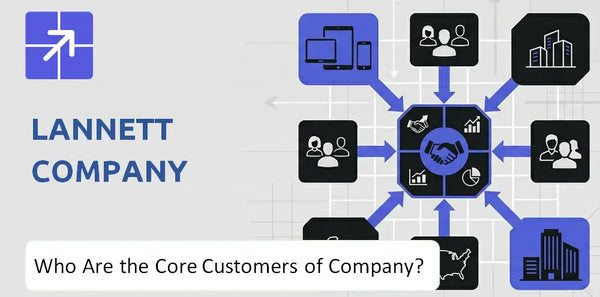
Buyers include national wholesalers, hospital GPOs, and specialty pharmacies; prioritize contract stability and regulatory-compliant sourcing. See Lannett Company BCG Matrix Analysis for product positioning.
Who Is Lannett Company Trying to Win?
Lannett Company, Inc. targets the three major US pharmaceutical wholesalers – Cencora, Cardinal Health, and McKesson – which account for roughly 85% – 90% of its gross sales; it also pursues large retail chains, GPOs, and growing CDMO clients. These buyer types gatekeep access to retail pharmacies, hospitals, and institutional formularies.
 Primary Wholesalers: The Big Three
Cencora, Cardinal Health, and McKesson are the main Lannett Company target customers because they distribute to most US pharmacies and hospitals; aggregate data show they drive about 85% – 90% of Lannett pharmaceutical customers' revenue, making pharmacy wholesalers and distributors critical buyers.
Secondary Buyers: Retail Chains, GPOs, and Institutions
Large retail and independent pharmacies – CVS and Walgreens among them – plus Group Purchasing Organizations and hospital procurement departments form secondary customer segments; these channels determine formulary placement and volume purchases that affect Lannett Company customer segments and hospital procurement departments' sourcing.
Customer Type and Market Role
Lannett mainly serves businesses and institutions – distributors, retail pharmacy chains, hospitals, and GPOs – while indirectly reaching patients via clinicians, insurance formularies, and pharmacy purchasing managers; the mix includes CDMO services for other pharmaceutical clients.
Most Important Segment by Revenue
The most important segment is wholesale distributors (the Big Three), which by scale and revenue concentration control access to pharmacies and hospitals; loss of or shifts in purchasing by these wholesalers would materially affect Lannett's top-line and inventory turnover. Read more on company operations in How Lannett Company Company Works and Makes Money.
Lannett Company SWOT Analysis
- Complete SWOT Breakdown
- Fully Customizable
- Editable in Excel & Word
- Professional Formatting
- Investor-Ready Format

What Do Lannett Company's Customers Care About Most?
Lannett Company target customers prioritize low-cost, reliable access to essential generics and biosimilars; their purchase drivers are price competitiveness, supply security, and portfolio breadth across CNS, cardiovascular, and pain therapies.

Security of supply is the top operational need
Wholesalers and GPOs seek suppliers who prevent shortages; in the 2025/2026 cycle buyers prioritize fulfillment to avoid past US drug shortages and keep hospital procurement departments and pharmacy wholesalers operational.
Price and margin pressure drive buying decisions
Pharmacy wholesalers and distributors and retail pharmacy chains pick suppliers based on competitive unit cost and discount terms; payers push for lower-cost generics and biosimilars to reduce spend on biologics like insulin glargine.
Clinical equivalence, not brand prestige
Clinicians prescribing Lannett Company generic drugs and hospital pharmacy directors care that generics and biosimilars match clinical outcomes of brands, so therapeutic interchangeability and labeling clarity matter.
Wide portfolio reduces sourcing risk
Long term care facilities sourcing Lannett generics and independent pharmacists partnering with Lannett Company value a broad SKU set across CNS, cardiovascular, and pain management to simplify procurement and stocking.
Reliable fill rates support repeat demand
Retail and independent pharmacies and hospital pharmacy directors reward suppliers who sustain >95% fulfillment on critical meds; steady on-time delivery reduces emergency sourcing and churn.
Cost savings from biosimilars accelerate adoption
Insurance formularies listing Lannett pharmaceuticals and pharmacy benefit managers focus on biosimilars like insulin glargine to cut biological drug spend; biosimilar adoption can lower costs by 20 – 40% versus originators per payer analyses in 2025.
Why customers pick Lannett Company
Hospitals that purchase Lannett Company generic drugs and wholesale distributors who buy Lannett pharmaceuticals choose suppliers that combine competitive pricing, a diversified generic portfolio, and demonstrable supply-chain stability; see corporate positioning in this History and Background of Lannett Company Company.
Lannett Company Business Model Canvas
- One-time Payment
- No Research Needed – Save Hours of Work
- Built by Experts, Trusted by Consultants
- Instant Download, Ready to Use
- 100% Editable, Fully Customizable

Where Is Demand Strongest for Lannett Company?
Demand is strongest in the United States, concentrated in institutional and mail-order pharmacy channels that serve chronic conditions; complex generics and biosimilars drive Lannett Company, Inc.'s fastest growth.
Primary US institutional and mail-order channels
The Lannett Company target customers are primarily US hospital procurement departments, pharmacy wholesalers and distributors, and mail-order pharmacies because the US fills over 90% of prescriptions with generics; institutional channels handle high-volume chronic-care scripts.
Secondary markets: retail and long-term care
Retail and independent pharmacies, long term care facilities, and retail pharmacy chains ordering Lannett products form secondary demand, plus government buyers (VA, public health) and pharmacy benefit managers influencing formularies.
Where Lannett appears strongest
Lannett pharmaceutical customers show strongest uptake in complex generics and hospital-supplied injectables where technical barriers limit competitors; revenue mix tilts toward high-volume generic contracts with pharmacy wholesalers and distributors.
Fastest-growing demand areas in 2025 – 2026
Demand is growing fastest for affordable insulin products and respiratory treatments amid legislative pressure to lower drug prices and rising chronic disease prevalence; biosimilar adoption and complex generics expansion accelerate institutional and mail-order buys. See Mission, Vision, and Values of Lannett Company Company for related company context.
Lannett Company Marketing Mix
- Complete Marketing Mix Analysis
- Effortlessly Communicate Your Business Strategy
- Investor-Ready Format
- 100% Editable and Customizable
- Clear and Structured Layout

How Does Lannett Company Keep Its Audience Growing?
Lannett Company, Inc. grows its audience by targeting limited-competition ANDAs, strengthening wholesaler contracts, and partnering on biosimilars to reach adjacent high-value segments while keeping retention via domestic manufacturing and regulatory expertise.
Expanding the Customer Base through Focused ANDAs and Partnerships
Lannett Company target customers expand as the company files ANDAs for low-competition generics and partners on biosimilars, enabling entry into hospital procurement departments, pharmacy wholesalers and distributors, retail and independent pharmacies, and institutional buyers without full clinical risk. Recent pipeline moves aim to add product listings to Growth Outlook of Lannett Company Company and increase customer reach in government and international markets.
Customer Retention Drivers
Long-term contracts with major wholesalers and a domestic manufacturing footprint reduce supply risk for pharmacy purchasing managers, hospital pharmacy directors, and wholesale distributors who buy Lannett pharmaceuticals. Regulatory navigation expertise and on-time launches support pharmacy wholesalers and distributors and lower churn among retail pharmacy chains ordering Lannett products.
Loyalty, Repeat Demand, and Customer Depth
Repeat demand comes from formulary placements and long-term care facilities sourcing Lannett generics; insurance formularies listing Lannett pharmaceuticals and veterans affairs contracts increase reorder frequency. Ecosystem stickiness is driven by reliable supply to hospitals that purchase Lannett Company generic drugs and pharmacies stocking Lannett Company medications, supporting predictable volumes for distributors and independent pharmacists partnering with Lannett Company.
Strongest Growth Lever in 2025/2026
The key lever is timely biosimilar insulin launch and manufacturing optimization: if launched on schedule in 2025, market entry into clinicians prescribing Lannett Company generic drugs and pharmacy benefit managers negotiating with Lannett could lift volumes and margins. Management projects moderate growth for 2025/2026 with EBITDA margins expected to stabilize as the mix shifts to higher-barrier molecules; recent guidance implies margin improvement versus prior low-single-digit EBITDA in earlier years, contingent on execution and contract renewals with retail pharmacy chains ordering Lannett products.
Lannett Company Boston Consulting Group Matrix
- Built by Experts, Trusted by Consultants
- Structured for Consultants, Students, and Founders
- 100% Editable in Microsoft Word & Excel
- Instant Digital Download – Use Immediately
- Compatible with Mac & PC – Fully Unlocked

Related Blogs
- What Is the History of Lannett Company Company and How Did It Evolve?
- What Is the Competitive Landscape of Lannett Company Company and How Does It Compete?
- What Is the Growth Outlook of Lannett Company Company and Where Is It Heading?
- How Does Lannett Company Company Work and What Drives Its Business Model?
- How Does Lannett Company Company Reach Customers and Turn Demand into Sales?
- What Do the Mission, Vision, and Core Values of Lannett Company Company Reveal?
- Who Owns Lannett Company Company Today and Who Holds Control?
Frequently Asked Questions
Lannett Company mainly targets the three major US pharmaceutical wholesalers: Cencora, Cardinal Health, and McKesson. These wholesalers account for roughly 85%-90% of gross sales and control access to most pharmacies and hospitals, making them the most important customer segment by revenue and market reach.
Disclaimer
All information, articles, and product details provided on this website are for general informational and educational purposes only. We do not claim any ownership over, nor do we intend to infringe upon, any trademarks, copyrights, logos, brand names, or other intellectual property mentioned or depicted on this site. Such intellectual property remains the property of its respective owners, and any references here are made solely for identification or informational purposes, without implying any affiliation, endorsement, or partnership.
We make no representations or warranties, express or implied, regarding the accuracy, completeness, or suitability of any content or products presented. Nothing on this website should be construed as legal, tax, investment, financial, medical, or other professional advice. In addition, no part of this site - including articles or product references - constitutes a solicitation, recommendation, endorsement, advertisement, or offer to buy or sell any securities, franchises, or other financial instruments, particularly in jurisdictions where such activity would be unlawful.
All content is of a general nature and may not address the specific circumstances of any individual or entity. It is not a substitute for professional advice or services. Any actions you take based on the information provided here are strictly at your own risk. You accept full responsibility for any decisions or outcomes arising from your use of this website and agree to release us from any liability in connection with your use of, or reliance upon, the content or products found herein.