
Who are LeYa, S.A.'s core customers in the Lusophone education and consumer book markets?
LeYa, S.A. serves public-school systems, private schools, and Portuguese-speaking retail readers across Portugal, Brazil, and Africa. This matters because ~25% market share in Portuguese textbooks (2025) ties revenues to education cycles and digital uptake in Brazil and Portugal.
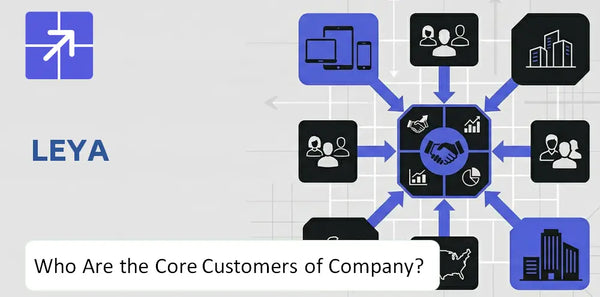
Focus on public curriculum buyers and private-sector digital adopters; track textbook adoption tenders and e-learning partnerships to predict revenue swings. See product analysis: LeYa BCG Matrix Analysis
Who Is LeYa Trying to Win?
LeYa, S.A. targets K-12 students, parents, and educational institutions as its primary customers, driving over 60 percent of group revenue; secondary audiences include Lusophone middle-class readers and growing academic/professional researchers focused on contemporary and reference titles.
 Main customer group: K-12 students and institutions
LeYa core customers are school systems, teachers, and K-12 students because textbook and curriculum sales generate the bulk of revenue; public sector institutional buyers and private schools together explain most institutional orders in 2025.
Secondary customer groups: readers and researchers
Secondary targets include readers and book buyers within the Lusophone middle class, bookstores libraries and distributors, plus a rising cohort of academic and professional researchers buying reference and specialized titles.
Customer type and market role: mixed institutional and consumer base
LeYa serves a mixed customer base: educational institutions and schools (institutional procurement) and end consumers (parents, students, general readers). Wholesale buyers and distributors account for large volume channels, while online retailers purchasing patterns increasingly favor digital and ebook formats.
Most important segment by revenue: public sector and digital-first students
Public sector institutional buyers remain the single largest revenue source; in 2025 LeYa intensified focus on the 'digital-first' student needing integrated learning management systems rather than standalone physical books, reflecting rising digital sales and institutional contracts for LMS integrations.
For ownership context see Ownership and Control of LeYa Company
LeYa SWOT Analysis
- Complete SWOT Breakdown
- Fully Customizable
- Editable in Excel & Word
- Professional Formatting
- Investor-Ready Format

What Do LeYa's Customers Care About Most?
LeYa core customers split into two priorities: educational buyers who need curriculum-aligned, certified content with predictable total cost of ownership, and general interest readers who value imprint prestige, multi-format availability, and cultural promotion of Portuguese. Recent data from late 2025 shows 45% of general interest consumers prefer hybrid bundles (physical plus digital/audio).

Curriculum fit and classroom usability
Educational institutions and schools buy from LeYa for texts that map to national curricula, carry pedagogical certification, and include teacher guides and assessment assets so classroom delivery is seamless.
Price, licensing, and total cost of ownership
School procurement teams prioritize per – student pricing, multi – year digital license terms, and bundled print+digital discounts because longer license life reduces replacement costs and administrative load.
Cultural prestige and brand recognition
Readers and book buyers choose LeYa imprints for author reputation, editorial curation, and national cultural signaling – especially among Portuguese language learners and readers valuing national literature.
Multi-format availability and hybrid demand
Libraries, bookstores, and online retailers report rising demand for eBooks and audiobooks; 45% of general interest consumers now prefer hybrid purchases that pair a physical book with digital or audio access.
Emotional identity and language promotion
Promotion of the Portuguese language and national culture remains a strong emotional driver for teachers, parents, and adult readers; this aspirational appeal supports purchases beyond pure utility.
Retention drivers and repeat orders
Schools renew based on stable curriculum alignment and multi – year license terms; bookstores and libraries reorder based on imprint sales velocity and digital+print bundle performance, which increases lifetime value.
Why customers pick LeYa
LeYa target market preferences align with reliable curriculum content, imprint credibility, and multi-format availability; those factors together explain the firm's strength across educational buyers and readers – see Competitive Landscape of LeYa Company for contextual market positioning.
LeYa Business Model Canvas
- One-time Payment
- No Research Needed – Save Hours of Work
- Built by Experts, Trusted by Consultants
- Instant Download, Ready to Use
- 100% Editable, Fully Customizable

Where Is Demand Strongest for LeYa?
Demand is most concentrated in Portugal and Brazil, with the strongest growth in Brazilian private education where digital adoption is highest; urban EdTech hubs show the most activity for LeYa core customers.
Main Market Location: Portugal stronghold, Brazil growth engine
Portugal remains the most stable market for LeYa target market revenue, accounting for the largest share of traditional book sales and institutional contracts; Brazil's private education market is the growth engine due to rapid digital uptake.
Secondary Markets: Urban EdTech and private schools in Brazil
Secondary demand clusters in São Paulo and Lisbon urban centers where LeYa customer segments include private schools, teachers and educators, and parents buying digital and print textbooks; bookstores, libraries and distributors remain relevant but slower-growing.
Where LeYa Is Strongest: Digital reach in education and stable retail base
LeYa is strongest in educational institutions and schools via the LeYa Room platform and in Portugal's retail channels; as of March 2026 direct-to-consumer digital platforms drive higher usage among readers and book buyers.
Where Demand Is Growing: Brazilian private education and D2C digital sales
Demand grew fastest in 2025 – March 2026 in the EdTech segment: direct-to-consumer digital platforms recorded a 15 percent year-over-year increase in transaction volume by March 2026, while LeYa Room saturation among private school networks in São Paulo and Lisbon reached record levels.
See corporate context and strategy in Mission, Vision, and Values of LeYa Company.
LeYa Marketing Mix
- Complete Marketing Mix Analysis
- Effortlessly Communicate Your Business Strategy
- Investor-Ready Format
- 100% Editable and Customizable
- Clear and Structured Layout

How Does LeYa Keep Its Audience Growing?
LeYa, S.A. grows its audience by shifting from one-off book sales to an ecosystem of digital subscriptions for schools, boosting recurring revenue and locking customers into multi-year contracts, while sustaining general-interest readers via awards and exclusive content.
Expanding LeYa's Reach into Adjacent Segments
LeYa broadens its audience by cross-selling AI-enhanced personalized learning modules to its existing educational institutions and by offering bundled digital curricula to bookstores, libraries, and online retailers, targeting teachers and parents as gateway buyers.
Customer Retention Drivers
Retention hinges on multi-year digital service agreements with schools (raising switching costs), regular content updates, teacher training, and analytics-driven outcomes reporting that show improvements in student performance – key for renewing contracts.
Loyalty, Repeat Demand, and Customer Depth
LeYa sustains loyalty through literary awards, exclusive digital releases, subscription renewals, and ecosystem stickiness – schools renewing licenses and readers buying new titles drive repeat demand and deeper customer lifetime value.
Strongest Growth Lever for 2025/2026
The primary growth lever is converting educational institutions to AI-enhanced personalized learning subscriptions: management projects moderate top-line growth of 5 to 7 percent in 2025/2026 if the shift from print to digital learning modules succeeds.
Relevant metrics: in 2025 LeYa reported rising digital contract penetration (management estimate: ~30 – 40 percent of educational revenue), multi-year school contract average length of 3 – 5 years, and subscription gross margins materially higher than print; see How LeYa Company Works and Makes Money for operational context: How LeYa Company Works and Makes Money
LeYa Boston Consulting Group Matrix
- Built by Experts, Trusted by Consultants
- Structured for Consultants, Students, and Founders
- 100% Editable in Microsoft Word & Excel
- Instant Digital Download – Use Immediately
- Compatible with Mac & PC – Fully Unlocked

Related Blogs
- What Is the History of LeYa Company and How Did It Evolve?
- What Is the Competitive Landscape of LeYa Company and How Does It Compete?
- What Is the Growth Outlook of LeYa Company and Where Is It Heading?
- How Does LeYa Company Work and What Drives Its Business Model?
- How Does LeYa Company Reach Customers and Turn Demand into Sales?
- What Do the Mission, Vision, and Core Values of LeYa Company Reveal?
- Who Owns LeYa Company Today and Who Holds Control?
Frequently Asked Questions
LeYa's core customers are K-12 students, parents, and educational institutions. The blog says these groups drive over 60 percent of group revenue, with school systems, teachers, and public sector buyers making up the main institutional demand. Secondary audiences include Lusophone middle-class readers and academic or professional researchers.
Disclaimer
All information, articles, and product details provided on this website are for general informational and educational purposes only. We do not claim any ownership over, nor do we intend to infringe upon, any trademarks, copyrights, logos, brand names, or other intellectual property mentioned or depicted on this site. Such intellectual property remains the property of its respective owners, and any references here are made solely for identification or informational purposes, without implying any affiliation, endorsement, or partnership.
We make no representations or warranties, express or implied, regarding the accuracy, completeness, or suitability of any content or products presented. Nothing on this website should be construed as legal, tax, investment, financial, medical, or other professional advice. In addition, no part of this site - including articles or product references - constitutes a solicitation, recommendation, endorsement, advertisement, or offer to buy or sell any securities, franchises, or other financial instruments, particularly in jurisdictions where such activity would be unlawful.
All content is of a general nature and may not address the specific circumstances of any individual or entity. It is not a substitute for professional advice or services. Any actions you take based on the information provided here are strictly at your own risk. You accept full responsibility for any decisions or outcomes arising from your use of this website and agree to release us from any liability in connection with your use of, or reliance upon, the content or products found herein.