
Who are Organogenesis Holdings Inc.'s core customers in hospital and wound-care settings?
Organogenesis targets hospital clinicians, wound-care specialists, and surgical centers treating chronic, non-healing wounds and complex surgical repairs. This matters because 2025 reimbursement shifts and rising chronic wound prevalence drive product adoption and formulary decisions.
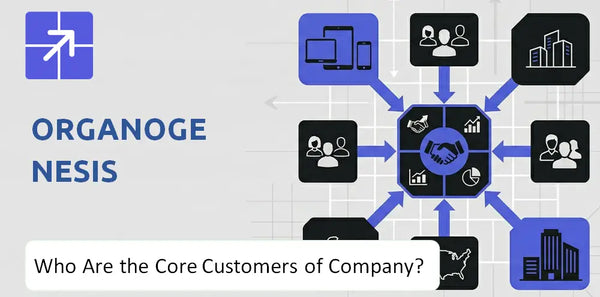
Hospitals and specialty clinics buy high-touch biologics; payer approval and clinical protocols dictate uptake. See product positioning in Organogenesis BCG Matrix Analysis.
Who Is Organogenesis Trying to Win?
Organogenesis Holdings Inc. targets specialized healthcare providers who manage complex wounds and surgical care, chiefly wound care specialists and orthopedic/spine surgeons, plus institutional buyers that control access across networks.
 Primary: Wound Care Specialists in Outpatient Settings
Wound care specialists, including podiatrists and vascular surgeons in Outpatient Wound Care Centers and private clinics, are the main Organogenesis target customers because they drive frequent product use for chronic wounds such as diabetic foot ulcers and venous leg ulcers. These clinicians account for the majority of advanced wound care volume and recurring purchases.
Secondary: Surgical and Institutional Buyers
Orthopedic and spine surgeons in Ambulatory Surgery Centers and hospitals form a high-value segment for biologics and grafts, while Value Analysis Committees at Integrated Delivery Networks (IDNs) and hospital purchasing departments control formulary access for thousands of clinicians. These groups influence procurement and scale deployment.
Customer Type and Market Role
Organogenesis serves a mixed customer base: clinical end-users (specialist physicians, surgeons) and institutional purchasers (hospital procurement, IDN Value Analysis Committees). Selling requires clinical evidence, reimbursement support, and procurement alignment.
Most Important Segment by Scale and Revenue
The wound care outpatient channel appears most important by volume and recurring revenue; Organogenesis reported that advanced wound care products and biosurgical offerings drove a significant share of its commercial sales through 2025, and the company expanded focus to pain management specialists after scaling ReNu for osteoarthritis to access the large joint-preservation market. See Ownership and Control of Organogenesis Company for more on corporate positioning.
Organogenesis SWOT Analysis
- Complete SWOT Breakdown
- Fully Customizable
- Editable in Excel & Word
- Professional Formatting
- Investor-Ready Format

What Do Organogenesis's Customers Care About Most?
Clinicians and hospital buyers prioritize clinical efficacy and reimbursement certainty; facility managers focus on lowering total cost of care; surgeons demand shelf-stable, bioactive matrices that speed recovery. Purchase drivers are wound closure rates after >30 days, Q-code coverage, and avoided readmissions or amputations.

Clinical efficacy: wound closure in chronic cases
Clinicians measure success by wound closure after standard care fails for over 30 days. Evidence from RCTs and real-world registries that show higher healed wound rates within 12 weeks drives adoption by wound care specialists and podiatrists treating diabetic foot ulcers.
Practical buying drivers: reimbursement and Q-codes
In the 2026 regulatory environment, buyers prioritize products with established Q-codes and clear Local Coverage Determinations (LCDs) from MACs. Hospital purchasing departments and health system procurement teams require predictable Medicare coverage to justify spend and inventory.
Economic focus: total cost of care reduction
Facility managers value products that lower total cost of care by preventing readmissions and amputations; averted readmissions can save hospitals $10,000 – $25,000 per event, which supports formulary placement and volume purchasing.
Surgical priorities: shelf-stability and bioactivity
Vascular and plastic surgeons buy acellular and cellular matrices for predictable shelf-stability, easy OR handling, and bioactive properties that accelerate soft tissue reconstruction and shorten recovery times – improving throughput and patient outcomes.
What customers value most: outcomes and payment clarity
Customers prioritize documented healing outcomes, reduced complication rates, and clear reimbursement pathways so clinicians can prescribe confidently and hospital procurement can model ROI using real-world effectiveness data.
Loyalty and repeat demand: proven ROI and supply reliability
Repeat usage follows consistent clinical results, stable coverage, and reliable distribution; long-term contracts often hinge on demonstrated reductions in amputations and cycle-time to heal across wound care clinics that use Organogenesis products.
Why customers choose Organogenesis products
Buyers choose Organogenesis target customers because its products align clinical efficacy with reimbursement certainty and operational needs – meeting clinicians, hospital purchasing departments Organogenesis, and burn centers where proof of healing and payment clarity matter most. Read more on company economics in How Organogenesis Company Works and Makes Money.
Organogenesis Business Model Canvas
- One-time Payment
- No Research Needed – Save Hours of Work
- Built by Experts, Trusted by Consultants
- Instant Download, Ready to Use
- 100% Editable, Fully Customizable

Where Is Demand Strongest for Organogenesis?
Organogenesis Holdings Inc. sees the strongest demand in the United States outpatient setting, which drives roughly 70% of 2025 revenue, concentrated in Sun Belt and Midwest regions with high diabetes prevalence and diabetic foot ulcer burden.
Main Market: US Outpatient & Ambulatory Settings
Demand is concentrated in US outpatient clinics and ambulatory surgery centers (ASCs), where shifting procedures and high-volume wound care create repeat procurement of Organogenesis products by healthcare providers for Organogenesis products.
Secondary Markets: Regional Hotspots & VA System
Sun Belt and Midwest states drive volume because of diabetic foot ulcer prevalence; the Veterans Affairs system provides a stable, high-volume base that smooths demand volatility.
Where Organogenesis Is Strongest: Outpatient Revenue Mix
Organogenesis is strongest in outpatient channels – wound care clinics, podiatry practices, and ASCs – reflected in a ~70% revenue share and growing penetration among wound care specialists target market and hospital purchasing departments Organogenesis engages.
Fastest-Growing Demand: Surgical & Sports Medicine Channel
Surgical and Sports Medicine is the fastest-growing segment, with double-digit growth in 2025 as procedures move to ASCs; antimicrobial-protected products like PuraPly AM are in high demand at community clinics where infection management is a key bottleneck.
For procurement context, health system procurement process for Organogenesis therapies favors outpatient repeat-use products; see Competitive Landscape of Organogenesis Company for comparative positioning and market size and segments for Organogenesis core customers.
Organogenesis Marketing Mix
- Complete Marketing Mix Analysis
- Effortlessly Communicate Your Business Strategy
- Investor-Ready Format
- 100% Editable and Customizable
- Clear and Structured Layout

How Does Organogenesis Keep Its Audience Growing?
Organogenesis Holdings Inc. grows its audience by landing accounts with a direct sales force, then expanding product use within those accounts and into adjacent specialties; retention relies on clinician training, clinical data, and high switching costs for advanced wound care matrices.
Land-and-Expand Drives New Customer Adds
Organogenesis target customers are acquired via a direct sales force of over 350 professionals who introduce next-generation bioactive products and new iterations to existing clinical accounts, then broaden use into sports medicine, surgery, and burn centers; ReNu clinical data in 2025 accelerated trials and adoption in the sports medicine vertical.
Customer Retention Drivers
Retention among core customers Organogenesis serves – wound care specialists, hospitals and clinics, vascular and plastic surgeons, and podiatrists – is high because training on matrices like Apligraf and Dermagraft creates significant clinical switching costs; regulatory stabilization for skin substitutes by 2026 also reduced churn risk.
Loyalty, Repeat Demand, and Clinical Depth
Repeat demand is driven by procedure-led usage patterns in surgical and wound care settings and sustained by clinical training, published outcomes, and reimbursement pathways; hospital purchasing departments and health system procurement processes favor established biologics, creating an ecosystem stickiness that boosts lifetime value.
Strongest Growth Lever in 2025 – 2026
The primary growth lever is market share expansion in surgical sectors supported by new product launches and clinical evidence – management projects annual revenue growth of 10 – 12% for 2025/2026, reflecting gains in hospital purchasing for Organogenesis advanced wound care products and resilience of the core portfolio.
See more corporate context in the article History and Background of Organogenesis Company
Organogenesis Boston Consulting Group Matrix
- Built by Experts, Trusted by Consultants
- Structured for Consultants, Students, and Founders
- 100% Editable in Microsoft Word & Excel
- Instant Digital Download – Use Immediately
- Compatible with Mac & PC – Fully Unlocked

Related Blogs
- What Is the History of Organogenesis Company and How Did It Evolve?
- What Is the Competitive Landscape of Organogenesis Company and How Does It Compete?
- What Is the Growth Outlook of Organogenesis Company and Where Is It Heading?
- How Does Organogenesis Company Work and What Drives Its Business Model?
- How Does Organogenesis Company Reach Customers and Turn Demand into Sales?
- What Do the Mission, Vision, and Core Values of Organogenesis Company Reveal?
- Who Owns Organogenesis Company Today and Who Holds Control?
Frequently Asked Questions
Organogenesis primarily serves wound care specialists in outpatient settings, especially podiatrists and vascular surgeons treating chronic wounds. It also sells to orthopedic and spine surgeons, plus institutional buyers like hospital purchasing teams and Value Analysis Committees that control access across health systems.
Disclaimer
All information, articles, and product details provided on this website are for general informational and educational purposes only. We do not claim any ownership over, nor do we intend to infringe upon, any trademarks, copyrights, logos, brand names, or other intellectual property mentioned or depicted on this site. Such intellectual property remains the property of its respective owners, and any references here are made solely for identification or informational purposes, without implying any affiliation, endorsement, or partnership.
We make no representations or warranties, express or implied, regarding the accuracy, completeness, or suitability of any content or products presented. Nothing on this website should be construed as legal, tax, investment, financial, medical, or other professional advice. In addition, no part of this site - including articles or product references - constitutes a solicitation, recommendation, endorsement, advertisement, or offer to buy or sell any securities, franchises, or other financial instruments, particularly in jurisdictions where such activity would be unlawful.
All content is of a general nature and may not address the specific circumstances of any individual or entity. It is not a substitute for professional advice or services. Any actions you take based on the information provided here are strictly at your own risk. You accept full responsibility for any decisions or outcomes arising from your use of this website and agree to release us from any liability in connection with your use of, or reliance upon, the content or products found herein.