
Who are Potbelly Corporation's core customers in urban and suburban high-frequency segments?
Potbelly Corporation targets young professionals and families seeking quick, warm sandwiches with cafe-style ambiance; this matters because the 2025 shift to franchise growth and digital orders aims to capture repeat customers in dense corridors, supporting unit economics and AUVs reported in 2025.
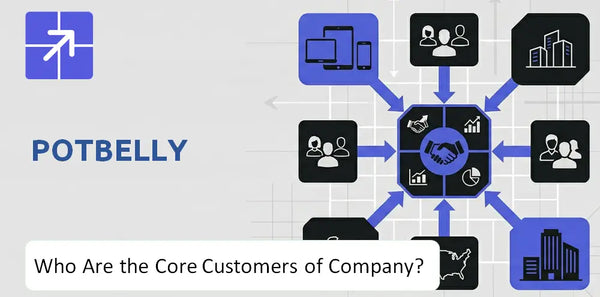
Focus on midday commuters and nearby office workers – digital orders and delivery drove a larger share of sales in 2025, so prioritizing convenience and repeat-purchase offers boosts frequency and margins. See Potbelly BCG Matrix Analysis
Who Is Potbelly Trying to Win?
Potbelly Corporation targets daytime office workers, suburban families, and digital-native Gen Z/Millennial diners; the primary goal is to win frequent, loyalty-driven customers who fuel lunch-hour sales and recurring revenue.
 Main customer group: Time-Pressed Professional
The core Potbelly target market is the urban lunch crowd – office workers and active professionals who visit during the weekday lunch rush and drive the largest share of in-store sales; this group's high-frequency midday visits matter most for same-store sales and peak-hour throughput.
Secondary customer groups: Suburban families and Digital-Native diners
Secondary Potbelly customers include suburban family households seeking a premium fast-casual sandwich option and Millennial and Gen Z diners who order via mobile and delivery; both segments expand daypart reach and off-peak sales.
Customer type and market role
Potbelly customers are mainly consumers (B2C) across urban and suburban markets, with a mixed emphasis on dine-in, takeout, and digital orders; corporate lunch catering is a smaller B2B adjunct to core retail sales.
Most important segment: Loyalty Enthusiast
Potbelly's Perks program exceeded 4.5 million members by 2025; members visit more often and spend materially more per transaction, forming the most strategically valuable segment for recurring revenue and retention; see Growth Outlook of Potbelly Company for further detail: Growth Outlook of Potbelly Company
Potbelly SWOT Analysis
- Complete SWOT Breakdown
- Fully Customizable
- Editable in Excel & Word
- Professional Formatting
- Investor-Ready Format

What Do Potbelly's Customers Care About Most?
Potbelly customers prioritize high-quality toasted sandwiches and fresh bakery items, fast order fulfillment across digital and in-shop channels, and a friendly neighborhood atmosphere; price sensitivity matters, so value bundles and tiered pricing influence purchase decisions. Core drivers: food quality, speed via Potbelly Digital Kitchen 2.0, and the in-store vibe.

Premium, fast sandwiches that feel upgraded
Potbelly target market seeks toasted, higher-quality sandwiches and freshly baked cookies as a perceived premium over Subway or Jimmy John's; this drives visits for lunch and casual dinners, especially among fast-casual sandwich diners.
Speed and seamless digital order fulfillment
Practical buyers value quick service: with full rollout of Potbelly Digital Kitchen 2.0 in 2025, order lead times fell materially, raising expectations for sub-5 minute pickup for mobile orders in many urban locations.
Neighborhood vibe and emotional connection
Customers – especially Millennial and Gen Z diners – respond to live music, unique decor, and friendly staff; these emotional cues create brand affinity and make Potbelly a destination beyond mere convenience.
Value without diluting premium positioning
During the 2025 inflationary cycle Potbelly maintained traffic using tiered pricing and Everyday Value bundles; customers value perceived savings while retaining the premium sandwich experience.
What keeps customers coming back
Repeat demand hinges on consistent toasted quality, fast digital fulfillment, and local atmosphere; loyalty program offers and bundled pricing increased visit frequency in 2025, with company reporting improved repeat rates year-over-year.
Why Potbelly wins vs competitors
Potbelly customers choose the brand for its toasted sandwich differentiation, neighborhood experience, and faster omnichannel service enabled by PDK 2.0 – appealing to the urban lunch crowd, office workers, and college students who value quality and speed.
Further context and competitive detail are available in Competitive Landscape of Potbelly Company.
Potbelly Business Model Canvas
- One-time Payment
- No Research Needed – Save Hours of Work
- Built by Experts, Trusted by Consultants
- Instant Download, Ready to Use
- 100% Editable, Fully Customizable

Where Is Demand Strongest for Potbelly?
Potbelly Company finds the most demand in high-density urban centers in the Midwest and Mid-Atlantic, while rapid expansion demand now concentrates in suburban lifestyle centers and the Sun Belt, notably Florida and Texas where drive-thru prototypes excel.
Main Market: Urban Core Lunch Crowds
Potbelly target market is densest among urban lunch crowds and fast-casual sandwich diners in Midwest and Mid-Atlantic cities; these locations deliver dependable weekday volume from office workers and college students.
Secondary Markets: Suburban Lifestyle & Sun Belt
Suburban lifestyle centers, plus Sun Belt states like Florida and Texas, show fastest growth; drive-thru and parking-friendly formats are driving customer acquisition among Millennial and Gen Z diners and families.
Where Potbelly Company Is Strongest
Potbelly Company is strongest where digital ordering and pickup complement foot traffic: urban centers for steady lunch rushes and suburban shops for higher average checks; digital sales now represent 40 – 42% of shop sales as of early 2026.
Fastest-Growing Demand Areas (2025 – 2026)
Growth is fastest in Sun Belt suburbs and drive-thru prototypes in Florida and Texas; catering from corporate clients has recovered to pre-pandemic volumes, presenting a high-margin channel opportunity alongside delivery and pickup.
For a detailed operational and revenue breakdown tied to these markets, see How Potbelly Company Works and Makes Money
Potbelly Marketing Mix
- Complete Marketing Mix Analysis
- Effortlessly Communicate Your Business Strategy
- Investor-Ready Format
- 100% Editable and Customizable
- Clear and Structured Layout

How Does Potbelly Keep Its Audience Growing?
Potbelly Corporation grows its audience by franchising aggressively and scaling a sophisticated digital ecosystem, expanding into new markets while deepening relationships with targeted fast-casual sandwich diners and urban lunch crowd segments.
Franchise Growth Acceleration and Market Expansion
Potbelly target market expansion relies on shifting to an 85 percent franchised model, unlocking local operators to enter untapped territories and adjacent segments such as college campuses and suburban centers; a pipeline of over 600 committed units for 2025/2026 supports footprint growth and market-share gains versus traditional QSRs and higher-priced casual dining.
Customer Retention Drivers
Retention centers on neighborhood positioning, convenience (delivery and order-ahead), and targeted local marketing to Potbelly customers – especially Millennial and Gen Z diners and office workers – supporting a company same-store sales growth target of 3 – 5 percent for 2025/2026.
Loyalty, Repeat Demand, and Customer Depth
The Perks loyalty program uses predictive analytics to personalize offers and has lifted visit frequency for top-tier members from 1.5 to over 3 visits per month, boosting repeat demand and increasing average spend among core Potbelly customers and urban professionals.
Strongest Customer-Base Growth Lever
The leading growth lever is scaling digital infrastructure – mobile ordering, loyalty analytics, and localized digital marketing – while preserving the brand's neighborhood identity; this lets Potbelly attract lunch rush customer profiles, college students, and Millennial and Gen Z diners and convert occasional visitors into repeat patrons. Read more on the brand's development in History and Background of Potbelly Company
Potbelly Boston Consulting Group Matrix
- Built by Experts, Trusted by Consultants
- Structured for Consultants, Students, and Founders
- 100% Editable in Microsoft Word & Excel
- Instant Digital Download – Use Immediately
- Compatible with Mac & PC – Fully Unlocked

Related Blogs
- What Is the History of Potbelly Company and How Did It Evolve?
- What Is the Competitive Landscape of Potbelly Company and How Does It Compete?
- What Is the Growth Outlook of Potbelly Company and Where Is It Heading?
- How Does Potbelly Company Work and What Drives Its Business Model?
- How Does Potbelly Company Reach Customers and Turn Demand into Sales?
- What Do the Mission, Vision, and Core Values of Potbelly Company Reveal?
- Who Owns Potbelly Company Today and Who Holds Control?
Frequently Asked Questions
Potbelly is trying to win frequent, loyalty-driven customers who help drive lunch-hour sales and recurring revenue. Its core target market includes daytime office workers, suburban families, and digital-native Gen Z and Millennial diners, with the urban lunch crowd playing the biggest role in in-store sales.
Disclaimer
All information, articles, and product details provided on this website are for general informational and educational purposes only. We do not claim any ownership over, nor do we intend to infringe upon, any trademarks, copyrights, logos, brand names, or other intellectual property mentioned or depicted on this site. Such intellectual property remains the property of its respective owners, and any references here are made solely for identification or informational purposes, without implying any affiliation, endorsement, or partnership.
We make no representations or warranties, express or implied, regarding the accuracy, completeness, or suitability of any content or products presented. Nothing on this website should be construed as legal, tax, investment, financial, medical, or other professional advice. In addition, no part of this site - including articles or product references - constitutes a solicitation, recommendation, endorsement, advertisement, or offer to buy or sell any securities, franchises, or other financial instruments, particularly in jurisdictions where such activity would be unlawful.
All content is of a general nature and may not address the specific circumstances of any individual or entity. It is not a substitute for professional advice or services. Any actions you take based on the information provided here are strictly at your own risk. You accept full responsibility for any decisions or outcomes arising from your use of this website and agree to release us from any liability in connection with your use of, or reliance upon, the content or products found herein.