
Who are Shell Plc's core customers in energy-intensive industries and decarbonizing consumers?
Shell Plc serves heavy industry, transport fleets, and retail consumers shifting to low-carbon options; this matters because revenue depends on both steady oil demand and growing clean-energy sales. In 2025 Shell targeted high-value segments while planning $22 – 25 billion CAPEX.
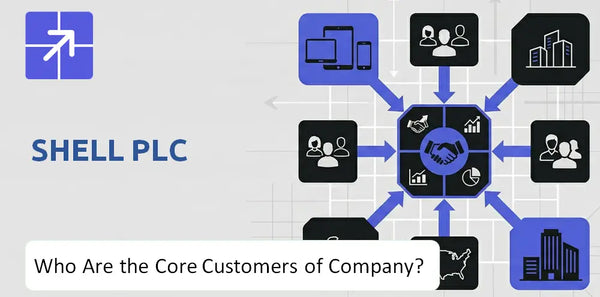
Focus on industrial fuel contracts and EV charging networks; prioritize margins and long-term contracts to protect cash flow. See product strategy in Shell Plc BCG Matrix Analysis.
Who Is Shell Plc Trying to Win?
Shell Plc aims to win three customer groups: retail motorists at >47,000 service stations, large B2B energy and transport clients, and growing corporate/government buyers for renewables and hydrogen.
 Main retail fuel and convenience customers
Shell target customers include over 33,000,000 daily retail fuel customers served via 47,000 branded service stations worldwide; retail motorists and convenience store shoppers drive volume and brand visibility.
Secondary industrial, aviation and shipping clients
Shell Plc customers span airlines (Jet A and aviation services), shipping companies using bunker fuel, and industrial manufacturers buying fuels, lubricants and petrochemicals; these corporate energy customers deliver higher-margin, contract-based revenue.
Customer type and market role
Shell serves a mixed base: retail fuel customers plus large commercial and institutional buyers; fleet managers who purchase Shell fuel and multinational corporations contracting Shell energy services are key account targets.
Most important segment by revenue and strategic focus
Traditional fuel buyers remain the revenue bedrock, but Shell is pivoting toward renewable energy buyers – seeking long-term PPAs, hydrogen buyers, and premium EV owners; corporate off-takers and governments with net-zero mandates are strategic growth targets. See History and Background of Shell Plc Company for context: History and Background of Shell Plc Company
Shell Plc SWOT Analysis
- Complete SWOT Breakdown
- Fully Customizable
- Editable in Excel & Word
- Professional Formatting
- Investor-Ready Format

What Do Shell Plc's Customers Care About Most?
Shell Plc customers prioritize immediate reliability and long-term sustainability: business clients demand energy security, stable pricing, and carbon transparency, while retail and EV drivers focus on convenience, non-fuel quality, and fast charging availability.

Energy security and decarbonization
Corporate energy customers and industrial and shipping clients need uninterrupted supply and clear emissions reporting; in 2025 many contracts include CCS or biofuel clauses and Shell provides integrated decarbonization options to meet Scope 1 – 3 targets.
Price stability and contract certainty
Commercial fuel supply customers for Shell and fleet managers who purchase Shell fuel prioritize predictable pricing and hedging options; long-term supply agreements and indexed pricing reduce exposure to 2025 – 2026 geopolitical volatility.
Convenience and non-fuel experience
Retail fuel customers and convenience store shoppers at Shell service stations choose locations with fast checkout, quality forecourt retail and clean amenities; these factors drive in-store spend beyond petrol and diesel.
Fast, reliable EV charging
Shell target market for EV charging stations centers on EV drivers who require ultra-fast charging (150kW+) and seamless digital payments; Shell Recharge app integration is a decisive factor in station selection and retention.
Transparency and measurable outcomes
Renewable energy buyers and corporate off-takers want verifiable emissions reductions; Shell Plc customers increasingly request lifecycle carbon metrics and supplier-level reporting as procurement conditions.
Trust, network scale, and integrated offerings
Core customers of Shell Plc – shipping companies using Shell bunker fuel, aviation customers who purchase Jet A, and large multinational corporations contracting Shell energy services – choose Shell for global reach, logistics capability, and bundled decarbonization solutions.
Retention hinges on uptime guarantees, transparent carbon reporting, and digital convenience; Shell target customers show higher loyalty where ultra-fast chargers are available and where commercial contracts include emissions delivery clauses – factors tied to measurable service levels and financial terms.
Mission, Vision, and Values of Shell Plc Company
Shell Plc Business Model Canvas
- One-time Payment
- No Research Needed – Save Hours of Work
- Built by Experts, Trusted by Consultants
- Instant Download, Ready to Use
- 100% Editable, Fully Customizable

Where Is Demand Strongest for Shell Plc?
Shell Plc finds the strongest demand for LNG in Asia – China, India, and Southeast Asia – while low-carbon energy and premium retail services lead demand in the United States and Northern Europe.
Core LNG demand: Asia as the primary market
Asia (China, India, Southeast Asia) hosts the highest demand for Shell Plc customers in LNG as coal-to-gas switching drives volumes; Shell expects to grow its LNG business by 20% to 30% by 2030 to meet structural demand.
Secondary demand: low-carbon and premium retail in mature markets
The United States and Northern Europe show strongest uptake for low-carbon energy contracts and premium retail services, with EV charging and renewable power buyers expanding as corporate energy customers seek decarbonization.
Where Shell Plc is strongest: upstream margins and retail convenience
The Gulf of Mexico remains a high-margin upstream stronghold for Shell Plc, while retail convenience is the fastest margin driver in mature Western markets where non-fuel retail sales are outpacing gasoline sales growth.
Fastest-growing demand areas in 2025/2026
Shell sees fastest margin growth in convenience retail and rising demand for renewable power solutions in Europe; industrial and shipping clients continue stable demand for LNG and bunkering, and fleet managers increase purchases of EV charging and low-carbon fuels. See the Competitive Landscape of Shell Plc Company for context.
Shell Plc Marketing Mix
- Complete Marketing Mix Analysis
- Effortlessly Communicate Your Business Strategy
- Investor-Ready Format
- 100% Editable and Customizable
- Clear and Structured Layout

How Does Shell Plc Keep Its Audience Growing?
Shell Plc grows its audience by expanding infrastructure like EV charging and retail sites, and by using data-driven loyalty and long-term B2B contracts to deepen relationships and reach adjacent energy segments.
How Shell Plc Expands Its Customer Base
Shell targets retail fuel customers, fleet managers, and corporate energy customers by scaling forecourts and aiming for over 200,000 public EV charging points by 2030, broadening Shell target market segments to include EV drivers and renewable energy buyers.
Customer Retention Drivers
Retention hinges on network density, convenience retail offers, and predictable pricing for commercial fuel supply customers; long-term 15 – 20 year LNG contracts lock in industrial and shipping clients and reduce churn among corporate energy customers.
Loyalty, Repeat Demand, and Customer Depth
The Shell Go plus loyalty program uses predictive analytics to increase visit frequency and average transaction value among convenience store shoppers and retail motorists who buy Shell petrol and diesel, driving repeat demand and ecosystem stickiness across retail and fleet segments.
The Strongest Customer-Base Growth Lever
The key lever is disciplined capital allocation: Shell Plc plans to return 30% – 40% of cash flow from operations to shareholders while reinvesting in EV charging and low-carbon solutions, keeping Shell Plc customers migrating to a diversified, lower-carbon energy portfolio through 2025 and 2026. See Growth Outlook of Shell Plc Company for context: Growth Outlook of Shell Plc Company
Shell Plc Boston Consulting Group Matrix
- Built by Experts, Trusted by Consultants
- Structured for Consultants, Students, and Founders
- 100% Editable in Microsoft Word & Excel
- Instant Digital Download – Use Immediately
- Compatible with Mac & PC – Fully Unlocked

Related Blogs
- What Is the History of Shell Plc Company and How Did It Evolve?
- What Is the Competitive Landscape of Shell Plc Company and How Does It Compete?
- What Is the Growth Outlook of Shell Plc Company and Where Is It Heading?
- How Does Shell Plc Company Work and What Drives Its Business Model?
- How Does Shell Plc Company Reach Customers and Turn Demand into Sales?
- What Do the Mission, Vision, and Core Values of Shell Plc Company Reveal?
- Who Owns Shell Plc Company Today and Who Holds Control?
Frequently Asked Questions
Shell Plc targets three main customer groups. These are retail motorists and convenience shoppers, large B2B energy and transport clients, and growing corporate and government buyers for renewables and hydrogen. The blog also notes fleet managers and multinational corporations as key account targets within this mix.
Disclaimer
All information, articles, and product details provided on this website are for general informational and educational purposes only. We do not claim any ownership over, nor do we intend to infringe upon, any trademarks, copyrights, logos, brand names, or other intellectual property mentioned or depicted on this site. Such intellectual property remains the property of its respective owners, and any references here are made solely for identification or informational purposes, without implying any affiliation, endorsement, or partnership.
We make no representations or warranties, express or implied, regarding the accuracy, completeness, or suitability of any content or products presented. Nothing on this website should be construed as legal, tax, investment, financial, medical, or other professional advice. In addition, no part of this site - including articles or product references - constitutes a solicitation, recommendation, endorsement, advertisement, or offer to buy or sell any securities, franchises, or other financial instruments, particularly in jurisdictions where such activity would be unlawful.
All content is of a general nature and may not address the specific circumstances of any individual or entity. It is not a substitute for professional advice or services. Any actions you take based on the information provided here are strictly at your own risk. You accept full responsibility for any decisions or outcomes arising from your use of this website and agree to release us from any liability in connection with your use of, or reliance upon, the content or products found herein.