
Who are Vector Limited's core customers in Auckland's electrification and decarbonization push?
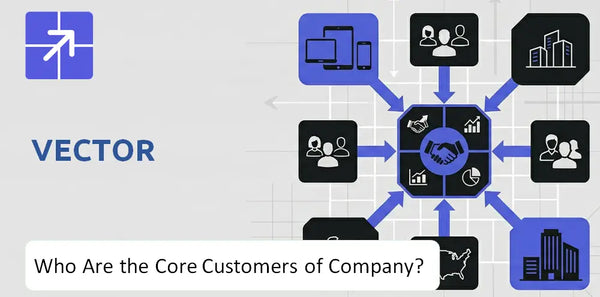
Vector Limited serves residential, commercial, and municipal customers across Auckland as the city electrifies and grows. This matters because Vector's 2025 shift toward digital grid services and EV infrastructure links revenue to urban decarbonization targets and rising electricity demand.
Investors should note Vector's product mix now includes grid services and energy tech; see Vector BCG Matrix Analysis for portfolio positioning and margin visibility.
Who Is Vector Trying to Win?
Vector Limited targets three core customer groups: about 625,000 residential and small-business electricity consumers in Greater Auckland, over 118,000 North Island gas distribution customers, and high-value enterprise and telco clients for fiber backhaul and point-to-point services; the firm is also prioritizing prosumers integrating solar, batteries, and EVs.
 Main customer group: Greater Auckland electricity users
The primary vector company target market comprises approximately 625,000 residential and small-business electricity customers in Greater Auckland, a regulated natural monopoly that delivers steady, tariff – regulated revenue and underpins Vector Limited's cash flow.
Secondary groups: gas customers and prosumers
Vector Company customer segments include over 118,000 gas distribution customers across the North Island (residential and light industrial) and a growing base of prosumers – households and businesses adopting solar, batteries, and EVs that demand two – way grid services and smart meters.
Customer type and market role: mixed consumer and B2B focus
Vector Limited serves a mixed customer base: mass-market consumers for regulated utilities and business customers for gas and fiber services; enterprise clients and telecommunications providers pay premium rates for backhaul and point-to-point connectivity.
Most important segment by revenue and scale
The Greater Auckland electricity consumer base is the most important segment by scale and regulated revenue, while fiber and enterprise contracts drive higher margin growth opportunities; see operational context in How Vector Company Works and Makes Money.
Vector SWOT Analysis
- Complete SWOT Breakdown
- Fully Customizable
- Editable in Excel & Word
- Professional Formatting
- Investor-Ready Format

What Do Vector's Customers Care About Most?
Reliability, price transparency, and energy autonomy drive demand for Vector Limited in the 2025 fiscal year. Auckland residentials want smart EV charging and home energy integration; commercial clients demand high-capacity electrification and rapid grid restoration for decarbonization and resilience.

Grid resilience and rapid restoration
Following extreme weather events, Auckland customers prioritize faster outage response and hardened distribution networks; utilities benchmarks show +30% willingness to pay for improved restoration performance in 2025 surveys.
Transparent, predictable pricing
Customers choose Vector Limited when tariffs are clear and avoid bill volatility; price transparency reduces churn risk and supports adoption of time-of-use and smart-charging tariffs.
Decarbonization capacity for industry
Commercial and industrial clients require high-capacity connections to electrify processes; demand driven by regulatory targets and internal ESG goals increased C&I connection requests by 18% in 2025 YTD.
Smart EV charging and home energy control
With EV penetration projected to exceed 25% of Auckland's fleet by late 2026, residential buyers value smart charging that avoids peak charges and integrates rooftop solar and batteries for energy autonomy.
Operational simplicity and fast service
Customers reward easy onboarding, rapid permitting, and digital account management; faster service cycles correlate with higher retention among small business and residential segments.
Why customers pick Vector Limited
Vector Limited wins on reliable distribution, capacity for large electrification projects, and integrated smart-energy offerings; see Mission, Vision, and Values of Vector Company for corporate positioning and stakeholder priorities.
Vector Business Model Canvas
- One-time Payment
- No Research Needed – Save Hours of Work
- Built by Experts, Trusted by Consultants
- Instant Download, Ready to Use
- 100% Editable, Fully Customizable

Where Is Demand Strongest for Vector?
Demand is strongest in the Auckland metropolitan area, which accounts for the largest share of load and growth; within Auckland the Northwest Corridor and southern greenfield suburbs show the fastest residential connection growth and major commercial demand from data centers.
Main Market: Auckland Metropolitan Core
Auckland generates roughly 37% of New Zealand's GDP and concentrates the vector company target market. The Northwest Corridor and southern greenfield developments drive a 1.8% annual rise in new residential connection points, making core customers of Vector Company predominantly urban households and developers in those precincts.
Secondary Markets: Regional Urban Centers & Commercial
Gas and fiber demand extends into other high-growth North Island cities such as Hamilton and Tauranga, forming important Vector Company customer segments beyond Auckland. Commercially, hyperscale data center projects in Auckland are the fastest-growing commercial buyers, representing large enterprise clients for Vector Company solutions.
Where Vector Is Strongest: Electricity in Auckland; Fiber & Gas Reach
Vector Limited's electricity business is most concentrated and revenue-dense in Auckland, while fiber and gas businesses extend reach into other urban centers – giving the company broad market relevance across residential, developer, and enterprise segments.
Where Demand Is Growing Fastest in 2025/2026
Growth is strongest in Auckland greenfield suburbs and the Northwest Corridor for residential connections, and in hyperscale data center builds for commercial demand; these segments drove the largest incremental load and fiber uptake in 2025. See the company history for context: History and Background of Vector Company
Vector Marketing Mix
- Complete Marketing Mix Analysis
- Effortlessly Communicate Your Business Strategy
- Investor-Ready Format
- 100% Editable and Customizable
- Clear and Structured Layout

How Does Vector Keep Its Audience Growing?
Vector Limited grows its audience by investing in grid future-proofing and digital services, reaching adjacent segments via fiber and AI-driven energy products, improving retention through customer-centric distributed energy management, and strengthening relationships by embedding long-term partnerships into network operations.
How Vector Expands Its Customer Base
Vector expands its target audience for Vector Company by deploying a NZD 550,000,000 annual capital expenditure program in 2025/2026 to upgrade distribution networks, plus fiber rollouts that capture 5G densification demand and attract telecom, commercial, and residential segments.
Customer Retention Drivers
Retention hinges on Symphony's data analytics and AI for distributed energy resources (DERs), predictable infrastructure reliability from ongoing capex, and service bundling (energy, grid services, fiber) that reduces churn among core customers of Vector Company.
Loyalty, Repeat Demand, and Customer Depth
Long-term contracts for grid services, recurring fiber and connectivity revenues, and DER management subscriptions convert one-time buyers into partners; enterprise clients and tech adopters increase lifetime value through upgrades and renewals.
Strongest Customer-Base Growth Lever
The single biggest lever is unavoidable electrification: as New Zealand shifts from fossil fuels, Vector Company customer segments – from households to large industrials – require grid capacity and smart services, making Vector a defensive growth play with upside tied to electrification.
See also Ownership and Control of Vector Company for context on governance and strategic direction.
Vector Boston Consulting Group Matrix
- Built by Experts, Trusted by Consultants
- Structured for Consultants, Students, and Founders
- 100% Editable in Microsoft Word & Excel
- Instant Digital Download – Use Immediately
- Compatible with Mac & PC – Fully Unlocked

Related Blogs
- What Is the History of Vector Company and How Did It Evolve?
- What Is the Competitive Landscape of Vector Company and How Does It Compete?
- What Is the Growth Outlook of Vector Company and Where Is It Heading?
- How Does Vector Company Work and What Drives Its Business Model?
- How Does Vector Company Reach Customers and Turn Demand into Sales?
- What Do the Mission, Vision, and Core Values of Vector Company Reveal?
- Who Owns Vector Company Today and Who Holds Control?
Frequently Asked Questions
Vector's core customer groups are Greater Auckland electricity users, North Island gas customers, and enterprise and telco clients for fiber services. The company also increasingly focuses on prosumers who want solar, batteries, EVs, and two-way grid services.
Disclaimer
All information, articles, and product details provided on this website are for general informational and educational purposes only. We do not claim any ownership over, nor do we intend to infringe upon, any trademarks, copyrights, logos, brand names, or other intellectual property mentioned or depicted on this site. Such intellectual property remains the property of its respective owners, and any references here are made solely for identification or informational purposes, without implying any affiliation, endorsement, or partnership.
We make no representations or warranties, express or implied, regarding the accuracy, completeness, or suitability of any content or products presented. Nothing on this website should be construed as legal, tax, investment, financial, medical, or other professional advice. In addition, no part of this site - including articles or product references - constitutes a solicitation, recommendation, endorsement, advertisement, or offer to buy or sell any securities, franchises, or other financial instruments, particularly in jurisdictions where such activity would be unlawful.
All content is of a general nature and may not address the specific circumstances of any individual or entity. It is not a substitute for professional advice or services. Any actions you take based on the information provided here are strictly at your own risk. You accept full responsibility for any decisions or outcomes arising from your use of this website and agree to release us from any liability in connection with your use of, or reliance upon, the content or products found herein.