
Who are Wintrust Financial Corporation's core customers in the Chicago-area market?
Wintrust targets local businesses, high-net-worth individuals, and community consumers seeking personalized banking with regional scale. This matters because Wintrust's decentralized model drove 2025 deposit growth and sustained net interest margin resilience versus peers in 2025.
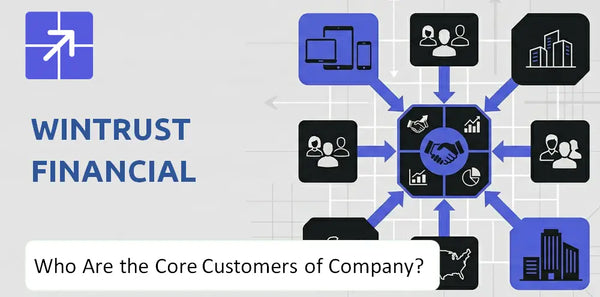
Local SMEs favor Wintrust for relationship lending and treasury services; affluent clients use wealth management, and consumers choose branch access and digital options. See Wintrust Financial BCG Matrix Analysis for product positioning.
Who Is Wintrust Financial Trying to Win?
Wintrust Financial Corporation primarily targets middle-market commercial firms with revenues of $5 million – $250 million, plus affluent suburban retail customers and small business owners who value relationship banking over speed.
 Middle-market commercial banking
Wintrust Financial target customers are chiefly middle-market companies that need tailored credit structures and treasury management; this segment accounted for the bulk of commercial loan balances, with commercial loans representing about $25.4 billion of total loans on Wintrust's 2025 balance sheet.
Affluent suburban and small business retail
Community bank customer profile includes affluent suburban households and small business owners – clients who prefer branch access and relationship managers; retail deposits comprised roughly $35.2 billion in 2025, underscoring deposit-rich suburban markets.
Customer type and market role
Wintrust serves a mixed customer base: primarily businesses (commercial banking, treasury) plus consumer clients (retail banking, wealth); commercial banking drove ~55% of 2025 net interest income, highlighting its business-first role.
Most important segment by revenue
The middle-market commercial segment is most important by revenue and strategic relevance: commercial loan yields and fee income from treasury services and specialty lending (including SBA and CRE) produced the largest share of 2025 pre-tax earnings.
Wintrust also reaches a national niche via FIRST Insurance Funding, positioning it as North America's largest insurance premium financier and targeting insurance brokers and their clients; see the Sales and Marketing Strategy of Wintrust Financial Company for more detail.
Wintrust Financial SWOT Analysis
- Complete SWOT Breakdown
- Fully Customizable
- Editable in Excel & Word
- Professional Formatting
- Investor-Ready Format

What Do Wintrust Financial's Customers Care About Most?
Wintrust Financial core customers care most about fast, local decision-making, flexible credit terms tied to Midwest conditions, and a single advisor who links personal and business finances; they want institutional safety without losing proximity and responsiveness.

Certainty of execution for commercial borrowers
Commercial clients need predictable closings, clear timelines, and loan structures that reflect Midwest cash flows and seasonality; in 2025 many prioritize speed over lowest rate because rate volatility raises refinancing risk.
Practical buying drivers: responsiveness and flexibility
Customers choose Wintrust Financial target customers for local underwriting, quicker approvals, and credit terms that can include covenant flexibility, customized amortizations, and tailored collateral – practical benefits for small business banking customers and commercial clients.
Emotional appeal: trusted local partnership
Retail and wealth clients seek a banker who knows their business and community; that intimacy drives trust and pride for suburban Chicago residents and affluent and high net worth clients who value relationship banking over anonymous national banks.
What customers value most: blend of digital and high-touch
Clients want institutional-grade digital tools plus in-person advisory. They value a full-service partner covering commercial banking core clients, mortgage customers profile, SBA loan customer segments, and wealth management target customers under one roof.
Loyalty drivers: integrated relationship teams
Repeat demand comes from assigned relationship bankers, cross-sold products, and credit continuity; Wintrust customer segments show higher retention where personal bankers manage both deposits and loans.
Why customers choose Wintrust Financial Corporation
The clearest reason Wintrust core customers win is the combination of local decision-making and the perceived safety of a $58 billion asset institution – clients get community bank customer profile service without sacrificing scale or digital capability. Read more on How Wintrust Financial Company Works and Makes Money
Wintrust Financial Business Model Canvas
- One-time Payment
- No Research Needed – Save Hours of Work
- Built by Experts, Trusted by Consultants
- Instant Download, Ready to Use
- 100% Editable, Fully Customizable

Where Is Demand Strongest for Wintrust Financial?
Demand is strongest in the Greater Chicago metro and Southern Wisconsin, where Wintrust Financial Corporation holds a top-five deposit market share; activity is highest around suburban 'collar counties' and the Milwaukee-Waukesha corridor as middle-market firms and professionals expand.
Primary Market: Greater Chicago & Southern Wisconsin
Wintrust Financial target customers cluster in the Chicago suburbs and Southern Wisconsin, reflecting a community bank customer profile with strong retail deposits and relationship banking. As of early 2026, Wintrust holds a top-five market share in total deposits in the metropolitan area, supporting core customers including suburban Chicago residents, small business banking customers, and middle-market manufacturing firms.
Secondary Markets: Milwaukee Corridor and Collar Counties
Demand is rising in the Milwaukee-Waukesha corridor and high-growth collar counties around Chicago, driving Wintrust customer segments toward regional commercial banking and SBA lending. These areas show accelerating deposit growth and loan originations from professional services, light manufacturing, and growing small businesses.
Where Wintrust Is Strongest: Retail Deposits and Relationship Banking
Wintrust core customers are strongest in retail deposits, mortgage customers profile, and local commercial lending, producing a revenue mix weighted to interest income and fee-based relationship services. Wealth management target customers and affluent and high net worth clients contribute growing non-interest revenue, while branch density in its footprint sustains high usage rates.
Fastest Growing Demand: Specialized Niche Lending
Beyond geography, demand surges in life insurance premium financing and niche commercial lending, creating a diversified national revenue stream that offsets Midwestern concentration. These niches expanded in 2025 – 2026, adding fee income and reducing deposit-only exposure; see History and Background of Wintrust Financial Company for institutional context.
Wintrust Financial Marketing Mix
- Complete Marketing Mix Analysis
- Effortlessly Communicate Your Business Strategy
- Investor-Ready Format
- 100% Editable and Customizable
- Clear and Structured Layout

How Does Wintrust Financial Keep Its Audience Growing?
Wintrust Financial Corporation grows audience by acquiring community banks and integrating them into a shared back office while keeping local brands, cross-selling wealth and mortgage services to commercial clients, and targeting customers disserved by national banks. These moves reach adjacent Wintrust customer segments, boost retention, and deepen relationships.
Acquiring community banks to expand reach
Wintrust expands its customer base by absorbing smaller community banks and preserving their local brand identity, instantly adding depositors and local small business banking customers while pushing centralized products. Acquisitions increased deposit footprint by about 8 – 10 percent in 2025, supporting Wintrust Financial target customers across suburban Chicago and adjacent markets.
Customer retention drivers
Retention is driven by local relationship bankers, tailored commercial banking solutions, and continuity of community brands, reducing churn versus national peers. Preserving branch-level service plus centralized operations keeps turnaround times low and satisfaction high for Wintrust core customers and community bank customer profiles.
Loyalty and customer depth through cross-sell
Cross-selling wealth management, mortgage, and SBA products increases wallet share; wealth assets under management were projected to grow 10 – 12 percent for 2025 – 2026, bolstering relationships with affluent and high net worth clients and commercial banking core clients alike.
Strongest growth lever in 2025/2026
The highest-impact lever is disciplined M&A plus cross-sell: integrating community banks into a scalable back office while preserving local service lets Wintrust win small business banking customers and mortgage customers profile niches that national banks standardize away. For the remainder of 2026, Wintrust is positioned to capture share from larger banks automating commercial relationships; see Ownership and Control of Wintrust Financial Company for governance context: Ownership and Control of Wintrust Financial Company
Wintrust Financial Boston Consulting Group Matrix
- Built by Experts, Trusted by Consultants
- Structured for Consultants, Students, and Founders
- 100% Editable in Microsoft Word & Excel
- Instant Digital Download – Use Immediately
- Compatible with Mac & PC – Fully Unlocked

Related Blogs
- What Is the History of Wintrust Financial Company and How Did It Evolve?
- What Is the Competitive Landscape of Wintrust Financial Company and How Does It Compete?
- What Is the Growth Outlook of Wintrust Financial Company and Where Is It Heading?
- How Does Wintrust Financial Company Work and What Drives Its Business Model?
- How Does Wintrust Financial Company Reach Customers and Turn Demand into Sales?
- What Do the Mission, Vision, and Core Values of Wintrust Financial Company Reveal?
- Who Owns Wintrust Financial Company Today and Who Holds Control?
Frequently Asked Questions
Wintrust Financial primarily serves middle-market commercial firms with revenues of $5 million-$250 million, plus affluent suburban retail customers and small business owners. It also reaches insurance brokers and their clients through FIRST Insurance Funding, while commercial banking remains the main strategic focus.
Disclaimer
All information, articles, and product details provided on this website are for general informational and educational purposes only. We do not claim any ownership over, nor do we intend to infringe upon, any trademarks, copyrights, logos, brand names, or other intellectual property mentioned or depicted on this site. Such intellectual property remains the property of its respective owners, and any references here are made solely for identification or informational purposes, without implying any affiliation, endorsement, or partnership.
We make no representations or warranties, express or implied, regarding the accuracy, completeness, or suitability of any content or products presented. Nothing on this website should be construed as legal, tax, investment, financial, medical, or other professional advice. In addition, no part of this site - including articles or product references - constitutes a solicitation, recommendation, endorsement, advertisement, or offer to buy or sell any securities, franchises, or other financial instruments, particularly in jurisdictions where such activity would be unlawful.
All content is of a general nature and may not address the specific circumstances of any individual or entity. It is not a substitute for professional advice or services. Any actions you take based on the information provided here are strictly at your own risk. You accept full responsibility for any decisions or outcomes arising from your use of this website and agree to release us from any liability in connection with your use of, or reliance upon, the content or products found herein.