
How does 23andMe convert consumer DNA tests into a data-driven drug-discovery business?
23andMe sells consumer genetic kits to build a proprietary genomic database, then licenses insights and advances its own drug pipeline. This matters as 2025 revenue mix and R&D milestones require shifting from one-time kit sales to recurring clinical partnerships and subscriptions.
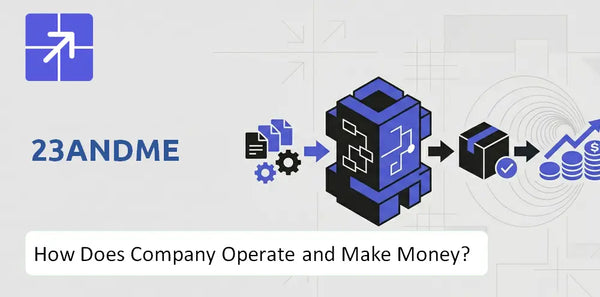
Focus on recurring revenue: bundle health subscriptions and partner licensing to stabilize cash flow; see 23andMe BCG Matrix Analysis for product-position context.
What Does 23andMe Actually Sell?
23andMe sells direct-to-consumer genetic testing kits and subscription reports, plus enterprise access to aggregated, de-identified genomic data for drug discovery. Customers pay for ancestry and health reports, ongoing 23andMe+ insights, and for pharmaceutical partners the firm's Research-as-a-Service data access.
 Core consumer products: Ancestry and Health kits
23andMe genetic testing company sells saliva-based kits that generate ancestry and health reports, including carrier status, trait reports, and predispositions for conditions such as Type 2 Diabetes and Alzheimer's. Customers buy the test kit (buy 23andMe kit online price varies by promotion) and receive DNA analysis and downloadable reports.
Subscription: 23andMe+ membership and ongoing reports
23andMe offers 23andMe+ subscription and membership model that provides updated health reports, pharmacogenetic insights, and clinical research updates; this increases customer lifetime value and recurring revenue. The subscription complements one-time kit sales by delivering continuous, research-driven content.
Enterprise product: Research-as-a-Service and data licensing
For pharmaceutical partners 23andMe sells access to a de-identified database of over 15 million genotyped individuals, with roughly 80 percent consented for research; this is packaged as Research-as-a-Service and data licensing to support target discovery and validation. Revenue from genetic data monetization and partnerships is a material part of 23andMe revenue streams.
Who buys it: consumers and pharma/biotech
Primary buyers are individual consumers seeking ancestry and health reports, and enterprise clients – pharmaceutical and biotech firms – buy access for clinical research and drug target identification. Healthcare researchers and academic partners also license datasets or collaborate on studies.
Customer value: actionable personal and research insights
Consumers get personalized ancestry breakdowns, trait explanations, and health risk indicators (how accurate are 23andMe health reports varies by condition and is disclosed per report). Enterprise clients gain statistically powered cohorts to accelerate target discovery and increase probability of clinical success.
Differentiators: scale, consented research cohort, and speed
23andMe stands out for scale – over 15 million genotypes – and a high consent rate for research, enabling faster signal detection versus smaller datasets. The combined consumer-to-research model links purchase-driven sample collection to genetic data monetization and partnerships with pharmaceutical companies. See Competitive Landscape of 23andMe Company for context.
23andMe SWOT Analysis
- Complete SWOT Breakdown
- Fully Customizable
- Editable in Excel & Word
- Professional Formatting
- Investor-Ready Format

How Does 23andMe Run Its Business Day to Day?
23andMe runs as a logistics-driven bioinformatics loop: saliva kits flow to lab partners, genotypes are digitized, and cloud algorithms turn raw data into consumer reports while an internal therapeutics team mines the aggregated dataset to feed a drug pipeline and partner programs.

Operating model: integrated consumer genomics and R&D
Day-to-day operations combine e-commerce, third-party genotyping labs, and cloud bioinformatics to deliver ancestry and health reports. The loop closes when aggregated, consented data informs therapeutic discovery and licensing.
Product delivery: kit distribution to app-based reports
Customers buy or subscribe online, receive a saliva collection kit, mail it back, and access ancestry and health reports via the mobile app or web portal – typical result times are under 6 weeks from sample receipt.
Production & sourcing: outsourced genotyping, in-house analytics
Genotyping microarrays are processed by third-party labs; 23andMe retains proprietary pipelines for genotype calling, quality control, and report generation. Therapeutics work is run by internal scientists using the same aggregated dataset for target discovery.
Sales channels: direct-to-consumer plus partnerships
Primary channels are direct e-commerce and retail; B2B ties include research collaborations and licensing to pharma partners, supporting revenue streams beyond kit sales and subscriptions.
Key assets, systems & partnerships
Critical assets are the millions of genotyped customers, cloud-based bioinformatics, consented phenotype database, and partnerships with genotyping labs and pharma collaborators such as GSK for therapeutics development.
What makes the model work in practice
Scalability rests on repeatable logistics (kit fulfillment and lab processing), automated cloud pipelines that convert raw SNP data into consumer reports, and monetizable aggregated data used to advance drug candidates – turning DTC customers into a research asset.
For governance and ownership context see Ownership and Control of 23andMe Company
23andMe Business Model Canvas
- One-time Payment
- No Research Needed – Save Hours of Work
- Built by Experts, Trusted by Consultants
- Instant Download, Ready to Use
- 100% Editable, Fully Customizable

How Does Revenue Flow Through 23andMe?
Revenue flows into 23andMe through direct-to-consumer DNA kit sales and a growing research/therapeutics business; kit demand converts to immediate cash while aggregate genetic data and partnerships drive higher-margin, long-term revenue.
Primary revenue: Consumer genetic testing and subscriptions
Most 23andMe business model cash comes from selling DNA kits priced between $99 and $229 in 2025 and from the 23andMe+ subscription introduced as a recurring revenue stabilizer, converting one-time buyers into annual payers and improving customer lifetime value.
Additional revenue: Research services and data licensing
23andMe revenue streams include multi-year collaborations and data-licensing with pharma, yielding upfront fees, milestone payments, and potential royalties tied to drug approvals; in 2025 research deals account for a growing share of total contractual revenue.
Pricing and monetization model
The company monetizes demand via direct sales of kits, an annual subscription (23andMe+), and licensing/partnership agreements; revenue types include product sales, subscription fees, upfront collaboration payments, milestone receipts, and future royalty streams.
What drives revenue most
Short term: kit sales and subscription take rates drive cash flow; long term: therapeutics and pharma partnerships drive high-margin upside – one approved drug could exceed annual kit revenue by multiples. See the company's customer-to-partner conversion dynamics in Sales and Marketing Strategy of 23andMe Company
23andMe Marketing Mix
- Complete Marketing Mix Analysis
- Effortlessly Communicate Your Business Strategy
- Investor-Ready Format
- 100% Editable and Customizable
- Clear and Structured Layout

What Makes 23andMe's Model Sustainable or Fragile?
The 23andMe business model is sustainable where its unique genetic database creates a competitive moat, but fragile due to falling direct-to-consumer kit sales, steep cash burn, regulatory/legal exposure, and dependence on an uncertain drug pipeline.
Database as a Competitive Moat
23andMe genetic testing company benefits from one of the largest consumer-genomics datasets, enabling data licensing and discovery deals that competitors and traditional biotech struggle to replicate. This asset supports diversified 23andMe revenue streams beyond ancestry and health reports.
Assets, Partnerships, and Capabilities
The company combines direct consumer reach, branded kits, an established subscription offering, and partnerships with pharmaceutical companies to monetize genetic data through clinical research and data licensing. Existing alliances and a consumer base give it scale to negotiate research collaborations.
Dependencies and Structural Constraints
Revenue depends on a saturated kit market, growth in subscription and health services, and successful monetization of genetic data – each constrained by privacy concerns, regulatory scrutiny after past breaches, and high customer acquisition costs. The pipeline-to-revenue lag is long: therapeutics require years and often >1 billion USD per approved drug.
Durability in 2025/2026
As of 2025 the model looks precarious: core kit sales show relative saturation, cash runway tightened by heavy R&D and SG&A, and legal/regulatory costs rose after privacy incidents. The firm's viability hinges on a major clinical milestone or pivot to a subscription-first health platform to stabilize revenues; otherwise, exposure remains high.
For deeper financial context and investor implications see Growth Outlook of 23andMe Company
23andMe Boston Consulting Group Matrix
- Built by Experts, Trusted by Consultants
- Structured for Consultants, Students, and Founders
- 100% Editable in Microsoft Word & Excel
- Instant Digital Download – Use Immediately
- Compatible with Mac & PC – Fully Unlocked

Related Blogs
- What Is the History of 23andMe Company and How Did It Evolve?
- What Is the Competitive Landscape of 23andMe Company and How Does It Compete?
- What Is the Growth Outlook of 23andMe Company and Where Is It Heading?
- How Does 23andMe Company Reach Customers and Turn Demand into Sales?
- What Do the Mission, Vision, and Core Values of 23andMe Company Reveal?
- Who Are the Core Customers in 23andMe Company's Target Market?
- Who Owns 23andMe Company Today and Who Holds Control?
Frequently Asked Questions
23andMe sells direct-to-consumer genetic testing kits, 23andMe+ subscriptions, and enterprise access to de-identified genomic data. Consumers buy ancestry and health reports, while pharmaceutical and biotech partners pay for Research-as-a-Service and data licensing for discovery and validation work.
Disclaimer
All information, articles, and product details provided on this website are for general informational and educational purposes only. We do not claim any ownership over, nor do we intend to infringe upon, any trademarks, copyrights, logos, brand names, or other intellectual property mentioned or depicted on this site. Such intellectual property remains the property of its respective owners, and any references here are made solely for identification or informational purposes, without implying any affiliation, endorsement, or partnership.
We make no representations or warranties, express or implied, regarding the accuracy, completeness, or suitability of any content or products presented. Nothing on this website should be construed as legal, tax, investment, financial, medical, or other professional advice. In addition, no part of this site - including articles or product references - constitutes a solicitation, recommendation, endorsement, advertisement, or offer to buy or sell any securities, franchises, or other financial instruments, particularly in jurisdictions where such activity would be unlawful.
All content is of a general nature and may not address the specific circumstances of any individual or entity. It is not a substitute for professional advice or services. Any actions you take based on the information provided here are strictly at your own risk. You accept full responsibility for any decisions or outcomes arising from your use of this website and agree to release us from any liability in connection with your use of, or reliance upon, the content or products found herein.