
How does ArcBest combine asset-heavy LTL operations with asset-light logistics to generate revenue?
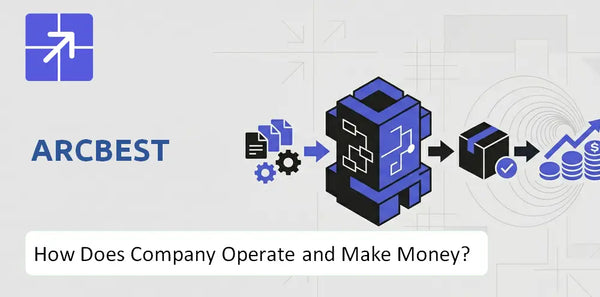
ArcBest mixes unionized less-than-truckload (LTL) operations with asset-light brokerage and tech-enabled logistics to smooth margins and capture supply-chain value. This matters as 2025 revenue mix shifts toward higher-margin ABF Freight and ArcBest Technology Services growth, signaling structural change.
Focus on capacity optimization and border-crossing logistics; a tighter network lowers operating ratio and improves free cash flow. See the ArcBest BCG Matrix Analysis
What Does ArcBest Actually Sell?
ArcBest sells freight movement and supply-chain management: core Less-Than-Truckload (LTL) via ABF Freight, brokerage capacity across full truckload and expedited lanes, final-mile delivery for large consumer goods, and managed transportation including visibility, warehousing coordination, and analytics. Customers pay for reliable capacity, end-to-end logistics orchestration, and data-driven cost and service optimization.
 Core Offerings: Multi-modal freight and logistics solutions
ArcBest company markets LTL freight services through ABF Freight as its flagship product, moving smaller shipments that don't need a full trailer. It complements LTL with an asset-light brokerage business selling full truckload, expedited shipping, and final-mile delivery, plus third-party logistics 3PL managed transportation platforms and warehousing coordination.
Who Buys It: Shippers needing flexible freight options
Buyers include manufacturers, retailers, distributors, and e-commerce sellers needing LTL or full-truck capacity, time-critical expedited lanes, or bulky final-mile delivery. Large shippers and mid-market firms also contract ArcBest for outsourced logistics (3PL) and managed transportation services for multi-modal moves.
Customer Value: Reliability, visibility, and cost control
Customers get guaranteed LTL coverage via ABF's network, on-demand capacity from brokerage partners, and managed-transportation analytics that reduce empty miles and optimize routing. In 2025 ArcBest reported consolidated revenue of $4.4 billion, reflecting demand for integrated logistics and capacity solutions that lower total landed cost.
Differentiator: Integrated asset-light plus asset-backed mix
ArcBest business model blends ABF's asset-backed LTL strength with an asset-light brokerage, so customers can access capacity without negotiating many carriers. Technology for shipment visibility and data-driven pricing helps the firm manage yields; its hybrid model supports scale and margin diversification versus pure carriers. See Mission, Vision, and Values of ArcBest Company for company context.
ArcBest SWOT Analysis
- Complete SWOT Breakdown
- Fully Customizable
- Editable in Excel & Word
- Professional Formatting
- Investor-Ready Format

How Does ArcBest Run Its Business Day to Day?
ArcBest runs day-to-day on a dual-track model: an Asset-Based network of roughly 240 service centers and company-owned trucks for LTL freight, and an Asset-Light clearinghouse using the Vantage platform to match freight with over 45,000 third-party carriers. Shipments flow from pickup through consolidation at hubs, then dispatch via owned or contracted capacity while real-time systems manage pricing, tracking, and capacity.

Dual-Track Operating Model
ArcBest company operates both asset-based LTL freight services and an asset-light brokerage. The hub-and-spoke network handles shipments via a unionized fleet while Vantage routes overflow and irregular demand to third-party logistics 3PL partners.
How Customers Access and Use Services
Customers book ArcBest logistics services via digital portals, API integrations, or sales reps; they choose ground, expedited, or specialized options and receive rate quotes that combine owned LTL pricing with asset-light brokerage rates.
How Shipments Are Sourced and Built
Pickup occurs at customer sites, then freight is consolidated at one of ~240 service centers; cross-dock sorting prepares loads for final-mile or regional moves using company drivers or Vantage-sourced carriers.
Sales Channels and Distribution
Primary channels include direct sales, online booking, and partnerships; distribution mixes ArcBest-owned dispatch for core lanes and third-party carrier networks for peak or long-tail lanes to maintain coverage and pricing flexibility.
Key Assets, Systems, and Partnerships
Critical assets are 240 service centers, a unionized driver base, the Vantage digital platform, and a carrier network of > 45,000. Strategic partnerships and acquisitions expand brokerage capacity and specialized services.
What Makes the Model Work in Practice
Scalability comes from Vantage enabling instant capacity shifts without buying trucks, while the asset-based footprint ensures predictable service and pricing for core lanes – this mix supports margin management and revenue diversification.
For historical context and strategic moves that shaped the dual model see History and Background of ArcBest Company
ArcBest Business Model Canvas
- One-time Payment
- No Research Needed – Save Hours of Work
- Built by Experts, Trusted by Consultants
- Instant Download, Ready to Use
- 100% Editable, Fully Customizable

How Does Revenue Flow Through ArcBest?
Revenue at ArcBest company flows from freight charges and brokerage spreads; demand from shippers converts into cash via contracted LTL moves and spot-market transactions. The model mixes asset-based LTL pricing with asset-light brokerage margins and logistics cross-sales to lift share of wallet.
Main revenue: Asset-Based LTL
Asset-based LTL freight services drive the largest slice of revenue, roughly 60% of total revenue as of early 2026, via per-hundredweight yields set by weight, distance, freight class, and fuel surcharges. Yield management and maximizing revenue per hundredweight matter most because they directly expand operating margin on owned network volumes.
Additional revenue: Asset-Light & Logistics
The remaining roughly 40% comes from asset-light transportation and third-party logistics 3PL services where ArcBest earns the spread between shipper price and third-party carrier cost. Cross-selling logistics services, expedited shipping, and value-added warehousing increases per-customer revenue.
Pricing and monetization model
Monetization blends freight rates (per CWT), fuel surcharges, contract minimums, and brokerage markups; long-term contracts provide predictable revenue while spot-market pricing captures upside during tight capacity. Service fees and logistics contract margins add recurring revenue.
What drives revenue most
Revenue hinges on network capacity utilization, yield per hundredweight in LTL, brokerage spread capture in asset-light segments, and cross-sell penetration into existing LTL customers. Volume mix shifts between contracted and spot business and fuel/operational cost pass-throughs materially affect margins. Read more on market positioning in Competitive Landscape of ArcBest Company
ArcBest Marketing Mix
- Complete Marketing Mix Analysis
- Effortlessly Communicate Your Business Strategy
- Investor-Ready Format
- 100% Editable and Customizable
- Clear and Structured Layout

What Makes ArcBest's Model Sustainable or Fragile?
ArcBest company's model balances a premium service reputation and diversified logistics services against structural cost pressures; strengths include integrated brokerage scale and asset-based operations, while risks stem from higher fixed labor costs and sensitivity to US industrial production swings.
Service reputation and one-stop logistics
ArcBest business model rests on differentiated service quality across LTL freight services, expedited ground, and third-party logistics 3PL, letting it command premium yields and customer retention in complex moves.
Brokerage scale and asset integration
MoLo integration expanded asset-light transportation brokerage volume, increasing non-asset revenue share; this complements ArcBest logistics services and spreads fixed-cost leverage across higher-margin brokerage flows.
Labor contracts and cost structure
The 2023-2028 Teamster contract provides operational certainty but sets a high break-on-load floor; ArcBest faces higher fixed-costs versus non-union peers, pressuring margins when freight rates soften.
Demand cyclicality and industrial exposure
Revenue and profitability remain sensitive to US industrial production and freight demand; decreased manufacturing output or freight volumes can quickly widen operating ratios in the asset-based business.
Operating ratio and margin hinge points
For 2025 – 2026, ArcBest must keep an operating ratio below 90% in asset operations to justify premium valuation; historical swings show single-digit percentage points in OR materially alter EBITDA and free cash flow.
Valuation sensitivity and outlook
Professional judgment: ArcBest looks like a premium, resilient operator in 2025 but valuation remains tied to operating performance, brokerage growth, and rate environment; see the Sales and Marketing Strategy of ArcBest Company for related commercial insights Sales and Marketing Strategy of ArcBest Company.
ArcBest Boston Consulting Group Matrix
- Built by Experts, Trusted by Consultants
- Structured for Consultants, Students, and Founders
- 100% Editable in Microsoft Word & Excel
- Instant Digital Download – Use Immediately
- Compatible with Mac & PC – Fully Unlocked

Related Blogs
- What Is the History of ArcBest Company and How Did It Evolve?
- What Is the Competitive Landscape of ArcBest Company and How Does It Compete?
- What Is the Growth Outlook of ArcBest Company and Where Is It Heading?
- How Does ArcBest Company Reach Customers and Turn Demand into Sales?
- What Do the Mission, Vision, and Core Values of ArcBest Company Reveal?
- Who Are the Core Customers in ArcBest Company's Target Market?
- Who Owns ArcBest Company Today and Who Holds Control?
Frequently Asked Questions
ArcBest sells freight movement and supply-chain management services. Its core offering is Less-Than-Truckload freight through ABF Freight, along with brokerage for full truckload and expedited lanes, final-mile delivery, and managed transportation services. Customers pay for reliable capacity, logistics coordination, and data-driven cost control.
Disclaimer
All information, articles, and product details provided on this website are for general informational and educational purposes only. We do not claim any ownership over, nor do we intend to infringe upon, any trademarks, copyrights, logos, brand names, or other intellectual property mentioned or depicted on this site. Such intellectual property remains the property of its respective owners, and any references here are made solely for identification or informational purposes, without implying any affiliation, endorsement, or partnership.
We make no representations or warranties, express or implied, regarding the accuracy, completeness, or suitability of any content or products presented. Nothing on this website should be construed as legal, tax, investment, financial, medical, or other professional advice. In addition, no part of this site - including articles or product references - constitutes a solicitation, recommendation, endorsement, advertisement, or offer to buy or sell any securities, franchises, or other financial instruments, particularly in jurisdictions where such activity would be unlawful.
All content is of a general nature and may not address the specific circumstances of any individual or entity. It is not a substitute for professional advice or services. Any actions you take based on the information provided here are strictly at your own risk. You accept full responsibility for any decisions or outcomes arising from your use of this website and agree to release us from any liability in connection with your use of, or reliance upon, the content or products found herein.