
How does Autodesk Company convert professional design tools into a predictable, subscription-driven business?
Autodesk Company sells software for design, construction, and manufacturing, shifting users from perpetual licenses to cloud subscriptions. This stabilizes revenue and ties clients into workflows; in 2025 subscription revenue growth and cloud adoption were key signals of resilience.
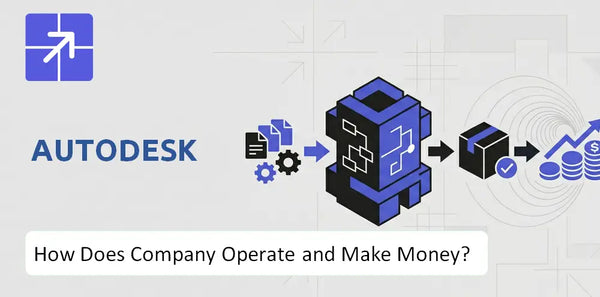
Focus pricing on multi-year enterprise contracts and promote integrations to raise switching costs; see Autodesk BCG Matrix Analysis for product positioning and revenue mix implications.
What Does Autodesk Actually Sell?
Autodesk sells industry-focused design and engineering software and cloud platforms that let professionals create 3D models, run simulations, and manage construction and manufacturing data; customers pay for software, cloud workflows, and recurring access to integrated toolsets that digitize project delivery and product development.
 Core product suites and platforms
Autodesk offers Industry Collections – bundled toolsets by sector – plus standalones and cloud services. The AEC collection centers on Revit and Civil 3D; manufacturing gets Fusion (cloud-native CAD/CAM/CAE); media receives Maya and 3ds Max; BIM 360/Autodesk Construction Cloud handle project data and collaboration.
Main buyer groups
Buyers include architecture, engineering, and construction firms; manufacturers and product designers; media and VFX studios; and enterprise owners managing capital projects. Purchases come from IT and procurement for subscriptions and from project teams for user seats and cloud services.
Practical customer value
Customers gain digitized workflows that reduce rework and material waste, ensure regulatory compliance, and enable global collaboration. For example, firms using Revit plus BIM 360 report faster coordination and fewer onsite clashes, lowering project delays and cost overruns.
Why Autodesk's offering stands out
Autodesk combines deep, sector-specific tools with cloud collaboration and an API ecosystem, supporting migrations from legacy CAD to subscription. Its subscription model and recurring revenue emphasize cloud services – Autodesk reported $4.6 billion revenue for fiscal 2025, driven by growth in subscriptions and Autodesk Construction Cloud adoption.
Mission, Vision, and Values of Autodesk Company
Autodesk SWOT Analysis
- Complete SWOT Breakdown
- Fully Customizable
- Editable in Excel & Word
- Professional Formatting
- Investor-Ready Format

How Does Autodesk Run Its Business Day to Day?
Autodesk runs day-to-day as a cloud-first SaaS operator: platform-hosted apps, subscription billing, integrated data flows, and development sprint cycles keep products current and connected to customers.

Cloud-first operating model
Operations center on a platform delivery model where products are hosted, updated continuously, and measured by usage metrics; the New Transaction Model, live in early 2026, routes billing through Autodesk even for reseller-facilitated deals, improving revenue visibility and upsell targeting.
Product and service delivery to customers
Customers access tools via subscriptions to cloud-hosted apps and the Autodesk Construction Cloud; self-serve portals, enterprise contracts, and reseller channels all feed into a unified billing and entitlement system for about 7.2 million active subscribers.
Development, sourcing, and product build
Cross-functional engineering squads run agile sprints focused on integrating Autodesk AI across the portfolio to automate tasks like generative building layouts and toolpath optimization; cloud infrastructure (AWS/Azure/GCP) and in-house services host models and data pipelines.
Sales channels and distribution
Direct digital sales, enterprise account teams, and a global reseller network distribute subscriptions; the New Transaction Model lets Autodesk invoice end customers directly, improving recurring revenue capture and enabling targeted upsell campaigns based on granular usage data.
Key assets, systems, and partnerships
Core assets include the Autodesk Construction Cloud, integrated AI services, entitlement/billing platforms, and APIs; strategic partnerships with cloud providers and large resellers scale delivery and ensure uptime and compliance across regions.
What makes the model work in practice
Centralized data and subscription billing enable predictable recurring revenue and targeted monetization; Autodesk leverages real-time job-site to back-office data to keep software relevant post-sale and drive renewals and add-on purchases – see Target Customers and Market of Autodesk Company for market context.
Autodesk Business Model Canvas
- One-time Payment
- No Research Needed – Save Hours of Work
- Built by Experts, Trusted by Consultants
- Instant Download, Ready to Use
- 100% Editable, Fully Customizable

How Does Revenue Flow Through Autodesk?
Revenue flows mainly from subscriptions, with demand converted into recurring payments via annual/multi-year plans, enterprise agreements, and token-based Flex purchases; the AEC and Manufacturing segments channel most cash into the business.
Core subscription revenue: recurring seats and seats-for-enterprise
Autodesk business model centers on subscription sales – annual and multi-year licenses – that generate predictable recurring revenue. For fiscal 2026 Autodesk reports recurring revenue at approximately 94 percent of total, driving stability and valuation for investors.
Additional channels: EBAs and token-based Flex
Enterprise Business Agreements (EBAs) bill large global firms based on actual consumption, while the Flex token model converts occasional users into paying customers. Together these Autodesk revenue streams supplement seat-based subscriptions and capture variable demand.
Pricing and monetization mechanics
Monetization is subscription-first (SaaS and cloud), with price adjustments, tiered enterprise pricing, consumption billing, and token packs. Autodesk subscription pricing and plans emphasize renewals and upsells to expand average revenue per user.
Main revenue drivers: segment mix and retention
The AEC segment contributes roughly 48 percent of revenue and Manufacturing about 26 percent; high net revenue retention (around 100 – 110 percent) plus conversion of non-compliant users and targeted price increases push fiscal 2026 revenue toward $6.8 billion. See a focused market view in Competitive Landscape of Autodesk Company
Autodesk Marketing Mix
- Complete Marketing Mix Analysis
- Effortlessly Communicate Your Business Strategy
- Investor-Ready Format
- 100% Editable and Customizable
- Clear and Structured Layout

What Makes Autodesk's Model Sustainable or Fragile?
Autodesk's model is sustainable because extreme switching costs and entrenched file formats lock customers in, but fragile due to sensitivity to macro cycles like interest rates and capex cuts; throne threats include cloud-native rivals and cyclical seat growth risks.
Moat from Switching Costs and Network Effects
Revit and AutoCAD create high switching costs: firms train staff, build libraries, and archive project data in Autodesk formats, making migration costly and slow. This supports elevated pricing power and recurring revenue under the Autodesk subscription model.
Key Assets and Platform Capabilities
Autodesk's portfolio spans AutoCAD, Revit, Fusion, and BIM 360 with broad integrations and APIs that embed the company into workflows across AEC and manufacturing. Scale and brand give it distribution advantages and partner ecosystems that sustain recurring revenue streams.
Dependencies and Concentration Risks
Revenue is exposed to construction and manufacturing capex cycles; seat growth can slow if commercial real estate and industrial investment contract. The model also depends on continued adoption of subscription billing and enterprise renewals, plus execution on cloud and AI transitions.
Durability Assessment for 2025 – 2026
For 2026 I judge Autodesk a high-quality defensive asset: direct billing adoption and AI-driven efficiency lift margins and stickiness, supporting non-GAAP operating margins near 36 percent. Still, short-term fragility exists if interest rates or global infrastructure spending fall and cloud-native SaaS competitors accelerate wins in construction tech.
See additional governance context in this companion piece on Ownership and Control of Autodesk Company.
Autodesk Boston Consulting Group Matrix
- Built by Experts, Trusted by Consultants
- Structured for Consultants, Students, and Founders
- 100% Editable in Microsoft Word & Excel
- Instant Digital Download – Use Immediately
- Compatible with Mac & PC – Fully Unlocked

Related Blogs
- What Is the History of Autodesk Company and How Did It Evolve?
- What Is the Competitive Landscape of Autodesk Company and How Does It Compete?
- What Is the Growth Outlook of Autodesk Company and Where Is It Heading?
- How Does Autodesk Company Reach Customers and Turn Demand into Sales?
- What Do the Mission, Vision, and Core Values of Autodesk Company Reveal?
- Who Are the Core Customers in Autodesk Company's Target Market?
- Who Owns Autodesk Company Today and Who Holds Control?
Frequently Asked Questions
Autodesk sells industry-focused design and engineering software plus cloud platforms. Its products let professionals create 3D models, run simulations, and manage construction and manufacturing data. Customers pay for software access, cloud workflows, and integrated toolsets that support project delivery and product development.
Disclaimer
All information, articles, and product details provided on this website are for general informational and educational purposes only. We do not claim any ownership over, nor do we intend to infringe upon, any trademarks, copyrights, logos, brand names, or other intellectual property mentioned or depicted on this site. Such intellectual property remains the property of its respective owners, and any references here are made solely for identification or informational purposes, without implying any affiliation, endorsement, or partnership.
We make no representations or warranties, express or implied, regarding the accuracy, completeness, or suitability of any content or products presented. Nothing on this website should be construed as legal, tax, investment, financial, medical, or other professional advice. In addition, no part of this site - including articles or product references - constitutes a solicitation, recommendation, endorsement, advertisement, or offer to buy or sell any securities, franchises, or other financial instruments, particularly in jurisdictions where such activity would be unlawful.
All content is of a general nature and may not address the specific circumstances of any individual or entity. It is not a substitute for professional advice or services. Any actions you take based on the information provided here are strictly at your own risk. You accept full responsibility for any decisions or outcomes arising from your use of this website and agree to release us from any liability in connection with your use of, or reliance upon, the content or products found herein.