
How does Badger Infrastructure Solutions turn hydro-excavation into a scalable service business?
Badger Infrastructure Solutions sells precision hydro-excavation services to utilities and contractors, using a large fleet and proprietary process to reduce liability and downtime. This matters as the 2025 U.S. infrastructure rebuild and stricter excavation regs drive steady, contract-based demand.
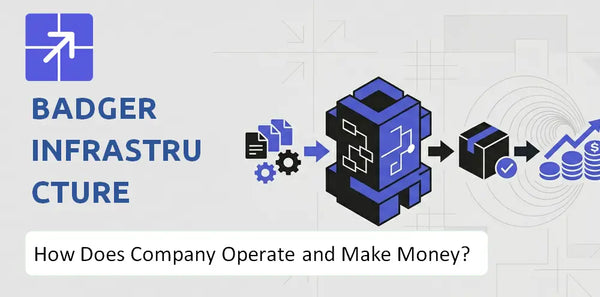
Focus on fleet utilization, recurring municipal contracts, and training to lock in margins; see Badger Infrastructure Solutions BCG Matrix Analysis for product and portfolio context.
What Does Badger Infrastructure Solutions Actually Sell?
Badger Infrastructure Solutions sells non-destructive excavation as a service via its Badger Hydrovac system: custom-engineered vacuum trucks plus trained two-person crews. Customers pay for safe, fast, turnkey daylighting and utility-exposure services that minimize risk to buried assets and operations.
 What the Company Offers
Badger Infrastructure Solutions provides hydrovac excavation using high-pressure water to liquefy soil and a high-capacity vacuum to remove slurry, delivered in a custom-engineered truck with a two-person crew. The offering includes site assessment, daylighting, potholing, slot trenching, and backfill management as a turnkey field service.
Who Buys It
Primary buyers are utilities, telecommunications carriers, gas and electric operators, and civil contractors seeking to avoid damaging fiber, gas mains, or other buried infrastructure. Municipalities and large EPCs (engineering, procurement, construction) contract Badger Infrastructure company for high-risk digs and public works projects.
What Value Customers Get
Customers gain risk mitigation: fewer utility strikes, lower environmental spill risk, and reduced workplace injuries, which translate into lower incident-related costs and regulatory exposure. Jobs finish faster than manual digging, lowering downtime and improving project schedule certainty.
Why the Offering Stands Out
Badger Infrastructure Solutions differentiates on safety and speed: proprietary Badger Hydrovac trucks, standardized crew training, and documented operating procedures reduce third-party damage incidents compared with mechanical excavation. The turnkey model simplifies procurement and billing for contractors and utilities.
In 2025 Badger Infrastructure services contributed materially to contract wins tied to fiber-to-the-home and gas main replacement programs; hydrovac jobs typically reduce utility strike probability by an estimated 70% relative to mechanical digging in open-trench scenarios, and field productivity gains of 20 – 30% shorten average task cycle times. See market and buyer segmentation in Target Customers and Market of Badger Infrastructure Solutions Company
Badger Infrastructure Solutions SWOT Analysis
- Complete SWOT Breakdown
- Fully Customizable
- Editable in Excel & Word
- Professional Formatting
- Investor-Ready Format

How Does Badger Infrastructure Solutions Run Its Business Day to Day?
Badger Infrastructure Solutions runs day-to-day with a decentralized service delivery network of over 130 service centers across North America, backed by centralized manufacturing and technical support from its Red Deer, Alberta facility. Local managers handle dispatch, fleet maintenance, technician scheduling, and slurry management logistics so crews can deploy each morning to emergency and planned excavation projects.

Decentralized delivery, centralized tech
Badger Infrastructure Solutions uses a decentralized service model where local centers run daily operations while centralized engineering and manufacturing in Red Deer enable rapid technical iterations on hydrovac trucks.
Service access and customer engagement
Customers request Badger Infrastructure services via phone, online booking, or contracted dispatch; work orders flow to regional centers and crews are scheduled for same-day emergency or longer-term projects under service contracts.
In-house production and engineering
Badger Infrastructure company vertically integrates design and assembly of hydrovac trucks at its Red Deer plant, allowing continuous product development and cost control versus off-the-shelf equipment suppliers.
Channels for delivery and contracts
Work is delivered through direct contracts, municipal procurement, and emergency call-outs; regional centers manage fleet dispatch to maintain utilization and fulfill long-term infrastructure contracts.
Key assets, systems, and partnerships
Critical assets include the Red Deer assembly facility, a fleet of custom hydrovac trucks, an approved network of slurry disposal sites, and digital dispatch/maintenance systems that track utilization and uptime.
Operational leverage that drives efficiency
Vertical integration and local autonomy let Badger Infrastructure Solutions iterate truck design while keeping regional responsiveness high; slurry management and disposal networks reduce downtime and protect margins.
Each morning, regional dispatchers assign crews to jobs that range from urban emergency water-main digs to multi-week pipeline projects; slurry management – sourcing water and routing excavated mud to approved disposal sites – is coordinated centrally and executed locally to meet regulatory and scheduling constraints. See Competitive Landscape of Badger Infrastructure Solutions Company for context: Competitive Landscape of Badger Infrastructure Solutions Company
Badger Infrastructure Solutions Business Model Canvas
- One-time Payment
- No Research Needed – Save Hours of Work
- Built by Experts, Trusted by Consultants
- Instant Download, Ready to Use
- 100% Editable, Fully Customizable

How Does Revenue Flow Through Badger Infrastructure Solutions?
Revenue flows into Badger Infrastructure Solutions through hourly service rates, mobilization and disposal fees, and contracted work; demand converts to cash when trucks are deployed under MSAs or project contracts and billed by the hour or per job.
Main revenue stream: Hourly service rates and truck utilization
Badger Infrastructure Solutions earns most revenue from hourly service rates billed on field crews and vacuum/utility trucks; management tracks $38,000 to $44,000 average Revenue Per Truck (RPT) per month in 2025, making fleet utilization the core profit lever.
Additional revenue streams: Fees, disposals, and contract types
Secondary income comes from mobilization charges, disposal fees for recovered materials, and premium emergency call-out surcharges; project-based contracts with general contractors add lump-sum billing alongside MSAs.
Pricing and monetization model: Time-and-materials plus ancillary fees
Badger Infrastructure company monetizes work primarily via time-and-materials billing (hourly crew and truck rates), with add-on fees for mobilization and disposal; MSAs set rates and terms but rarely guarantee volumes, so revenue recognition tracks deployed hours.
What drives revenue most: Fleet utilization, MSAs, and US market mix
About 80 percent of 2025 revenue is generated in the United States, concentrating income in larger markets; highest revenue sensitivity is fleet utilization (RPT), speed of response to customer call-outs, and the mix of MSA versus project work. Read more on ownership and contracting here: Ownership and Control of Badger Infrastructure Solutions Company
Badger Infrastructure Solutions Marketing Mix
- Complete Marketing Mix Analysis
- Effortlessly Communicate Your Business Strategy
- Investor-Ready Format
- 100% Editable and Customizable
- Clear and Structured Layout

What Makes Badger Infrastructure Solutions's Model Sustainable or Fragile?
The Badger Infrastructure Solutions model is sustainable where regulatory Safe Digging rules create non – discretionary demand and scale provides mobilization advantage, but it is fragile to skilled labor shortages and volatile diesel and parts costs that compress margins.
Regulatory Floor: Safe Digging Mandates
State-level Safe Digging rules increasingly require hydro-excavation near high-priority underground assets, creating a predictable baseline of work for Badger Infrastructure Solutions and reducing demand cyclicality.
Scale Enables Large Mobilizations
With a fleet exceeding 1,500 units, Badger Infrastructure company can serve multi-state IIJA projects and emergency disaster responses that smaller rivals cannot, supporting higher utilization and contract win rates.
Skilled Labor and Certification Dependency
Hydro – excavation requires CDL-certified operators and trained technicians; wage inflation or multi-month recruitment gaps directly raise labor cost per job and reduce margin on Badger Infrastructure services.
Resilience Outlook for 2025/2026
Benefit from the Infrastructure Investment and Jobs Act (IIJA) funding for grid modernization and fiber expansion keeps demand strong in 2025/2026, yet exposure to diesel price swings and parts lead times leaves the Badger Infrastructure business model moderately vulnerable if cost inflation persists.
Operational levers to monitor: fleet utilization and maintenance uptime, CDL operator headcount and labor cost per hour, and diesel fuel expense as a percentage of operating cost; see History and Background of Badger Infrastructure Solutions Company for context: History and Background of Badger Infrastructure Solutions Company
Badger Infrastructure Solutions Boston Consulting Group Matrix
- Built by Experts, Trusted by Consultants
- Structured for Consultants, Students, and Founders
- 100% Editable in Microsoft Word & Excel
- Instant Digital Download – Use Immediately
- Compatible with Mac & PC – Fully Unlocked

Related Blogs
- What Is the History of Badger Infrastructure Solutions Company and How Did It Evolve?
- What Is the Competitive Landscape of Badger Infrastructure Solutions Company and How Does It Compete?
- What Is the Growth Outlook of Badger Infrastructure Solutions Company and Where Is It Heading?
- How Does Badger Infrastructure Solutions Company Reach Customers and Turn Demand into Sales?
- What Do the Mission, Vision, and Core Values of Badger Infrastructure Solutions Company Reveal?
- Who Are the Core Customers in Badger Infrastructure Solutions Company's Target Market?
- Who Owns Badger Infrastructure Solutions Company Today and Who Holds Control?
Frequently Asked Questions
Badger Infrastructure Solutions sells non-destructive excavation as a service. It uses custom-engineered Badger Hydrovac trucks and trained two-person crews to perform daylighting, potholing, slot trenching, and backfill management while reducing risk to buried assets and operations.
Disclaimer
All information, articles, and product details provided on this website are for general informational and educational purposes only. We do not claim any ownership over, nor do we intend to infringe upon, any trademarks, copyrights, logos, brand names, or other intellectual property mentioned or depicted on this site. Such intellectual property remains the property of its respective owners, and any references here are made solely for identification or informational purposes, without implying any affiliation, endorsement, or partnership.
We make no representations or warranties, express or implied, regarding the accuracy, completeness, or suitability of any content or products presented. Nothing on this website should be construed as legal, tax, investment, financial, medical, or other professional advice. In addition, no part of this site - including articles or product references - constitutes a solicitation, recommendation, endorsement, advertisement, or offer to buy or sell any securities, franchises, or other financial instruments, particularly in jurisdictions where such activity would be unlawful.
All content is of a general nature and may not address the specific circumstances of any individual or entity. It is not a substitute for professional advice or services. Any actions you take based on the information provided here are strictly at your own risk. You accept full responsibility for any decisions or outcomes arising from your use of this website and agree to release us from any liability in connection with your use of, or reliance upon, the content or products found herein.