
How does Bergs Timber AB (publ) capture value by shifting from sawmilling to engineered wood manufacturing?
Bergs Timber AB (publ) transforms roundwood into higher-margin engineered wood products through vertical integration, reducing exposure to log-lumber spreads. This matters as 2025 revenue mix shifts toward processed boards, reflecting a strategic pivot amid stable Nordic timber supply and rising demand for prefabricated construction components.
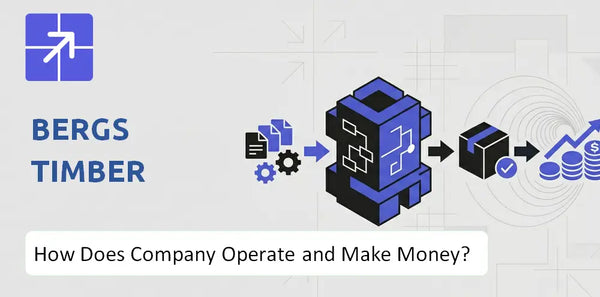
Bergs Timber AB (publ) now emphasizes factory value capture; scale in engineered boards improves margin stability. See product-level implications in Bergs Timber BCG Matrix Analysis.
What Does Bergs Timber Actually Sell?
Bergs Timber AB (publ) sells advanced wood products and architectural solutions – high-performance wooden window frames, external doors, decking, fencing, and noise barriers – often chemically or thermally modified. Customers pay for durable, FSC-certified, long-life timber components and integrated supply services rather than raw sawn timber.
 Product mix: Joinery, Windows, Doors, Garden Products, Wood Protection
Bergs Timber sells finished joinery items and architectural timber systems: high-performance wooden window frames and external doors, decking boards, fencing panels, and acoustic noise barriers. Many items use chemical or thermal modification to extend service life to up to 50 years for treated components.
Who buys it: construction, DIY, and joinery sectors
Main buyers are construction contractors, joinery workshops, building material retailers, and DIY consumers across Sweden and export markets; public projects buy noise barriers and facade systems. Institutional buyers prioritize FSC-certified supply and long-term durability.
Customer value: sustainability, durability, and specification-grade components
Customers get a sustainable alternative to plastic and metal – FSC-certified timber with enhanced rot and weather resistance, lower lifecycle carbon than alternatives, and predictable service life. The company bundles product specification, modification (thermal/chemical), and logistics to reduce contractor risk.
Differentiators: modified wood, certification, and integrated supply
Bergs Timber stands out by offering thermally or chemically modified wood, FSC certification, and value-added joinery production – making it easier to specify in architecture and public procurement. Its product portfolio supports higher margins than commodity sawn timber and ties into Bergs Timber business model and revenue streams focused on processed, specification-led sales.
Ownership and Control of Bergs Timber Company
Bergs Timber SWOT Analysis
- Complete SWOT Breakdown
- Fully Customizable
- Editable in Excel & Word
- Professional Formatting
- Investor-Ready Format

How Does Bergs Timber Run Its Business Day to Day?
Bergs Timber AB (publ) runs daily through a decentralized production and distribution network: precision wood processing in Sweden, Estonia, Latvia, and the UK; logistics moving semi-finished goods from Baltic low-cost plants to Western Europe and Scandinavian markets; ERP and warehouse systems coordinate kiln drying, planing, chemical treatment, and order flow.

Operating model: decentralized precision processing
Bergs Timber operates as a distributed manufacturer with focused processing units rather than large-volume sawmills. Day-to-day work centers on value-adding steps – kiln drying, planing, and preservative treatment – matched to customer specs and downstream retail or construction demand.
Product delivery: order-driven, cross-border logistics
Customers order finished and semi-finished products via distributor agreements and direct B2B contracts; daily dispatch prioritizes inventory for high-demand Western European and Scandinavian hubs, with lead times managed through integrated transport planning and EDI with key retailers.
Production and sourcing: sustainable Nordic and Baltic supply
Raw timber is sourced from sustainably managed Baltic and Nordic forests under certification schemes; timber flows into specialized Baltic processing lines for cost-efficiency, then receives finishing in Sweden or the UK when specifications require. Daily procurement teams monitor stumpage prices and harvest volumes.
Sales channels: distributors, builders merchants, and export
Main channels are wholesalers, builders merchants, and direct contractor sales; exports to Western Europe represent a large share of volumes, routed from Baltic plants to ports and road hubs. Sales teams update pricing weekly to reflect timber market moves.
Key assets and systems: plants, logistics, ERP
Critical assets include specialized planing and treatment lines in Sweden, Estonia, and Latvia; transport fleets and third-party logistics (3PL) partners; and integrated ERP and warehouse management for lot tracking, quality control, and FSC/PEFC compliance documentation.
What makes it work: cost geography and product mix
The model succeeds by combining lower-cost Baltic processing with finishing closer to demand, preserving margin on higher-value, precision-processed products. Daily focus on logistics, inventory turns, and treatment capacity keeps unit costs down and service levels high.
Key daily KPIs tracked: order-to-delivery lead time, inventory days (30 – 60 days typical across lines), kiln throughput, and outbound freight utilization; procurement monitors Baltic stumpage and sawlog prices that can move gross margins by several percentage points. See the company background: History and Background of Bergs Timber Company
Bergs Timber Business Model Canvas
- One-time Payment
- No Research Needed – Save Hours of Work
- Built by Experts, Trusted by Consultants
- Instant Download, Ready to Use
- 100% Editable, Fully Customizable

How Does Revenue Flow Through Bergs Timber?
Revenue at Bergs Timber AB (publ) flows mainly through B2B sales to DIY retailers, construction firms, and manufacturers, converting demand via long-term contracts and seasonal orders; Joinery and Windows/Doors drove roughly 45% of turnover in fiscal 2025. Margin comes from processing raw sawn timber into higher-priced finished, treated, or engineered wood products.
Main revenue stream: Finished joinery and windows/doors
Joinery and Windows/Doors are the primary revenue source, accounting for about 45% of 2025 turnover as bespoke, value-added products sell at a higher price per cubic meter than raw sawn timber.
Additional revenue streams: Garden products and industrial sales
Garden Products generate strong seasonal retail orders in spring/summer; industrial manufacturers and export channels buy bulk sawn timber and components, adding steady B2B volume.
Pricing and monetization model: Margin on value-added processing
Bergs Timber monetizes through product differentiation and processing margins – selling treated and engineered wood at premium prices versus raw sawn timber, secured by long-term supply agreements and spot retail orders.
Key revenue drivers: Product mix, contracts, and timber costs
Revenue is most strongly driven by the share of high-margin joinery and windows/doors, the volume from long-term B2B contracts, seasonal retail demand peaks, and fluctuations in sawn timber input prices.
Mission, Vision, and Values of Bergs Timber Company
Bergs Timber Marketing Mix
- Complete Marketing Mix Analysis
- Effortlessly Communicate Your Business Strategy
- Investor-Ready Format
- 100% Editable and Customizable
- Clear and Structured Layout

What Makes Bergs Timber's Model Sustainable or Fragile?
Bergs Timber AB (publ) gains sustainability from EU green building mandates and demand for carbon-storing wood products, plus proprietary wood treatment tech, but its model is fragile from concentration in UK/Scandinavia, exposure to Baltic energy and labor costs, and sensitivity to raw-material price swings and interest-rate driven housing slowdowns.
Alignment with Green Building Demand
Bergs Timber benefits from rising EU regulation favoring low-carbon materials; 2025 EU policies and procurement targets boost demand for engineered and treated wood used in construction and joinery.
Specialized Wood Treatment and Product Mix
Proprietary wood treatment processes and a premium joinery portfolio create a moat vs generic timber importers, supporting higher margins in selected segments such as windows, doors, and treated cladding.
Market Concentration and Geographic Risk
Heavy reliance on the UK and Scandinavian housing markets concentrates revenue risk; a prolonged residential slowdown or sustained high mortgage rates through 2026 would materially reduce demand for premium joinery and renovation segments.
Resilience Assessment for 2025/2026
Professional judgement for 2025/2026 is that Bergs Timber is positioned for the low-carbon transition but remains profitability-sensitive to Baltic energy and labor cost inflation, sawn timber input volatility, and overall construction activity.
Key assets include integrated sawmill operations, forest products supply chain links, and export channels into northern Europe; see Competitive Landscape of Bergs Timber Company for market context: Competitive Landscape of Bergs Timber Company.
Bergs Timber Boston Consulting Group Matrix
- Built by Experts, Trusted by Consultants
- Structured for Consultants, Students, and Founders
- 100% Editable in Microsoft Word & Excel
- Instant Digital Download – Use Immediately
- Compatible with Mac & PC – Fully Unlocked

Related Blogs
- What Is the History of Bergs Timber Company and How Did It Evolve?
- What Is the Competitive Landscape of Bergs Timber Company and How Does It Compete?
- What Is the Growth Outlook of Bergs Timber Company and Where Is It Heading?
- How Does Bergs Timber Company Reach Customers and Turn Demand into Sales?
- What Do the Mission, Vision, and Core Values of Bergs Timber Company Reveal?
- Who Are the Core Customers in Bergs Timber Company's Target Market?
- Who Owns Bergs Timber Company Today and Who Holds Control?
Frequently Asked Questions
Bergs Timber sells advanced wood products and architectural timber solutions. Its range includes wooden window frames, external doors, decking, fencing, and noise barriers, often chemically or thermally modified. The company focuses on durable, FSC-certified components plus integrated supply services rather than raw sawn timber.
Disclaimer
All information, articles, and product details provided on this website are for general informational and educational purposes only. We do not claim any ownership over, nor do we intend to infringe upon, any trademarks, copyrights, logos, brand names, or other intellectual property mentioned or depicted on this site. Such intellectual property remains the property of its respective owners, and any references here are made solely for identification or informational purposes, without implying any affiliation, endorsement, or partnership.
We make no representations or warranties, express or implied, regarding the accuracy, completeness, or suitability of any content or products presented. Nothing on this website should be construed as legal, tax, investment, financial, medical, or other professional advice. In addition, no part of this site - including articles or product references - constitutes a solicitation, recommendation, endorsement, advertisement, or offer to buy or sell any securities, franchises, or other financial instruments, particularly in jurisdictions where such activity would be unlawful.
All content is of a general nature and may not address the specific circumstances of any individual or entity. It is not a substitute for professional advice or services. Any actions you take based on the information provided here are strictly at your own risk. You accept full responsibility for any decisions or outcomes arising from your use of this website and agree to release us from any liability in connection with your use of, or reliance upon, the content or products found herein.