
How does Britvic operate as a beverage manufacturer and distributor within Carlsberg's multi-beverage strategy?
Britvic combines owned brands and a UK/Ireland PepsiCo license to produce, bottle, and distribute soft drinks nationally. Its 2025 integration into Carlsberg Group boosted procurement scale and logistics efficiency, helping offset input-cost inflation pressures. Britvic BCG Matrix Analysis
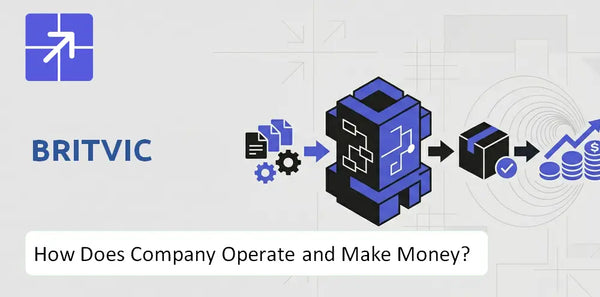
Focus on channel mix: retail and on-trade sales drive volume, while licensing and own brands lift margins; monitor supply-chain synergies from Carlsberg for cost savings.
What Does Britvic Actually Sell?
Britvic sells ready-to-drink non – alcoholic beverages (stills and carbonates), dispense systems for hospitality, and concentrated juices/syrups for international markets; customers pay for branded drinks, ongoing syrup supply and hardware service, and region-specific juice formulations.
 Core product lines and licenses
Britvic's portfolio includes owned brands Robinsons, Tango, J2O, and Fruit Shoot plus a long – term exclusive licence to manufacture and sell PepsiCo drinks such as Pepsi MAX, 7UP and Rockstar Energy. The business sells bottled and canned carbonates, still beverages, ready – to – drink juices and concentrated syrups.
Main customer segments
Retail chains and supermarkets buy packaged beverages; bars, cinemas and restaurants buy dispense hardware and repeat syrup supplies; international food and beverage manufacturers and wholesalers buy concentrates and syrups in markets such as Brazil and France.
Customer value proposition
Customers get recognised brand equity, consistent flavour formulations, and supply reliability – plus service contracts for dispense systems that create recurring revenue. In 2025 Britvic reported that its concentrate and out-of-home channels contributed materially to margin stability versus retail-pack volumes.
Differentiators and go – to – market
Britvic stands out through brand licences (PepsiCo), a mixed stills/carbonates portfolio, and integrated dispense solutions that tie customers into repeat purchases. Its distribution strategy combines direct supply to hospitality and wholesalers plus retail listings, supporting diversified Britvic revenue drivers and reduced single – channel risk. See Competitive Landscape of Britvic Company
Britvic SWOT Analysis
- Complete SWOT Breakdown
- Fully Customizable
- Editable in Excel & Word
- Professional Formatting
- Investor-Ready Format

How Does Britvic Run Its Business Day to Day?
Britvic runs daily via a vertically integrated model: high – speed UK bottling and can lines, fruit processing in Brazil, and consolidated logistics that move finished units to retail and hospitality. Key systems include ERP-driven production scheduling, customer route-to-market planning, and shared warehousing and HGV fleets under Carlsberg ownership to streamline multi-category delivery.

Operating model: integrated manufacturing to delivery
Britvic business model centers on owning production, bottling, and distribution so control over quality, cost, and timing is tight. Daily ops run on ERP and MES systems that sequence high-speed can and PET lines, schedule labour, and manage raw-material intake.
Product and service delivery: retail and on – trade reach
Customers buy through supermarkets, convenience chains, foodservice, and hospitality; Britvic services these via direct store delivery (DSD) and distribution centres. Under the combined route-to-market, teams co-ordinate simultaneous drop-offs of soft drinks and beer to hospitality accounts, increasing truck fill rates.
Production, sourcing and development: UK and Brazil split
UK hubs focus on carbonated drinks and concentrate blending; Brazil operations (Maguary, Bela Ischia) focus on fruit processing and regional beverage SKUs. Ingredient sourcing mixes global suppliers for concentrates and local fruit supply contracts; R&D adapts formulations to regional tastes.
Sales channels and distribution: multi-channel logistics
Primary channels are supermarkets, convenience stores, hospitality (on-trade), and e-commerce. Britvic distribution strategy uses a mix of national DCs, regional warehouses, and a DSD fleet; under Carlsberg integration in 2025 – 26, warehousing and HGV fleets were consolidated to improve utilisation.
Key assets, systems and partnerships: scale infrastructure
Key assets include UK production plants, Brazilian fruit processing sites, DCs, and HGV fleets; tech stack includes ERP, MES, and TMS (transport management). Strategic partnerships include the local PepsiCo bottling/marketing arrangement and distribution alignment with Carlsberg for hospitality customers.
What makes the model work: efficiency and brand alignment
Efficiency comes from vertical control of bottling and consolidation of logistics, raising truck fill rates and lowering per-unit delivery cost. Brand alignment (PepsiCo licensing) and a diverse portfolio (juice, soft drinks, mixers) drive steady volume while route-to-market synergies boost margin recovery.
Operational snapshot: in fiscal 2025 Britvic reported integrated net sales and operational metrics showing drive from core soft drinks and Brazil fruit lines, with logistics consolidation reducing distribution costs per hectolitre; see detailed history: History and Background of Britvic Company
Britvic Business Model Canvas
- One-time Payment
- No Research Needed – Save Hours of Work
- Built by Experts, Trusted by Consultants
- Instant Download, Ready to Use
- 100% Editable, Fully Customizable

How Does Revenue Flow Through Britvic?
Revenue flows through Britvic via high-volume product sales to supermarkets, pubs/restaurants, and convenience outlets, plus service contracts for dispense equipment; demand converts into revenue via fixed-price retail contracts and volume-linked foodservice incentives.
Core channel: large-scale retail supermarket sales
Supermarkets account for the largest share of volumes, driven by branded SKUs and multipack formats; in 2025 retail volumes remain anchored by the PepsiCo partnership, which supplies roughly 50% of UK hectolitres and provides stable, high-frequency orders.
Additional channels: hospitality and convenience
Pubs, restaurants and on-the-go outlets generate higher-margin dispense and single-serve sales; long-term dispense equipment contracts and volume incentives in foodservice convert demand into recurring revenue and uplift per-venue spend.
Pricing and monetization: wholesale, contracts, and equipment services
Britvic monetizes through wholesale product sales, fixed annual retail contracts, volume-based foodservice rebates, and service/lease fees for dispense units; owned brands like Robinsons avoid royalty costs and lift gross margins, improving Revenue Per Hectoliter.
Primary revenue drivers and margin levers
Revenue is driven most by volume from the PepsiCo joint layout and by higher ASPs (average selling prices) from premium glass bottles and sugar-free variants; in 2025 Revenue Per Hectoliter has trended up as the mix shifts to premium SKUs and owned brands, boosting margins and free cash flow.
For channel-level demand, see customer segmentation and route-to-market in this related piece: Target Customers and Market of Britvic Company
Britvic Marketing Mix
- Complete Marketing Mix Analysis
- Effortlessly Communicate Your Business Strategy
- Investor-Ready Format
- 100% Editable and Customizable
- Clear and Structured Layout

What Makes Britvic's Model Sustainable or Fragile?
Britvic's model rests on a dominant UK market position and a shift to low/no – sugar brands, reducing exposure to sugar taxes, while scale from the 2025 Carlsberg acquisition strengthens distribution and cross – sell. Major fragilities include dependence on the PepsiCo licence for core SKUs and pressure from private – label and plastic packaging costs.
Scale and healthier portfolio
Brittvic's low/no – sugar pivot means over 90 percent of brands meet healthier criteria, shielding revenue from sugar tax volatility and aligning with consumer trends; combined UK market share in branded soft drinks stayed above 30 percent in 2025, supporting stable pricing power.
Manufacturing and route – to – market strengths
Britvic bottling, manufacturing operations and UK distribution networks provide efficient go – to – market reach, and the Carlsberg deal in 2025 expands export markets and cross – sell into on – trade channels, improving margin levers and supply chain scale economies.
Concentration on partner licences
The PepsiCo licence accounts for a large share of branded revenue in the UK; any licence disruption would materially reduce Britvic revenue drivers and gross margin, while private – label growth pressures pricing and shelf space.
Resilience outlook for 2025 – 2026
As of 2026 professional judgement: Britvic remains a high – quality cash generator, but future growth depends on Carlsberg integration execution and UK consumer stability; rising aluminium and energy costs remain manageable due to scale, yet plastic packaging and competitor pressure leave the model exposed.
For more on the company context and values see Mission, Vision, and Values of Britvic Company
Britvic Boston Consulting Group Matrix
- Built by Experts, Trusted by Consultants
- Structured for Consultants, Students, and Founders
- 100% Editable in Microsoft Word & Excel
- Instant Digital Download – Use Immediately
- Compatible with Mac & PC – Fully Unlocked

Related Blogs
- What Is the History of Britvic Company and How Did It Evolve?
- What Is the Competitive Landscape of Britvic Company and How Does It Compete?
- What Is the Growth Outlook of Britvic Company and Where Is It Heading?
- How Does Britvic Company Reach Customers and Turn Demand into Sales?
- What Do the Mission, Vision, and Core Values of Britvic Company Reveal?
- Who Are the Core Customers in Britvic Company's Target Market?
- Who Owns Britvic Company Today and Who Holds Control?
Frequently Asked Questions
Britvic sells ready-to-drink non-alcoholic beverages, dispense systems for hospitality, and concentrated juices and syrups for international markets. Its portfolio includes owned brands such as Robinsons, Tango, J2O, and Fruit Shoot, plus PepsiCo drinks under licence. It serves retail, hospitality, and wholesale customers.
Disclaimer
All information, articles, and product details provided on this website are for general informational and educational purposes only. We do not claim any ownership over, nor do we intend to infringe upon, any trademarks, copyrights, logos, brand names, or other intellectual property mentioned or depicted on this site. Such intellectual property remains the property of its respective owners, and any references here are made solely for identification or informational purposes, without implying any affiliation, endorsement, or partnership.
We make no representations or warranties, express or implied, regarding the accuracy, completeness, or suitability of any content or products presented. Nothing on this website should be construed as legal, tax, investment, financial, medical, or other professional advice. In addition, no part of this site - including articles or product references - constitutes a solicitation, recommendation, endorsement, advertisement, or offer to buy or sell any securities, franchises, or other financial instruments, particularly in jurisdictions where such activity would be unlawful.
All content is of a general nature and may not address the specific circumstances of any individual or entity. It is not a substitute for professional advice or services. Any actions you take based on the information provided here are strictly at your own risk. You accept full responsibility for any decisions or outcomes arising from your use of this website and agree to release us from any liability in connection with your use of, or reliance upon, the content or products found herein.