
How does Capital Group Companies run its investment business and what drives revenue?
Capital Group Companies runs long-horizon active asset management, earning fees from client AUM while prioritizing research and portfolio-manager autonomy. This matters as its employee-owned structure supported steady AUM growth in 2025 versus passive peers.
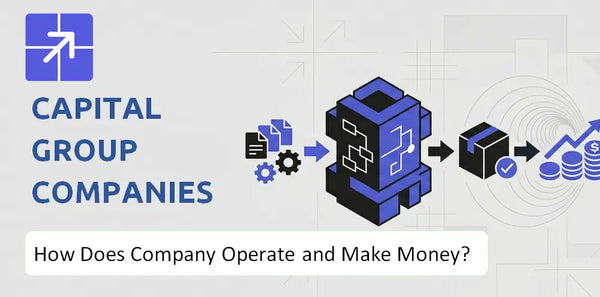
Its model leans on concentrated, research-led funds and client relationships; product mix and fee tiers drive margins. See Capital Group Companies BCG Matrix Analysis for portfolio signals.
What Does Capital Group Companies Actually Sell?
Capital Group Companies sells active investment management and wealth stewardship via the American Funds mutual funds, institutional mandates, fixed-income strategies, and active ETFs; clients pay for access to its proprietary global research and portfolio management aimed at long-term, risk-adjusted outperformance.
 Core product suite
Capital Group Companies primarily offers the American Funds family of mutual funds, a growing lineup of transparent active ETFs, specialized fixed-income products, and bespoke institutional mandates. Revenue comes from management fees, net of fund expense waivers and distribution fees, across retail and institutional channels.
Main buyer segments
Buyers include individual retail investors via financial advisors, retirement plans and 401(k) sponsors, institutional investors (pensions, endowments, sovereign wealth funds), and independent advisers seeking active management. Assets under management were about $2.1 trillion as of fiscal 2025, showing broad client reach.
Customer value delivered
Clients pay for fundamental, bottom-up research and multi-manager execution that targets superior long-term, risk-adjusted returns; they also get portfolio construction, retirement solutions, and reporting. The offering emphasizes low turnover, diversified active portfolios and tax-aware strategies for taxable investors.
Why Capital Group stands out
Capital Group business model centers on its proprietary analyst-driven research engine and a decades-long track record: American Funds have historically ranked in the top quartile across many categories over 10- and 15-year windows, which supports persistent fee-based AUM growth. Its multi-manager approach, deep analyst teams, and conservative governance create a durable competitive advantage in active management.
Ownership and Control of Capital Group Companies Company
Capital Group Companies SWOT Analysis
- Complete SWOT Breakdown
- Fully Customizable
- Editable in Excel & Word
- Professional Formatting
- Investor-Ready Format

How Does Capital Group Companies Run Its Business Day to Day?
Day-to-day, Capital Group Companies runs a multi-manager investment engine called the Capital System: each fund's assets are split among several autonomous managers plus a research portfolio, with trading driven by in-house research and executed by a global trading desk to manage liquidity across nearly $3 trillion AUM.

Operating model: multi-manager Capital System
The Capital System divides each pooled vehicle into sleeves run by multiple portfolio managers and an analyst-run research portfolio. Managers have autonomy over allocations and stock picks, which reduces single-manager risk and concentrates high-conviction ideas into diversified funds.
Product delivery: mutual funds and institutional mandates
Clients access Capital Group companies via mutual funds, institutional mandates, retirement/401(k) platforms, and advisor channels. Order flow is processed through custodial and platform partners, with NAV pricing daily for mutual funds and periodic reporting for institutional accounts.
Research & development: in-house analyst-driven sourcing
A global research team of over 400 investment professionals conducts thousands of company visits and deep dives annually; that primary research feeds model construction, risk limits, and trading decisions rather than external sell-side signals.
Trading & execution: centralized global desk
A centralized trading desk aggregates manager orders to optimize execution, manage liquidity, and minimize market impact across equities and fixed income. The desk coordinates with regional trading hubs to handle cross-border settlement and currency exposure for nearly $3 trillion AUM.
Sales & distribution: multi-channel reach
Distribution runs through financial advisors, retirement platforms, institutional sales, and direct client teams. Product placement focuses on Capital Group mutual funds and tailored institutional solutions, with digital portals for reporting and order placement.
Key assets & systems: human capital and tech stack
Key assets are the analyst team, proprietary research databases, portfolio risk systems, and trading infrastructure. Partnerships with custodians and platforms scale distribution; governance is privately held, supporting long-term investment horizons.
Practical mechanics: autonomy within guardrails
Managers run sleeves with clear risk and size limits; the research portfolio amplifies analyst convictions. This blend of autonomy and centralized oversight keeps funds concentrated yet diversified and aligns with the Capital Group business model of high-conviction active management.
For historical context and governance details, see History and Background of Capital Group Companies Company
Capital Group Companies Business Model Canvas
- One-time Payment
- No Research Needed – Save Hours of Work
- Built by Experts, Trusted by Consultants
- Instant Download, Ready to Use
- 100% Editable, Fully Customizable

How Does Revenue Flow Through Capital Group Companies?
Revenue at Capital Group Companies flows mainly from asset-based management fees tied to Assets Under Management (AUM), plus smaller advisory and distribution-related fees; demand from intermediaries converts client allocations into a rising fee base as AUM and market appreciation grow.
Management fees on AUM: the core revenue engine
Capital Group companies earns the vast majority of revenue from management fees charged as a percentage of AUM; with AUM at about $2.9 trillion in early 2026, even fees of a few basis points generate annual revenues in the billions, so scale matters most for the Capital Group business model.
Distribution and advisory fees: secondary revenue streams
Revenue also comes from intermediary and advisory payments, sub-advisory contracts, and limited performance or service fees; Capital Group mutual funds and institutional solutions add fee diversity beyond pure AUM-linked income.
Pricing model: percentage-based asset fees
The monetization model is primarily percentage-of-assets under management (basis points); retail and institutional share classes vary fees, and intermediary distribution means commissions and share-class economics influence net revenue per dollar invested.
Key revenue drivers and growth loop
Advisor-led distribution creates a stable demand loop: advisors recommend Capital Group funds, inflows raise AUM, market appreciation increases the fee base, and proven performance supports retention – so net inflows and market returns drive the bulk of revenue. See Mission, Vision, and Values of Capital Group Companies Company for context on governance and strategy.
Capital Group Companies Marketing Mix
- Complete Marketing Mix Analysis
- Effortlessly Communicate Your Business Strategy
- Investor-Ready Format
- 100% Editable and Customizable
- Clear and Structured Layout

What Makes Capital Group Companies's Model Sustainable or Fragile?
Capital Group Companies' model is sustainable because of its private, employee-owned structure and scale, yet fragile if active management underperforms or advisor relationships erode. Strengths include low relative fees and heavy reinvestment in research; risks center on multi-year underperformance in large-cap growth and shifts to fee-based digital platforms.
Private ownership and scale support resilience
Being privately and employee-owned lets Capital Group Companies reinvest profits into research and talent during downturns, avoiding public-market pressure to cut costs. Scale – managing over $2.1 trillion in assets under management as of fiscal 2025 – lowers per-account costs and sustains distribution reach.
Research platform and low-fee positioning
Capital Group business model centers on a multi-manager research team and deep analyst coverage, enabling persistent active management advantages. Its fee differential versus many active peers and comparable passive products helps retain inflows into Capital Group mutual funds and active ETFs.
Concentration and distribution dependencies
Revenue and flow sensitivity concentrate in large-cap equity performance and intermediary channels; prolonged underperformance in large-cap growth or loss of advisor relationships could trigger outflows. The firm also depends on third-party platforms and retirement plan pipelines for scale.
Durability outlook for 2025 – 2026
Professional judgment for 2025/2026 sees a stable, resilient outlook: Capital Group captured meaningful share in active ETFs while keeping mutual fund dominance, supporting revenue diversification. Still, if active management underperforms benchmarks for multiple years, fee compression and advisor migration to fee-based digital models could materially stress margins and AUM.
See competitive context in Competitive Landscape of Capital Group Companies Company for related positioning, market share, and product-mix data.
Capital Group Companies Boston Consulting Group Matrix
- Built by Experts, Trusted by Consultants
- Structured for Consultants, Students, and Founders
- 100% Editable in Microsoft Word & Excel
- Instant Digital Download – Use Immediately
- Compatible with Mac & PC – Fully Unlocked

Related Blogs
- What Is the History of Capital Group Companies Company and How Did It Evolve?
- What Is the Competitive Landscape of Capital Group Companies Company and How Does It Compete?
- What Is the Growth Outlook of Capital Group Companies Company and Where Is It Heading?
- How Does Capital Group Companies Company Reach Customers and Turn Demand into Sales?
- What Do the Mission, Vision, and Core Values of Capital Group Companies Company Reveal?
- Who Are the Core Customers in Capital Group Companies Company's Target Market?
- Who Owns Capital Group Companies Company Today and Who Holds Control?
Frequently Asked Questions
Capital Group Companies sells active investment management and wealth stewardship. Its offerings include American Funds mutual funds, active ETFs, fixed-income strategies, and institutional mandates. Clients pay for proprietary global research, portfolio management, retirement solutions, and reporting aimed at long-term, risk-adjusted returns.
Disclaimer
All information, articles, and product details provided on this website are for general informational and educational purposes only. We do not claim any ownership over, nor do we intend to infringe upon, any trademarks, copyrights, logos, brand names, or other intellectual property mentioned or depicted on this site. Such intellectual property remains the property of its respective owners, and any references here are made solely for identification or informational purposes, without implying any affiliation, endorsement, or partnership.
We make no representations or warranties, express or implied, regarding the accuracy, completeness, or suitability of any content or products presented. Nothing on this website should be construed as legal, tax, investment, financial, medical, or other professional advice. In addition, no part of this site - including articles or product references - constitutes a solicitation, recommendation, endorsement, advertisement, or offer to buy or sell any securities, franchises, or other financial instruments, particularly in jurisdictions where such activity would be unlawful.
All content is of a general nature and may not address the specific circumstances of any individual or entity. It is not a substitute for professional advice or services. Any actions you take based on the information provided here are strictly at your own risk. You accept full responsibility for any decisions or outcomes arising from your use of this website and agree to release us from any liability in connection with your use of, or reliance upon, the content or products found herein.