
How does Carlyle Group work as an intermediary between institutional capital and private markets?
The Carlyle Group sources institutional capital, structures private-market investments, and earns fees and carry across Private Equity, Credit, and Investment Solutions. This matters because in 2025 Carlyle pushed Fee Related Earnings to stabilize revenue, tying performance to AUM growth rather than timing of exits.
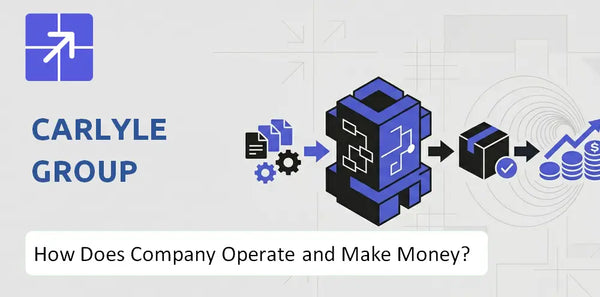
The firm earns management fees and performance fees while scaling AUM; focus on FRE in 2025 made revenue more predictable. See product insight: Carlyle Group BCG Matrix Analysis
What Does Carlyle Group Actually Sell?
The Carlyle Group sells specialized access to private market alpha through private equity funds, credit vehicles, and real estate platforms; clients pay for active portfolio company oversight, bespoke debt solutions, and global deal sourcing that aim to outperform public benchmarks. Revenue derives from management fees, performance fees (carried interest), and asset-based fees tied to assets under management.
 Core Product Suite
Carlyle Group offers private equity funds, credit funds, real estate vehicles, secondaries and tactical opportunistic strategies; these are structured as closed-end funds, co-investments, and perpetual credit platforms for institutional and high-net-worth capital.
Main Buyer Segments
Pension funds, sovereign wealth funds, insurance companies, endowments, family offices and high-net-worth individuals buy access to Carlyle's private equity strategy and credit solutions for diversification and return enhancement.
Customer Value Delivered
Clients receive active operational improvement and governance for portfolio companies, tailored debt instruments banks won't provide, and access to global deal flow – aiming to generate superior returns versus the S&P 500 through long-term illiquid positions.
Differentiators and Purchase Drivers
Carlyle Group's edge is its global network, sector-specialist teams, and operational playbook that enable leveraged buyouts and turnarounds; clients pay for expertise, scale, and the firm's track record – fees split between management fees (typically ~1.0 – 2.0% of AUM) and carried interest (commonly ~20% on profits).
For further detail on strategy and outlook see Growth Outlook of Carlyle Group Company.
Carlyle Group SWOT Analysis
- Complete SWOT Breakdown
- Fully Customizable
- Editable in Excel & Word
- Professional Formatting
- Investor-Ready Format

How Does Carlyle Group Run Its Business Day to Day?
The Carlyle Group runs daily by cycling capital: fundraising, deploying into deals, and harvesting exits, supported by global investment, research, credit, and investor-relations teams. Operational workflows use deal pipelines, portfolio operations playbooks, and integrated risk systems to move capital from commitment to realization.

Operating model: lifecycle of capital
Carlyle Group, a leading private equity firm and alternative asset manager, runs on fundraising, investment underwriting, portfolio oversight, and exits. Daily work centers on sourcing deals across aerospace, healthcare, and technology, underwriting with Global Research and Investment Strategy teams, and coordinating exits to realize returns.
Product and service delivery: investment access
Institutional and accredited investors access Carlyle's investment funds via closed-end private equity funds, credit vehicles, and discretionary mandates; investor relations teams manage subscriptions, capital calls, and reporting. Retail access occurs through publicly traded shares and listed investment vehicles.
Production, sourcing, and deal development
Deal teams of over 2,200 professionals source and diligence opportunities, deploy capital, and install operating plans in portfolio companies. Internal research, sector specialists, and local offices originate transactions and negotiate leveraged buyouts, growth equity, and structured credit deals.
Sales channels and distribution
Primary distribution runs through institutional sales to pension funds, sovereign wealth funds, and endowments; secondary channels include fund-of-funds, placement agents, and public equity markets for listed securities. Investor relations sustains a steady pipeline of commitments and recurring capital raising.
Key assets, systems, and partnerships
Core assets include proprietary deal flow networks, Global Research, portfolio operations teams, and credit underwriting platforms that act like a non-bank lender for middle-market loans. Carlyle leverages limited partner (LP) relationships and industry operating partners to scale improvements across portfolio company operations.
What makes the model work in practice
Reliability comes from recurring fee income (management fees), performance fees (carried interest), strong LP relationships, and significant dry powder to act during dislocations; in 2025 the firm managed and advised assets across strategies totaling over $370 billion, enabling scale and deal flexibility. See Target Customers and Market of Carlyle Group Company for market context: Target Customers and Market of Carlyle Group Company
Carlyle Group Business Model Canvas
- One-time Payment
- No Research Needed – Save Hours of Work
- Built by Experts, Trusted by Consultants
- Instant Download, Ready to Use
- 100% Editable, Fully Customizable

How Does Revenue Flow Through Carlyle Group?
Revenue at The Carlyle Group flows from steady management fees tied to assets under management and volatile performance fees (carried interest), with deal and advisory fees as add-ons; client demand for private equity and credit exposure converts into fee-bearing AUM and realized gains. Growth of Global Credit in 2025 shifts mix toward more frequent, yield-like fee income.
Management Fees: The Predictable Base
Management fees are calculated as a percentage of AUM and provide a recurring revenue floor; with AUM approaching $465 billion as of early 2026, these fees underwrite Carlyle Group operating costs and staffing for portfolio company oversight.
Carried Interest and Performance Fees: High Upside
Carried interest typically represents 20 percent of profits above agreed hurdle rates, converting strong fund exits and realized returns into concentrated, lumpy revenue spikes that drive earnings volatility and upside for this alternative asset manager.
Transaction and Advisory Fees: Deal-Level Income
Transaction, monitoring, and advisory fees are charged on executed deals and portfolio services, adding fee income during active buyouts, exits, restructurings, and capital raises – often booked as non-recurring but meaningful per-deal revenue.
Global Credit: Yield-Based Fee Growth
Carlyle Group has prioritized expanding Global Credit in 2025 to capture more frequent, yield-like fees; credit strategies produce steady interest and management fees versus the longer private equity cycles, shifting revenue mix toward recurring income.
Pricing and Monetization Model
The firm monetizes demand via AUM-based management fees, performance-linked carried interest, deal and advisory commissions, and credit interest margins – combining subscription-like fees (management) with commission-style and profit-share models (performance fees).
Primary Revenue Drivers
Revenue is driven chiefly by AUM scale and realized fund performance; larger AUM raises management fee income while successful exits trigger carried interest. Fundraising velocity, portfolio exits, and credit deployment pace determine short- and medium-term cash flow.
For a focused view on distribution, fundraising mechanics, and marketing alignment within Carlyle Group, see the related article Sales and Marketing Strategy of Carlyle Group Company.
Carlyle Group Marketing Mix
- Complete Marketing Mix Analysis
- Effortlessly Communicate Your Business Strategy
- Investor-Ready Format
- 100% Editable and Customizable
- Clear and Structured Layout

What Makes Carlyle Group's Model Sustainable or Fragile?
The Carlyle Group model is sustainable due to locked-in, long-dated fund commitments and diversification across private equity, private credit, and secondaries, but fragile because interest-rate swings, the denominator effect, and dependence on M&A/IPOs can quickly reduce realizations and investor allocations.
High Switching Costs and Long-Dated Capital
Pension funds and large institutions typically commit to 10-year private equity funds, creating stable, predictable fee income and a durable capital base that supports Carlyle Group private equity strategy and investment fund management.
Diversified Earnings and Product Mix
Carlyle Group expanded into private credit and secondaries, which provide fee and interest income when IPO and M&A markets are slow, hedging cycles in how Carlyle Group makes money and smoothing revenue sources breakdown.
Interest-Rate Sensitivity and Leverage
Many portfolio company strategies use leverage; rising rates increase borrowing costs and can compress equity returns and carried interest, making Carlyle Group business model explained vulnerable to macro rate volatility.
Denominator Effect and Fundraising Concentration
When public markets fall, institutional limited partners cut private allocations to rebalance, stalling fundraising and secondary liquidity – this concentrates risk in fundraising cycles and the Carlyle Group fundraising process for institutional investors.
Operational Capabilities and Scale
Carlyle Group's global platform, operational teams for portfolio company oversight, and scale in deal sourcing improve exit outcomes and fees; the firm reported managing assets of approximately $375 billion in 2025, supporting deal execution and private equity strategy and approach.
Resilience Outlook for 2025 – 2026
Professional judgment is cautiously optimistic: diversified fee streams and growth in private credit increase resilience, but realisations and NAVs depend on a stable M&A/IPO market and continued institutional demand for alternatives in 2025 and 2026; see History and Background of Carlyle Group Company for context.
Carlyle Group Boston Consulting Group Matrix
- Built by Experts, Trusted by Consultants
- Structured for Consultants, Students, and Founders
- 100% Editable in Microsoft Word & Excel
- Instant Digital Download – Use Immediately
- Compatible with Mac & PC – Fully Unlocked

Related Blogs
- What Is the History of Carlyle Group Company and How Did It Evolve?
- What Is the Competitive Landscape of Carlyle Group Company and How Does It Compete?
- What Is the Growth Outlook of Carlyle Group Company and Where Is It Heading?
- How Does Carlyle Group Company Reach Customers and Turn Demand into Sales?
- What Do the Mission, Vision, and Core Values of Carlyle Group Company Reveal?
- Who Are the Core Customers in Carlyle Group Company's Target Market?
- Who Owns Carlyle Group Company Today and Who Holds Control?
Frequently Asked Questions
Carlyle Group sells access to private market strategies, including private equity funds, credit vehicles, real estate platforms, secondaries, and opportunistic strategies. Clients pay for portfolio oversight, bespoke debt solutions, and global deal sourcing, with revenue coming from management fees, carried interest, and asset-based fees tied to assets under management.
Disclaimer
All information, articles, and product details provided on this website are for general informational and educational purposes only. We do not claim any ownership over, nor do we intend to infringe upon, any trademarks, copyrights, logos, brand names, or other intellectual property mentioned or depicted on this site. Such intellectual property remains the property of its respective owners, and any references here are made solely for identification or informational purposes, without implying any affiliation, endorsement, or partnership.
We make no representations or warranties, express or implied, regarding the accuracy, completeness, or suitability of any content or products presented. Nothing on this website should be construed as legal, tax, investment, financial, medical, or other professional advice. In addition, no part of this site - including articles or product references - constitutes a solicitation, recommendation, endorsement, advertisement, or offer to buy or sell any securities, franchises, or other financial instruments, particularly in jurisdictions where such activity would be unlawful.
All content is of a general nature and may not address the specific circumstances of any individual or entity. It is not a substitute for professional advice or services. Any actions you take based on the information provided here are strictly at your own risk. You accept full responsibility for any decisions or outcomes arising from your use of this website and agree to release us from any liability in connection with your use of, or reliance upon, the content or products found herein.