
How does Caseking operate as a niche gaming hardware retailer and what drives its sales and margins?
Caseking focuses on high-end PC components and accessories, selling to prosumers and enthusiasts via specialized catalogues, community events, and direct online channels. This matters because in 2025 Caseking, integrated into Pro Gamers Group, signals resilient demand for premium hardware amid broader retail pressures.
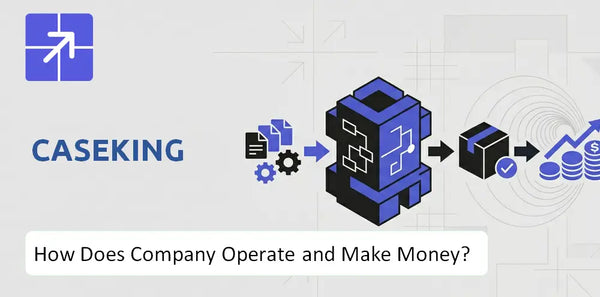
Track SKU-level premium pricing, limited releases, and community-led promotions for insights; see Caseking BCG Matrix Analysis for product positioning and growth signals.
What Does Caseking Actually Sell?
Caseking sells high-performance PC hardware, gaming peripherals, and bespoke system integration services; customers pay for performance-optimized components, premium gaming lifestyle gear, and assembly/configuration expertise.
 Core product lineup: high-performance hardware and systems
Caseking business model centers on retailing liquid-cooled graphics cards, overclocked processors, enthusiast motherboards, and complete custom PCs built to order. The Caseking e-commerce store also lists high-value cooling solutions, power supplies, and storage aimed at performance seekers.
Who buys it: gamers, PC enthusiasts, and B2B partners
Main customer groups include competitive and hobby gamers, boutique PC builders, and small-scale retailers buying via Caseking wholesale program. Corporate and esports teams also purchase integrated systems and peripherals.
Customer value: performance, aesthetics, and convenience
Customers get optimized performance (overclock-ready parts), premium ergonomics (gaming chairs, desks), and aesthetic ecosystems (RGB lighting, custom cabling). House brands like Noblechairs and Kolink deliver better price-to-performance and exclusive SKUs.
Why it stands out: curated stock, house brands, and system integration
Caseking product range differentiates via exclusive house brands, curated high-end inventory, and on-demand system assembly – reducing buyer research time and providing warranty-backed builds. See Competitive Landscape of Caseking Company for market context: Competitive Landscape of Caseking Company
Caseking SWOT Analysis
- Complete SWOT Breakdown
- Fully Customizable
- Editable in Excel & Word
- Professional Formatting
- Investor-Ready Format

How Does Caseking Run Its Business Day to Day?
Caseking runs as a high-velocity e-commerce and distribution operator focused on fragile, high-value PC hardware; daily work centers on inventory synchronization, order fulfillment, and system-building with integrated quality control.

Operating model: logistics-first, service-enabled
Caseking business model combines a direct-to-consumer Caseking e-commerce store with regional wholesale distribution; its operating tech routes orders from website to warehouse, then to courier or in-house assembly lines for custom systems.
Product and service delivery: online ordering to built systems
Customers buy via the Caseking e-commerce store or B2B portals; fast-pick logistics and a system-building department enable same-week assembled-PC delivery and trackable shipments across Europe and selected international lanes.
Production, sourcing, and development: tight OEM links
Caseking sources components directly from manufacturers and niche brands, maintaining real-time inventory feeds and negotiated purchase windows to manage volatility in GPU and CPU pricing and availability.
Sales channels and distribution: multi-channel reach
Main channels are the Caseking e-commerce store, marketplace listings, and B2B wholesale; regional warehouses feed last-mile couriers while drop-ship partnerships handle overflow and international orders.
Key assets, systems, and partnerships: warehouses, WMS, and vendor ties
Core assets include automated warehouses, a warehouse management system (WMS) with real-time ERP integration, skilled system-build technicians, and partnerships with niche hardware brands and logistics carriers.
What makes it work: service differentiation and tight inventory control
Daily synchronization with manufacturers, a skilled assembly workforce, and strict QA reduce returns and support higher margins versus pure box-shifter retailers; inventory turns and build throughput drive revenue.
Daily metrics monitored include order volume, build throughput, inventory turn rate, and return rate; in 2025 Caseking reported average inventory turnover near 8x and system-build revenue representing roughly 30% of product sales in peak months – details and broader outlook are discussed in this analysis: Growth Outlook of Caseking Company
Caseking Business Model Canvas
- One-time Payment
- No Research Needed – Save Hours of Work
- Built by Experts, Trusted by Consultants
- Instant Download, Ready to Use
- 100% Editable, Fully Customizable

How Does Revenue Flow Through Caseking?
Revenue flows through Caseking via high-volume retail of PC components and higher-margin add-ons and services, plus growing B2B wholesale distribution across Europe. Demand converts to revenue through anchor hardware sales that drive accessory and house-brand attach rates, and wholesale fees that stabilize cash flow.
Anchor hardware sales
Core revenue comes from CPUs, GPUs, motherboards, and cases sold via the Caseking e-commerce store; these items generate the largest top-line but thin margins due to market competition. In 2025, desktop GPUs and CPUs still accounted for the majority of unit value sold across retail channels.
Accessories and house-brand upsell
High-margin accessories – PSUs, cooling, cables, peripherals – and Caseking-branded products are attached to anchor purchases, lifting gross margins per order. Attach rates typically add 10 – 25% incremental margin to hardware transactions.
Wholesale distribution and B2B sales
By 2025 Caseking expanded its Caseking wholesale program, acting as a master distributor for gaming brands across Europe and earning distribution fees and volume discounts. B2B channels smooth seasonality and contributed an estimated 15 – 30% of revenue in recent fiscal reporting periods.
Pricing and monetization mix
Monetization blends retail markups, margin on house brands, fixed distribution fees, and service revenues (warranties, assembly, and logistics). Promotional pricing and tiered wholesale rates steer volume while preserving accessory margins.
Primary revenue drivers
Revenue is driven most by anchor product availability and pricing on CPUs/GPUs, accessory attach rates, and distribution contracts. Inventory sourcing and manufacturer relationships directly affect margins and time-to-cash, so supply-side execution matters most. See Ownership and Control of Caseking Company for governance context: Ownership and Control of Caseking Company
Operational levers that move revenue
Faster procurement, dynamic pricing, and cross-sell algorithms raise average order value; logistics efficiency cuts fulfillment costs and shortens delivery times. Wholesale partnerships expand reach and stabilize revenue against retail seasonality.
Caseking Marketing Mix
- Complete Marketing Mix Analysis
- Effortlessly Communicate Your Business Strategy
- Investor-Ready Format
- 100% Editable and Customizable
- Clear and Structured Layout

What Makes Caseking's Model Sustainable or Fragile?
Caseking's model is sustainable through deep community ties and private-label brands that protect margins, yet fragile due to exposure to semiconductor cycles, supply-chain shocks, and manufacturer DTC shifts. Structural strengths include niche positioning and higher-margin enthusiast sales; key dependencies are component availability and manufacturer channel strategies.
Community-driven niche positioning
Caseking business model leans on an engaged enthusiast community – PC builders and gamers – so demand is less price-sensitive and loyalty supports recurring purchases. This focus helps the Caseking e-commerce store sustain steadier margins versus mass-market retailers.
Private-label and curated SKUs
Caseking product range now includes private-label components and exclusive bundles that reduce direct price competition and protect gross margins. Curated configurations and expert recommendations add service value generalist marketplaces struggle to match.
Concentration on semiconductor and supply cycles
Revenue and inventory turns depend heavily on global chip availability and freight capacity; shortages or excesses can swing margins quickly. Caseking distribution and logistics face concentration risk from a small set of key suppliers and seasonal demand spikes.
Resilience assessment for 2025/2026
As of 2025, Caseking company profile shows a stable specialist retailer with high-margin enthusiast sales, but 2026 risks include major manufacturers adopting direct-to-consumer channels that could bypass retailers. My view: the model is durable if Caseking scales private brands, expands B2B wholesale, and preserves curated services.
Mission, Vision, and Values of Caseking Company
Caseking Boston Consulting Group Matrix
- Built by Experts, Trusted by Consultants
- Structured for Consultants, Students, and Founders
- 100% Editable in Microsoft Word & Excel
- Instant Digital Download – Use Immediately
- Compatible with Mac & PC – Fully Unlocked

Related Blogs
- What Is the History of Caseking Company and How Did It Evolve?
- What Is the Competitive Landscape of Caseking Company and How Does It Compete?
- What Is the Growth Outlook of Caseking Company and Where Is It Heading?
- How Does Caseking Company Reach Customers and Turn Demand into Sales?
- What Do the Mission, Vision, and Core Values of Caseking Company Reveal?
- Who Are the Core Customers in Caseking Company's Target Market?
- Who Owns Caseking Company Today and Who Holds Control?
Frequently Asked Questions
Caseking mainly sells high-performance PC hardware, gaming peripherals, and custom system integration services. Its catalog includes liquid-cooled graphics cards, overclocked processors, enthusiast motherboards, cooling solutions, power supplies, storage, and complete custom PCs built to order for performance-focused buyers.
Disclaimer
All information, articles, and product details provided on this website are for general informational and educational purposes only. We do not claim any ownership over, nor do we intend to infringe upon, any trademarks, copyrights, logos, brand names, or other intellectual property mentioned or depicted on this site. Such intellectual property remains the property of its respective owners, and any references here are made solely for identification or informational purposes, without implying any affiliation, endorsement, or partnership.
We make no representations or warranties, express or implied, regarding the accuracy, completeness, or suitability of any content or products presented. Nothing on this website should be construed as legal, tax, investment, financial, medical, or other professional advice. In addition, no part of this site - including articles or product references - constitutes a solicitation, recommendation, endorsement, advertisement, or offer to buy or sell any securities, franchises, or other financial instruments, particularly in jurisdictions where such activity would be unlawful.
All content is of a general nature and may not address the specific circumstances of any individual or entity. It is not a substitute for professional advice or services. Any actions you take based on the information provided here are strictly at your own risk. You accept full responsibility for any decisions or outcomes arising from your use of this website and agree to release us from any liability in connection with your use of, or reliance upon, the content or products found herein.