
How does C.H. Robinson Worldwide connect shippers to carriers and earn margins as an asset-light logistics orchestrator?
C.H. Robinson Worldwide matches shippers with carriers, managing routes, pricing, and risk without owning transport assets. This matters because its 2025 results showed freight brokerage volumes tied to North American demand, making it a real-time indicator of trade flow and pricing power.
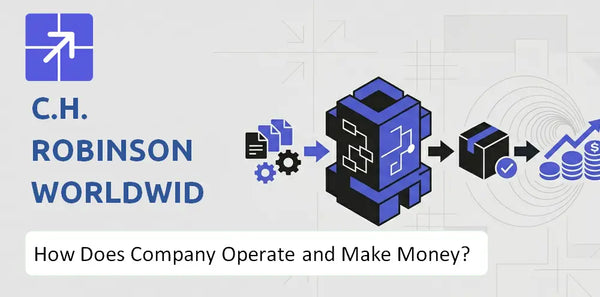
C.H. Robinson Worldwide scales via tech, data, and broker network; focus on margin per load and platform growth drove its 2025 operating priorities. See practical tools like C.H. Robinson Worldwide BCG Matrix Analysis
What Does C.H. Robinson Worldwide Actually Sell?
C.H. Robinson Worldwide sells logistics expertise and access to a vast, fragmented transportation network: freight brokerage services across truckload, LTL, ocean, air, and customs brokerage, plus the Navisphere digital platform that connects shippers to carriers and provides real-time visibility and execution.
 Core Offerings: Freight, Brokerage, and Digital Logistics
C H Robinson provides truckload, less-than-truckload (LTL), ocean, air freight, and customs brokerage services, plus multimodal supply chain solutions. Customers buy guaranteed moves and logistics execution, largely via the Navisphere platform that routes loads to over 450,000 contract carriers and aggregates capacity.
Main Buyers: Shippers and Independent Carriers
Large shippers – manufacturers, retailers, and CPG firms – buy predictable, enterprise-grade transportation and visibility. Independent owner-operators and small carriers use C H Robinson to access steady freight volume and enterprise customers they otherwise could not reach.
Customer Value: Visibility, Capacity, and Risk Transfer
Shippers get single-point booking, real-time tracking, rate optimization, and compliance – reducing procurement effort and dwell time. Carriers gain access to consistent loads and faster settlement; Navisphere automates matching, documentation, and performance metrics.
Differentiators: Scale, Network, and Technology
C H Robinson business model hinges on scale – its 450,000 carrier network and global ops reduce search friction and spot-market exposure for shippers. Navisphere (C H Robinson supply chain technology and Navisphere) and embedded brokerage expertise make it easier to buy logistics than calling dozens of small carriers, while offering analytics and multimodal optimization.
See the company's guiding principles and culture in this deeper piece on corporate direction: Mission, Vision, and Values of C.H. Robinson Worldwide Company
C.H. Robinson Worldwide SWOT Analysis
- Complete SWOT Breakdown
- Fully Customizable
- Editable in Excel & Word
- Professional Formatting
- Investor-Ready Format

How Does C.H. Robinson Worldwide Run Its Business Day to Day?
C H Robinson runs day-to-day as a high-volume freight brokerage and global logistics operator, using algorithmic matching and dynamic pricing to route shipments and manage capacity. The delivery flow moves from digital quoting in Navisphere to automated booking, carrier procurement, and exception-led human intervention for complex moves.

Algorithmic Brokerage Engine
C H Robinson operates an algorithmic matching engine that processes tens of thousands of shipments daily and dynamically prices freight based on market capacity and historical data. The platform optimizes the buy-sell spread to protect gross margins while filling carrier capacity.
Customer Access and Delivery Flow
Shippers access services via Navisphere, APIs, and account teams to request quotes, book freight, and track shipments. In 2025 the firm automated roughly 85% of North American truckload lifecycles, so most transactions complete without manual booking.
How Services Are Sourced and Built
Operational capacity is sourced from a distributed carrier network and ocean/airline partners; Global Forwarding teams manage documentation, drayage, and ocean carrier bookings for cross-border containers. Data teams continuously refine pricing models using proprietary shipment, carrier, and market data.
Sales and Distribution Channels
Sales flow through direct enterprise accounts, online portals, and embedded APIs with TMS partners; spot-market volume is handled via digital freight platforms. Account teams provide consultative, industry-specific solutions for large shippers.
Key Assets, Systems, and Partnerships
Core assets include the Navisphere platform, proprietary pricing algorithms, a large carrier network, and global forwarding operations. Strategic partnerships with ocean carriers, drayage providers, and TMS vendors enable scale and cross-border capability.
Operational Mechanics That Deliver Results
The model relies on automated quoting, real-time capacity signals, and human exception management; daily work centers on managing the buy-sell spread – buying carrier capacity below shipper pricing to preserve margin. For background on company evolution see History and Background of C.H. Robinson Worldwide Company.
C.H. Robinson Worldwide Business Model Canvas
- One-time Payment
- No Research Needed – Save Hours of Work
- Built by Experts, Trusted by Consultants
- Instant Download, Ready to Use
- 100% Editable, Fully Customizable

How Does Revenue Flow Through C.H. Robinson Worldwide?
Revenue flows through a gross-to-net spread model: C H Robinson bills shippers the full freight amount, then deducts carrier payouts to produce Adjusted Gross Profit (AGP). Demand – shipment volume and spot or contract rates – converts to billed revenue, while AGP and managed services drive profitability.
Main revenue: freight brokerage and AGP spread
C H Robinson records total revenue at invoice value for freight brokerage services, but the business economics hinge on the gross-to-net spread: carrier payouts subtracted from billed freight. Investors watch Adjusted Gross Profit, which historically sits between 11% and 14% of billed revenue and determines core profitability.
Additional revenue: managed transportation and consulting
C H Robinson expands recurring income via managed transportation fees and supply chain consulting (non-transactional services), plus value-adds like freight analytics and Navisphere platform services. In 2025, managed services grew as a percentage of gross profit, smoothing earnings versus volatile spot markets.
Pricing and monetization: transaction spreads and service fees
Monetization comes from the commission-like spread on each load, fixed management fees for outsourced logistics, and consulting/project fees. Spot market volatility shifts billed revenue by billions, but AGP per load and managed-fee renewal rates set sustainable cash flow.
What drives revenue most: volume and margin per load
Shipment volume and margin per load are primary drivers: higher truckload volume or pricier lanes raise AGP dollars; contract coverage and carrier network strength stabilize margins. In 2025, diversification into managed transportation reduced dependency on spot freight swings; see related analysis on Ownership and Control of C.H. Robinson Worldwide Company.
C.H. Robinson Worldwide Marketing Mix
- Complete Marketing Mix Analysis
- Effortlessly Communicate Your Business Strategy
- Investor-Ready Format
- 100% Editable and Customizable
- Clear and Structured Layout

What Makes C.H. Robinson Worldwide's Model Sustainable or Fragile?
C H Robinson's model is sustainable due to its large transaction network and asset-light flexibility, but fragile from potential margin compression as digital-native brokerages and carrier-direct software disintermediate brokers. Structural strengths include data-driven pricing and scalability; risks include technological catch-up by competitors and concentrated exposure to freight-cycle swings.
Network effect drives pricing and coverage
C H Robinson's scale – handling over 75 million shipments annually as of 2025 and brokering freight across >100,000 carriers – creates a network effect that improves matching, service density, and price discovery versus smaller brokerages.
Asset-light flexibility lowers fixed costs
Because C H Robinson does not own tractors or trailers, it can reduce operating leverage quickly in downturns and scale without heavy capex in upcycles, preserving cash flow and ROIC (return on invested capital).
Data, technology, and Navisphere as core assets
C H Robinson's Navisphere platform, proprietary transaction data (millions of annual loads), and integrations with shippers/ERP systems are key capabilities that enable optimized routing, predictive pricing, and customer lock-in.
Lean operations and AI lower cost-to-serve
By 2025 the company's Lean initiatives plus generative AI pilots have materially cut cost-to-serve, supporting sustained double-digit operating margins even with softer freight rates.
Dependencies on carrier network and spot market
C H Robinson depends on a broad yet concentrated carrier base for capacity; spot market volatility and regional capacity tightness can swing margins. Exposure to a cyclical freight market remains a constraint.
Competitive threat from digital disintermediation
Digital-first brokerages and carrier-direct software could compress spreads if C H Robinson loses its technological lead or if shippers push more volume off-platform.
Resilience outlook for 2025/2026
In 2025 C H Robinson remains highly resilient: operating margin stayed in the low double digits, adjusted EBITDA margin and positive free cash flow reflect durable earnings power. Continued investment in Navisphere, AI, and Lean processes makes the model durable, though margin pressure from digital rivals is a persistent downside risk; monitor pricing spread and technology adoption metrics.
Implication for stakeholders
Investors and shippers should watch C H Robinson's spread (revenue per load minus carrier pay), cadence of AI-driven efficiency gains, and carrier retention rates; for further market context see Target Customers and Market of C.H. Robinson Worldwide Company.
C.H. Robinson Worldwide Boston Consulting Group Matrix
- Built by Experts, Trusted by Consultants
- Structured for Consultants, Students, and Founders
- 100% Editable in Microsoft Word & Excel
- Instant Digital Download – Use Immediately
- Compatible with Mac & PC – Fully Unlocked

Related Blogs
- What Is the History of C.H. Robinson Worldwide Company and How Did It Evolve?
- What Is the Competitive Landscape of C.H. Robinson Worldwide Company and How Does It Compete?
- What Is the Growth Outlook of C.H. Robinson Worldwide Company and Where Is It Heading?
- How Does C.H. Robinson Worldwide Company Reach Customers and Turn Demand into Sales?
- What Do the Mission, Vision, and Core Values of C.H. Robinson Worldwide Company Reveal?
- Who Are the Core Customers in C.H. Robinson Worldwide Company's Target Market?
- Who Owns C.H. Robinson Worldwide Company Today and Who Holds Control?
Frequently Asked Questions
C.H. Robinson Worldwide sells logistics expertise and access to transportation capacity. Its core services include truckload, LTL, ocean, air freight, customs brokerage, and multimodal supply chain solutions, all supported by the Navisphere platform for booking, visibility, and execution.
Disclaimer
All information, articles, and product details provided on this website are for general informational and educational purposes only. We do not claim any ownership over, nor do we intend to infringe upon, any trademarks, copyrights, logos, brand names, or other intellectual property mentioned or depicted on this site. Such intellectual property remains the property of its respective owners, and any references here are made solely for identification or informational purposes, without implying any affiliation, endorsement, or partnership.
We make no representations or warranties, express or implied, regarding the accuracy, completeness, or suitability of any content or products presented. Nothing on this website should be construed as legal, tax, investment, financial, medical, or other professional advice. In addition, no part of this site - including articles or product references - constitutes a solicitation, recommendation, endorsement, advertisement, or offer to buy or sell any securities, franchises, or other financial instruments, particularly in jurisdictions where such activity would be unlawful.
All content is of a general nature and may not address the specific circumstances of any individual or entity. It is not a substitute for professional advice or services. Any actions you take based on the information provided here are strictly at your own risk. You accept full responsibility for any decisions or outcomes arising from your use of this website and agree to release us from any liability in connection with your use of, or reliance upon, the content or products found herein.