
How does CHS Inc. operate its member-owned agribusiness platform and generate revenue across inputs, energy, and marketing?
CHS Inc. links CHS BCG Matrix Analysis supply, energy, and global grain marketing to serve farmer-members and commercial clients. Its scale in 2025 logistics and energy trading matters because commodity swings and fuel margins drove earnings volatility and margin compression.
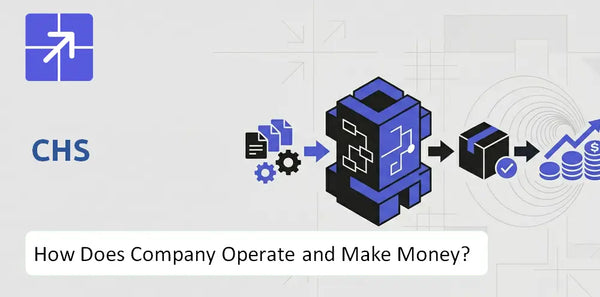
CHS earns through fertilizer, seed, petroleum sales, and grain merchandising; network density and trading volumes drive cash flow. Watch 2025 export volumes and energy spreads as leading operational signals.
What Does CHS Actually Sell?
CHS Inc. sells refined fuels (Cenex gasoline, premium diesel), propane, lubricants, crop inputs (seed, crop nutrients, crop protection), global grain marketing services, food ingredients (soybean oil, flour) and financial services like credit and risk management; customers pay for physical products, trading access, logistics and financing that connect farms to global markets.
 Core product and service mix
CHS Inc offers refined fuels under the Cenex brand, propane and lubricants for transport and farm equipment; agronomy inputs including seed, crop nutrients and crop protection; global grain merchandising and export services; processed food ingredients via processing plants and joint ventures; and financial services such as working capital, lending and risk management tools.
Main buyer groups
Buyers include independent farmers and farmer-members, grain elevators, food processors, fuel retailers and commercial fleets, export buyers in Asia and Latin America, and wholesale and retail partners that source fertilizer, fuel and processed ingredients through CHS supply chain logistics.
Customer value delivered
Customers gain access to bundled inputs, nationwide fuel distribution, export market access and price-risk solutions; CHS's integrated logistics and grain marketing lower transaction costs and improve cash flow – CHS reported in fiscal 2025 revenue of $46.0 billion, driven by trading and energy volumes.
What differentiates CHS
CHS Inc's cooperative structure links farmer-members to capital and markets, combining agribusiness scale with fuel and processing verticals; its global grain marketing platform and integrated logistics network support large export volumes – CHS handled over 40 million metric tons of grain and oilseed merchandising in recent years – so partners get scale, distribution and financing under one brand. Read the Growth Outlook of CHS Company for more context.
CHS SWOT Analysis
- Complete SWOT Breakdown
- Fully Customizable
- Editable in Excel & Word
- Professional Formatting
- Investor-Ready Format

How Does CHS Run Its Business Day to Day?
CHS Inc runs daily via a high-velocity logistics and processing network linking rural farm co-ops to global export points; operations coordinate energy refining, grain handling, fertilizer procurement, and retail fuel distribution through integrated systems and seasonal planning. Fleet, terminals, elevators, refineries, and ERP/transportation management systems move product and cash across pipelines, rail, barge, and retail sites to meet farmer-owner needs.

Integrated operating model and cooperative governance
CHS Inc uses a cooperative structure where daily decisions reflect priorities of 600,000 farmer-owners; functional teams in procurement, trading, logistics, and retail execute to seasonal calendars (planting/harvest). Centralized trading desks and decentralized field services balance scale with local responsiveness.
Product and service delivery to farmers and consumers
Farmers access inputs (seed, fertilizer, crop protection) through local cooperatives and Cenex-branded retail points; fuel and lubricants flow from refineries to thousands of retail sites and wholesale customers via pipelines, terminals, and transport partners.
Production, sourcing, and processing mechanics
Energy division refines about 160,000 barrels per day across two major refineries (Montana, Kansas) into diesel, gasoline, and asphalt; grain division aggregates billions of bushels at elevators and ports, then coordinates rail and barge moves for export and domestic merchandising.
Sales channels and distribution networks
CHS Inc sells via wholesale contracts, Cenex retail stations, cooperative member channels, and international grain markets; logistics use pipelines, unit trains, barges, and deep-water terminals to connect supply to demand across domestic and export markets.
Key assets, systems, and partnerships
Critical assets include refineries, storage terminals, grain elevators, rail loading facilities, and export terminals; technology stack features ERP, TMS (transportation management), and trading platforms. Partnerships with railroads, barge operators, and agronomy suppliers underpin scale.
Operational levers that make the model work
Seasonal alignment (fertilizer timing, harvest logistics), integrated merchant trading, and cooperative capital access drive cash flow predictability; tight inventory turns and multimodal logistics reduce cost and deliver margin across energy and agribusiness lines. Read more on market positioning in Competitive Landscape of CHS Company.
CHS Business Model Canvas
- One-time Payment
- No Research Needed – Save Hours of Work
- Built by Experts, Trusted by Consultants
- Instant Download, Ready to Use
- 100% Editable, Fully Customizable

How Does Revenue Flow Through CHS?
Revenue at CHS Inc flows mainly from two segments: Energy and Ag, converting customer demand for fuel, fertilizer, and grain into transactional sales and trading margins. Demand becomes revenue through commodity trading spreads, large-volume grain merchandising, and value-added processing contracts.
Energy segment: margin capture on fuels and refined products
The Energy segment earns high-margin revenue from the spread between crude purchase costs and refined product sale prices across wholesale fuel distribution and trading; in 2025 – 2026 CHS Inc projects overall revenues between $42,000,000,000 and $45,000,000,000, with Energy typically contributing the larger margin per unit sold.
Ag segment: volume-driven grain and crop inputs
CHS agribusiness generates massive volume-based revenue by buying grain from producers and selling into domestic and export markets, plus crop inputs like fertilizer and seed; margins are thinner but cash flow is significant due to scale.
Pricing and monetization: spreads, fees, and product sales
CHS company business model monetizes through product sales (fuel, fertilizer, food ingredients), trading spreads (crude-to-product and grain basis), service fees for logistics and storage, and value-added processing contracts; specialty crop nutrients and branded food processing raise per-unit returns.
What drives revenue most: spreads, volumes, and value-added mix
Revenue is most strongly driven by commodity price spreads in Energy, large grain volumes in Ag, and the shift toward higher-margin specialty fertilizers and food processing; patronage refunds return a portion of net income to members, aligning incentives across the CHS cooperative structure – see Ownership and Control of CHS Company for governance context: Ownership and Control of CHS Company.
CHS Marketing Mix
- Complete Marketing Mix Analysis
- Effortlessly Communicate Your Business Strategy
- Investor-Ready Format
- 100% Editable and Customizable
- Clear and Structured Layout

What Makes CHS's Model Sustainable or Fragile?
CHS Inc's model is sustainable because scale, member-owner demand, and vertical integration stabilize margins, but it is fragile due to exposure to global trade shocks, energy crack-spread volatility, and fertilizer-input price swings; interest rates and climate-driven yield risk add further downside.
Scale and Captive Member Demand Support Stability
CHS Inc benefits from a built-in customer base of member-owners that smooths demand cycles and secures supply commitments, underpinning steady revenue across agribusiness and energy segments.
Vertical Integration Captures Multiple Margins
Ownership across refineries, grain origination, processing, and retail fuels lets CHS company business model capture upstream and downstream margins, improving resilience when one segment softens.
Dependence on Global Energy and Trade Flows
CHS energy and fertilizers revenues are sensitive to international crack spreads and export volumes; sudden trade restrictions or tariffs can compress margins and disrupt CHS supply chain logistics.
Resilience in 2025/2026: Durable but Exposed
For fiscal 2025 CHS Inc reported annual net income north of 1,000,000,000 dollars as a baseline, supporting liquidity and investment. Still, high interest rates and volatile fertilizer input costs make the 2026 outlook one of resilient stability that remains exposed to abrupt international policy shifts and carbon regulation changes; see History and Background of CHS Company for context.
CHS Boston Consulting Group Matrix
- Built by Experts, Trusted by Consultants
- Structured for Consultants, Students, and Founders
- 100% Editable in Microsoft Word & Excel
- Instant Digital Download – Use Immediately
- Compatible with Mac & PC – Fully Unlocked

Related Blogs
- What Is the History of CHS Company and How Did It Evolve?
- What Is the Competitive Landscape of CHS Company and How Does It Compete?
- What Is the Growth Outlook of CHS Company and Where Is It Heading?
- How Does CHS Company Reach Customers and Turn Demand into Sales?
- What Do the Mission, Vision, and Core Values of CHS Company Reveal?
- Who Are the Core Customers in CHS Company's Target Market?
- Who Owns CHS Company Today and Who Holds Control?
Frequently Asked Questions
CHS sells refined fuels, propane, lubricants, crop inputs, grain marketing services, food ingredients, and financial services. Its offerings connect farm production to fuel, food, and global markets through trading, logistics, processing, and financing.
Disclaimer
All information, articles, and product details provided on this website are for general informational and educational purposes only. We do not claim any ownership over, nor do we intend to infringe upon, any trademarks, copyrights, logos, brand names, or other intellectual property mentioned or depicted on this site. Such intellectual property remains the property of its respective owners, and any references here are made solely for identification or informational purposes, without implying any affiliation, endorsement, or partnership.
We make no representations or warranties, express or implied, regarding the accuracy, completeness, or suitability of any content or products presented. Nothing on this website should be construed as legal, tax, investment, financial, medical, or other professional advice. In addition, no part of this site - including articles or product references - constitutes a solicitation, recommendation, endorsement, advertisement, or offer to buy or sell any securities, franchises, or other financial instruments, particularly in jurisdictions where such activity would be unlawful.
All content is of a general nature and may not address the specific circumstances of any individual or entity. It is not a substitute for professional advice or services. Any actions you take based on the information provided here are strictly at your own risk. You accept full responsibility for any decisions or outcomes arising from your use of this website and agree to release us from any liability in connection with your use of, or reliance upon, the content or products found herein.