
How does Cogent Communications operate its low-cost, high-volume ISP business and what drives its revenue?
Cogent Communications runs a fiber-based Tier 1 ISP focused on high-density routes, turning large bandwidth volumes into recurring cash flow. The 2025 Sprint Wireline integration expanded its enterprise reach, raising scale and margin leverage. This matters for network pricing and capacity planning.
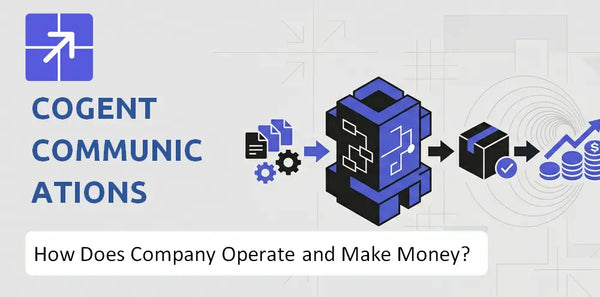
Focus on utilization and long-term contracts; prioritize metro fiber densification to lift yields and reduce churn. See product analysis: Cogent Communications BCG Matrix Analysis
What Does Cogent Communications Actually Sell?
Cogent Communications sells high-capacity, dedicated bandwidth and transport: Dedicated Internet Access (DIA), private Ethernet/IP backbone services, and colocation connectivity. Customers pay for symmetrical, scalable data transit and colocated cross-connects optimized for price and predictable performance.
 Core products: bandwidth, transit, colocation
Cogent Communications offers Dedicated Internet Access (DIA) from 100 Mbps up to 400 Gbps, IP transit and Ethernet VPNs, plus data center colocation cross-connects and on-net fiber where available. The stack is focused on raw transport – no legacy voice or heavy managed services – so customers buy predictable Mbps and low-latency routes.
Who buys it: carriers, cloud, enterprises
Primary customers are wholesale carriers and content networks, cloud and CDN providers, large enterprises with heavy egress needs, and regional ISPs seeking transit. Retail business customers with branch aggregation also subscribe for high-value symmetrical links.
Customer value: low cost per Mbps and symmetry
Customers get symmetrical upload/download speeds, aggressive price-per-Mbps, and straightforward SLAs for throughput; Cogent's price leadership drove reported 2025 revenue concentration toward high-margin IP transit and wholesale contracts. This reduces total cost of ownership for heavy-traffic use cases.
Differentiator: lean, low-cost transport
Cogent Communications business model centers on an efficient backbone and simple service menu, undercutting incumbents like AT&T and Lumen on price. Its peering policy and IP transit pricing comparison often favor direct peering and aggressive wholesale deals, making it easy to buy large-capacity links.
See market positioning and competitor analysis in this article: Competitive Landscape of Cogent Communications Company
Cogent Communications SWOT Analysis
- Complete SWOT Breakdown
- Fully Customizable
- Editable in Excel & Word
- Professional Formatting
- Investor-Ready Format

How Does Cogent Communications Run Its Business Day to Day?
Cogent Communications runs daily operations by managing its global fiber backbone and selling direct connections to customers on its owned network; delivery flows from customer premises to on-net fiber into the core network, controlled end-to-end to preserve service quality and minimize third-party transit costs.

Operating model: lean, on – net, high – density focus
Cogent Communications operates a capital-intensive fiber backbone and targets dense urban markets where owned fiber connects directly to customers; staff prioritize on-net sales and network operations to keep operating expenses low and utilization high.
Product and service delivery: direct fiber access
Customers buy IP transit and Ethernet services that terminate on Cogent's fiber in over 3,300 multi-tenant office buildings and 1,550 data centers; provisioning typically moves from sales contract to on-net handoff and circuit activation within days to weeks depending on site readiness.
Production, sourcing, and network build
Cogent builds and maintains its own fiber – over 61,000 intercity route miles and more than 15,000 metro fiber miles as of early 2026 – using in – house engineering for route planning, fiber construction, and optical layer upgrades to scale capacity.
Sales channels and distribution: focused field sales
Revenue growth comes from a lean field sales force selling into high – density enterprise and wholesale segments, plus online and channel deals for IP transit; emphasis is on on – net attach to avoid transit fees and maximize margins.
Key assets, systems, and partnerships
Core assets are the fiber backbone, dark fiber assets, and on – net building footprint; Cogent relies on peering relationships and exchange points to function as a de – facto Tier 1 IP transit provider and integrates with colocation partners for last – mile handoffs. See Ownership and Control of Cogent Communications Company for governance context: Ownership and Control of Cogent Communications Company
What makes the model work in practice
Control of the end – to – end path keeps service quality high and eliminates third – party transit costs; focusing on on – net sales in dense markets maximizes utilization of fiber miles and drives predictable recurring revenue, which underpins Cogent Communications business model and Cogent network services.
Cogent Communications Business Model Canvas
- One-time Payment
- No Research Needed – Save Hours of Work
- Built by Experts, Trusted by Consultants
- Instant Download, Ready to Use
- 100% Editable, Fully Customizable

How Does Revenue Flow Through Cogent Communications?
Revenue at Cogent Communications flows mainly from recurring subscriptions for Internet transit and dedicated connections; demand converts to revenue via fixed monthly recurring charges (MRCs) on multi-year contracts and large-capacity wholesale agreements.
Primary revenue: Subscription IP transit and transport
Cogent Communications derives most revenue from IP transit and large-capacity transport sold on recurring contracts to content providers, ISPs, and enterprises. As of fiscal 2025, total revenue was approximately $1.1 billion, driven by stable monthly recurring charges tied to 12 – 36 month contracts.
Additional revenue: Corporate and NetCentric segments
The Corporate segment supplies high – margin connections to law firms, financial services, and professional services; the NetCentric segment sells massive transit pipes to streaming and content providers. Integration of Sprint assets added wavelength services and legacy enterprise revenue now being migrated to Cogent network services.
Pricing and monetization model: Fixed MRCs and capacity tiers
Cogent monetizes demand via fixed monthly recurring charges, capacity-based pricing (port sizes, bandwidth tiers, wavelengths) and term contracts, often with volume discounts for wholesale bandwidth contracts. Typical contract terms are 12 – 36 months; enterprise deals and wavelength contracts lift average revenue per customer.
What drives revenue most: Large transit contracts and contract renewals
Revenue growth depends on net adds in content/ISP customers for high-capacity transit, upsells to larger ports, contract renewals, and migrating Sprint legacy customers onto Cogent's native network to improve margins. See Target Customers and Market of Cogent Communications Company for customer segmentation and market detail: Target Customers and Market of Cogent Communications Company
Cogent Communications Marketing Mix
- Complete Marketing Mix Analysis
- Effortlessly Communicate Your Business Strategy
- Investor-Ready Format
- 100% Editable and Customizable
- Clear and Structured Layout

What Makes Cogent Communications's Model Sustainable or Fragile?
Cogent Communications' model rests on Tier 1 status and extreme cost-per-bit efficiency, giving it structural margins by carrying traffic without transit fees; however, rapid annual bandwidth price erosion and shifting demand patterns make revenues volume-sensitive and exposed.
Structural advantage: Tier 1, low cost-per-bit
Cogent Communications leverages a global backbone and peering-heavy strategy to avoid transit costs, which creates a structural margin edge versus many IP transit providers. This cost advantage supports high free cash flow: in fiscal 2025 Cogent reported adjusted EBITDA of $1.1 billion, underpinning cash returns and dividend capacity.
Key assets and capabilities: backbone, on-net footprint, and scale
Cogent network services rest on an extensive backbone, dense on-net office and data center connectivity, and an aggressive peering policy Cogent uses to keep costs down. Asset scale supports wholesale bandwidth deals and retail business lines; after the Sprint deal close, network scale and dark fiber holdings grew materially, enhancing capacity and wholesale leverage.
Dependencies and constraints: price declines, volume growth requirement
Bandwidth market pricing typically falls 15% – 20% annually, so Cogent Communications must grow bits sold just to sustain revenue. The model depends on maintaining peering relationships, high utilization of owned fiber, and on-net enterprise office connections; concentration in business broadband and wholesale customers raises churn and counterparty risk.
Durability in 2025/2026: robust cash flow, conditional on deleveraging
Professional judgment as of 2026 is that Cogent Communications remains a robust cash-flow engine with a sustainable dividend, provided management executes post-Sprint deleveraging. Fiscal 2025 free cash flow was approximately $520 million, supporting a dividend yield attractive to investors – yet rising hybrid work trends threaten demand for high-margin on-net office links, the principal fragility.
See related analysis on Sales and Marketing Strategy of Cogent Communications Company for go-to-market and customer-segmentation context: Sales and Marketing Strategy of Cogent Communications Company
Cogent Communications Boston Consulting Group Matrix
- Built by Experts, Trusted by Consultants
- Structured for Consultants, Students, and Founders
- 100% Editable in Microsoft Word & Excel
- Instant Digital Download – Use Immediately
- Compatible with Mac & PC – Fully Unlocked

Related Blogs
- What Is the History of Cogent Communications Company and How Did It Evolve?
- What Is the Competitive Landscape of Cogent Communications Company and How Does It Compete?
- What Is the Growth Outlook of Cogent Communications Company and Where Is It Heading?
- How Does Cogent Communications Company Reach Customers and Turn Demand into Sales?
- What Do the Mission, Vision, and Core Values of Cogent Communications Company Reveal?
- Who Are the Core Customers in Cogent Communications Company's Target Market?
- Who Owns Cogent Communications Company Today and Who Holds Control?
Frequently Asked Questions
Cogent Communications sells high-capacity bandwidth and transport services. Its core offer includes Dedicated Internet Access, IP transit, private Ethernet services, and colocation connectivity. The company focuses on raw transport, so customers buy predictable, symmetrical links rather than heavy managed services or legacy voice products.
Disclaimer
All information, articles, and product details provided on this website are for general informational and educational purposes only. We do not claim any ownership over, nor do we intend to infringe upon, any trademarks, copyrights, logos, brand names, or other intellectual property mentioned or depicted on this site. Such intellectual property remains the property of its respective owners, and any references here are made solely for identification or informational purposes, without implying any affiliation, endorsement, or partnership.
We make no representations or warranties, express or implied, regarding the accuracy, completeness, or suitability of any content or products presented. Nothing on this website should be construed as legal, tax, investment, financial, medical, or other professional advice. In addition, no part of this site - including articles or product references - constitutes a solicitation, recommendation, endorsement, advertisement, or offer to buy or sell any securities, franchises, or other financial instruments, particularly in jurisdictions where such activity would be unlawful.
All content is of a general nature and may not address the specific circumstances of any individual or entity. It is not a substitute for professional advice or services. Any actions you take based on the information provided here are strictly at your own risk. You accept full responsibility for any decisions or outcomes arising from your use of this website and agree to release us from any liability in connection with your use of, or reliance upon, the content or products found herein.