
How does Echo Global Logistics connect shippers and carriers to run an asset-light freight platform?
Echo Global Logistics matches shippers with a dispersed carrier network using proprietary dispatch and pricing tech to build a virtual fleet. This matters as the $900 billion US freight market shifts to data-driven intermediaries; Echo reported continued tech investment in 2025 to boost automation.
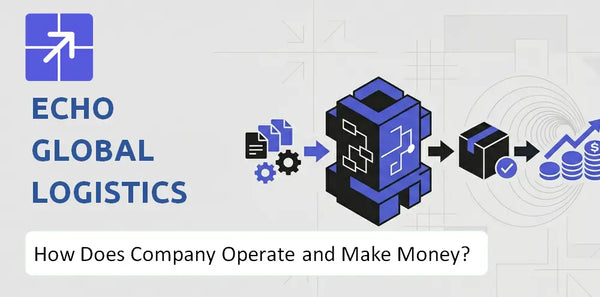
Echo scales by automating load matching and pricing, reducing capital needs and improving margins; prioritize carrier reliability and real-time visibility. See product insight: Echo Global Logistics BCG Matrix Analysis
What Does Echo Global Logistics Actually Sell?
Echo Global Logistics sells transportation management services and supply chain expertise via a logistics technology platform; customers pay for access to a vetted carrier network, real – time visibility, routing optimization, and outsourced freight operations rather than physical assets.
 Core Offerings: Transportation Management and Tech
Echo Global Logistics provides freight brokerage services across Truckload, Less – Than – Truckload (LTL), and Intermodal, driven by its EchoShip transportation management system (TMS) and EchoDrive carrier portal. Revenue comes from transaction margins, managed services contracts, and technology subscriptions; in fiscal 2025 Echo reported freight revenue and service fees aligned to a network of over 50,000 carriers.
Who Buys It: Shippers and Retailers
Buyers include mid – to – large shippers, retailers, manufacturers, and brokers seeking third party logistics provider (3PL) support and freight brokerage services. Customers range from high – volume national accounts to regional distributors that need spot market capacity and contract logistics support.
Customer Value: Cost, Certainty, and Efficiency
Clients get lower transportation costs via aggregated buying power, reduced empty miles through optimized routing, and real – time freight tracking for improved on – time performance. Outsourced logistics management replaces in – house teams, cutting operating overhead and improving service levels.
Differentiators: Technology and Carrier Network
Echo Global Logistics business model centers on a logistics technology platform that links shippers to a broad carrier base, offering API integration, EDI support, and digital freight marketplace features. This combination of EchoShip TMS, EchoDrive carrier tools, and a large carrier network makes procurement, capacity management, and compliance simpler and faster; see Competitive Landscape of Echo Global Logistics Company for context: Competitive Landscape of Echo Global Logistics Company
Echo Global Logistics SWOT Analysis
- Complete SWOT Breakdown
- Fully Customizable
- Editable in Excel & Word
- Professional Formatting
- Investor-Ready Format

How Does Echo Global Logistics Run Its Business Day to Day?
Echo Global Logistics runs a high-volume, data-driven brokerage and managed-transport operation where AI pricing, real-time tracking, and ERP integration drive daily match, execution, and exception workflows; human brokers handle complex negotiations and relationships while software automates matching, documentation, and carrier payables.

Operating model: transactional, tech-first brokerage
Echo Global Logistics business model centers on a high-volume transactional engine that processes thousands of loads per day using AI-driven pricing algorithms and a logistics technology platform to match shipper demand with carrier capacity in real time.
Service delivery: on-demand brokerage and managed transport
Customers access Echo Global Logistics services via direct sales, APIs/EDI, and a portal; shippers submit loads through ERP integrations or the digital freight marketplace and receive routed capacity, tracking, and billing through the platform.
Production/sourcing: carrier network and procurement
Echo sources capacity from a broad carrier network – asset and non-asset partners – using automated tendering and dynamic spot-market engagement; by FY2025 the firm reported handling over 1.2 million loads annually across modes (road, intermodal, LTL, truckload).
Sales channels: blended direct and digital distribution
Sales use direct enterprise account teams for Managed Transportation and self-serve or API/EDI channels for transactional freight brokerage services; channel mix drives recurring contract revenue and spot-booked load volume.
Key assets: tech stack, carrier relationships, data
Core assets include the logistics technology platform, TMS integrations, proprietary pricing algorithms, and a carrier network; partnerships with carriers and ERP systems enable scale and improved capacity management across the freight brokerage services portfolio.
What makes it work: automation plus human expertise
Automation handles routine matching, documentation, and carrier payments so brokers focus on complex exceptions and customer relationships; by March 2026 automation reduced manual match tasks by an estimated 40%, increasing throughput and lowering operating cost per load.
Daily workflow: AI offers price, system auto-tenders to carriers, human broker negotiates exceptions, operations tracks via TMS, billing and carrier payables settle through automated pay systems; Echo Global Logistics carrier network and partnerships provide capacity while ERP/API links feed Managed Transportation oversight and spend optimization. Read the company context here: Mission, Vision, and Values of Echo Global Logistics Company
Echo Global Logistics Business Model Canvas
- One-time Payment
- No Research Needed – Save Hours of Work
- Built by Experts, Trusted by Consultants
- Instant Download, Ready to Use
- 100% Editable, Fully Customizable

How Does Revenue Flow Through Echo Global Logistics?
Revenue at Echo Global Logistics flows mainly from the spread between shipper prices and carrier costs and from recurring managed-transportation contracts; spot demand converts to cash on delivery while contract work yields predictable fees. Total revenue equals load volume times market rates, with 2025 gross margins in the 14% – 16% range depending on freight cycles.
Main revenue stream: Transactional Freight Spread
Echo Global Logistics earns most revenue from the gross margin (spread) between rates charged to shippers and rates paid to carriers in freight brokerage services; this spot-market-driven model converts demand to cash at delivery and dominated 2025 top-line swings.
Additional revenue: Managed Transportation and Services
Managed Transportation provides recurring-style revenue via management fees or a percentage of total freight spend; ancillary services – technology fees, accessorials, and contract logistics – add revenue and stickiness to Echo Global Logistics services.
Pricing and monetization model: Spread plus fee-based contracts
Echo monetizes through transactional spreads on individual loads and fixed or variable management fees on long-term contracts; it also captures revenue from technology integrations, API/EDI services, and value-added logistics, aligning with its logistics technology platform strategy.
What drives revenue most: Volume, rates, and capacity
Revenue is driven by load volume and prevailing market rates; capacity tightness and spot-market volatility shift gross margins. Echo Global Logistics carrier network and partnerships, plus recovery in industrial production, support the 2026 outlook for higher revenue.
For background on corporate history and strategy, see History and Background of Echo Global Logistics Company
Echo Global Logistics Marketing Mix
- Complete Marketing Mix Analysis
- Effortlessly Communicate Your Business Strategy
- Investor-Ready Format
- 100% Editable and Customizable
- Clear and Structured Layout

What Makes Echo Global Logistics's Model Sustainable or Fragile?
Echo Global Logistics's model is sustainable due to scale-driven network effects and asset-light operations but fragile where spot-rate volatility, carrier reliability, and brokerage commoditization threaten margins. Structural strengths include data density and platform reach; dependencies on third-party carriers and competitive tech entrants are persistent risks.
Scale-driven network effects support the model
Higher loads attract more carriers, which draws more shippers, reinforcing Echo Global Logistics freight brokerage services and expanding its logistics technology platform. In 2025 Echo reported handling over 100 million shipments annually across truckload, LTL, and intermodal channels, increasing data density for better routing and pricing.
Key assets and capabilities
Echo Global Logistics services rely on a proprietary TMS, API and EDI integrations, and a nationwide carrier network; these give scale and product breadth as a third party logistics provider. Technology-enabled sales and account teams moved the firm toward being a logistics technology platform and strategic partner in 2025.
Dependencies and operational constraints
Revenue depends on carrier capacity availability and spot market pricing; Echo Global Logistics carrier network and partnerships expose it to concentration and service-quality risk. Contract mix matters: in 2025 management noted spot market represented a meaningful portion of volume, making margins sensitive to rate swings.
How durable the model looks in 2025/2026
Professional judgment: robust but needs active defense. Echo Global Logistics revenue model explained shows successful transition from pure broker to technology-forward 3PL, with margin discipline and incremental tech revenue, yet it must protect pricing against automated digital freight marketplace competitors. See Sales and Marketing Strategy of Echo Global Logistics Company for client acquisition context.
Echo Global Logistics Boston Consulting Group Matrix
- Built by Experts, Trusted by Consultants
- Structured for Consultants, Students, and Founders
- 100% Editable in Microsoft Word & Excel
- Instant Digital Download – Use Immediately
- Compatible with Mac & PC – Fully Unlocked

Related Blogs
- What Is the History of Echo Global Logistics Company and How Did It Evolve?
- What Is the Competitive Landscape of Echo Global Logistics Company and How Does It Compete?
- What Is the Growth Outlook of Echo Global Logistics Company and Where Is It Heading?
- How Does Echo Global Logistics Company Reach Customers and Turn Demand into Sales?
- What Do the Mission, Vision, and Core Values of Echo Global Logistics Company Reveal?
- Who Are the Core Customers in Echo Global Logistics Company's Target Market?
- Who Owns Echo Global Logistics Company Today and Who Holds Control?
Frequently Asked Questions
Echo Global Logistics sells transportation management services and supply chain expertise, not physical assets. Customers pay for access to a vetted carrier network, real-time visibility, routing optimization, and outsourced freight operations through its logistics technology platform and freight brokerage services.
Disclaimer
All information, articles, and product details provided on this website are for general informational and educational purposes only. We do not claim any ownership over, nor do we intend to infringe upon, any trademarks, copyrights, logos, brand names, or other intellectual property mentioned or depicted on this site. Such intellectual property remains the property of its respective owners, and any references here are made solely for identification or informational purposes, without implying any affiliation, endorsement, or partnership.
We make no representations or warranties, express or implied, regarding the accuracy, completeness, or suitability of any content or products presented. Nothing on this website should be construed as legal, tax, investment, financial, medical, or other professional advice. In addition, no part of this site - including articles or product references - constitutes a solicitation, recommendation, endorsement, advertisement, or offer to buy or sell any securities, franchises, or other financial instruments, particularly in jurisdictions where such activity would be unlawful.
All content is of a general nature and may not address the specific circumstances of any individual or entity. It is not a substitute for professional advice or services. Any actions you take based on the information provided here are strictly at your own risk. You accept full responsibility for any decisions or outcomes arising from your use of this website and agree to release us from any liability in connection with your use of, or reliance upon, the content or products found herein.