
How does FINEOS convert legacy insurance operations into subscription revenue through its core platforms?
FINEOS sells cloud-native core systems to life, accident, and health insurers, shifting clients from on-premise silos to multi-year subscriptions; this matters because in 2025 FINEOS reported rising subscription adoption driving higher recurring revenue and stickier contracts.
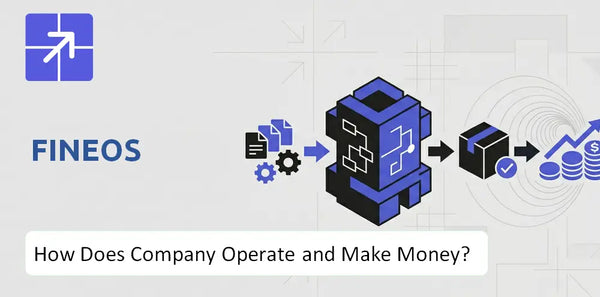
Focus on renewals and implementation speed; faster go-lives cut churn risk and unlock FINEOS BCG Matrix Analysis insights tied to product-market fit.
What Does FINEOS Actually Sell?
FINEOS sells the FINEOS AdminSuite, a cloud-native SaaS insurance platform that replaces legacy core systems for group and individual life, disability, and health insurers. Customers pay for modular policy administration, billing, claims management, and integrated absence management plus industry-specific logic and implementation services.
 Core product: FINEOS AdminSuite
FINEOS AdminSuite is a modular, cloud-native core insurance platform providing policy administration, billing, insurance claims management software, and claims automation. The platform embeds life and disability core systems logic (disability benefit calculations, paid family leave rules) so insurers get purpose-built workflows rather than generic ERP or CRM software.
Who buys FINEOS software
Primary buyers are life, group protection, and disability insurers, TPAs (third-party administrators), and large employers offering self-funded benefits. Procurement focuses on core systems replacement, SaaS insurance platform adoption, and modernization projects for claims and policy administration.
Customer value: speed, accuracy, single source
Customers gain faster claim processing, lower operational risk, and consolidated data as a single automated source of truth. FINEOS customers report reduced manual touchpoints and improved compliance for complex regulatory regimes; typical implementations cite claims processing time reductions and measurable admin cost savings.
Why FINEOS stands out
FINEOS differentiates by selling industry-specific business logic and modularity – not just a generic platform – plus a partner ecosystem for implementations and integrations with policy administration systems. The cloud platform supports faster upgrades and lower upfront capex versus on-premise replacements, and the vendor offers demo requests and trials linked to customer case studies and success stories.
For contextual company background and history see History and Background of FINEOS Company
FINEOS SWOT Analysis
- Complete SWOT Breakdown
- Fully Customizable
- Editable in Excel & Word
- Professional Formatting
- Investor-Ready Format

How Does FINEOS Run Its Business Day to Day?
FINEOS runs day-to-day as a SaaS insurance platform with continuous DevOps deployments, AWS-hosted production, and a large professional-services arm that leads multi-year insurer implementations while regional teams provide 24/7 support.

Operating model: cloud-first SaaS with embedded services
FINEOS combines subscription SaaS revenue from its FINEOS software with sizable professional-services fees during implementation. Core product development sits in Ireland while delivery hubs in North America and Asia-Pacific coordinate global rollouts and support.
Product and service delivery: platform plus hands-on configuration
Customers access the SaaS insurance platform via secure AWS instances; procurement is usually a multi-stage contract followed by discovery, configuration, testing, and phased cutover. Implementation teams of domain experts work alongside insurer staff to configure life and disability core systems and claims flows.
Production, sourcing, and development: DevOps on AWS
Daily ops center on CI/CD pipelines, automated testing, and platform maintenance on AWS. Product roadmaps and engineering are centralized in Ireland; offshore and regional engineering deliver localization, compliance, and integration adapters for policy administration systems.
Sales channels and distribution: direct enterprise sales plus partners
FINEOS sells primarily through direct enterprise sales to carriers and brokers, supported by a partner ecosystem of consultants and systems integrators. Renewals and SaaS subscriptions generate recurring revenue while services drive upfront cash flow during migration.
Key assets, systems, and partnerships: cloud, IP, and experts
Key assets include the FINEOS software codebase, AWS-hosted infrastructure, certified integration adapters, and a global bench of functional insurance experts. Strategic partnerships with cloud providers and consulting firms help scale implementations and integrations.
What makes the model work in practice: specialist services plus product
The hybrid model – recurring SaaS plus high-margin professional services – reduces churn risk during complex migrations. Continuous DevOps releases and 24/7 regional support keep live carriers running; industry-specific modules for insurance claims management software speed time-to-value.
For examples of target customers and market fit, see Target Customers and Market of FINEOS Company.
FINEOS Business Model Canvas
- One-time Payment
- No Research Needed – Save Hours of Work
- Built by Experts, Trusted by Consultants
- Instant Download, Ready to Use
- 100% Editable, Fully Customizable

How Does Revenue Flow Through FINEOS?
Revenue at FINEOS flows mainly from high-margin recurring subscriptions and lower-margin professional services; demand converts through long sales cycles into multi-year contracts priced by covered lives or premium volume, then shifts to subscription billing after go-live.
Main revenue: Recurring subscription contracts
FINEOS software earns the bulk of turnover from multi-year SaaS insurance platform contracts tied to the number of covered lives or premiums processed; entering 2026 subscriptions make up roughly 80 – 85 percent of revenue and carry gross margins often above 85 percent.
Additional revenue: Professional services and integrations
Professional services – implementation, configuration, and systems integration – generate the material secondary stream during deployment phases and historically account for the remaining 15 – 20 percent of turnover; partner consulting and third-party integrations add incremental fees.
Pricing and monetization model
FINEOS monetizes via per-covered-life or volume-based subscription pricing for life and disability core systems, plus time-and-materials or fixed-fee professional services; long sales cycles of 12 – 24 months convert pipeline into signed ARR before implementation revenue peaks.
Primary revenue drivers
Growth is driven by contract scale (covered lives/premium volume), conversion of long sales cycles, and retention of large insurers; steady-state subscription margins fund R&D and cloud platform expansion – see Growth Outlook of FINEOS Company for context.
FINEOS Marketing Mix
- Complete Marketing Mix Analysis
- Effortlessly Communicate Your Business Strategy
- Investor-Ready Format
- 100% Editable and Customizable
- Clear and Structured Layout

What Makes FINEOS's Model Sustainable or Fragile?
FINEOS's model is sustainable due to extreme customer stickiness – migration costs and regulatory integration lock insurers into core claims and billing systems – but fragile because revenue is concentrated in Tier 1 carriers and dependent on large, lumpy professional services projects and high R&D spend to stay ahead of Guidewire and Duck Creek.
Defensive Moat: Customer Stickiness
Once an insurer embeds FINEOS software into life and disability core systems, switching costs rise sharply; implementations tie to claims workflows, regulatory reporting, and actuarial processes. Clients typically run mission-critical insurance claims management software for decades, giving FINEOS a high retention profile and recurring SaaS and maintenance revenue.
Key Assets and Capabilities
FINEOS's cloud platform, modular FINEOS claims and billing suites, and deep domain expertise in life and disability core systems create a product moat. Its partner ecosystem and professional services capability support large migrations and integrations with policy administration systems, helping drive expansion revenue and cross-sell.
Dependencies and Concentration Risks
Revenue is concentrated among Tier 1 carriers and large transformation deals; professional services can be lumpy – FINEOS reported material variability in services bookings in recent fiscal years. The model also depends on sustained R&D spend to compete with Guidewire and Duck Creek and on North American insurance modernization budgets that are sensitive to macro cycles.
Durability in 2025/2026
As of fiscal 2025, professional judgment and company disclosures indicate cloud-migration peaks are easing and free cash flow is turning positive, suggesting a move toward sustainable cash generation. Still, FINEOS remains a high-beta play tied to the pace of insurer modernization and the timing of large services contracts; pipeline sensitivity to macroeconomic shifts keeps exposure elevated. See Competitive Landscape of FINEOS Company for context: Competitive Landscape of FINEOS Company
FINEOS Boston Consulting Group Matrix
- Built by Experts, Trusted by Consultants
- Structured for Consultants, Students, and Founders
- 100% Editable in Microsoft Word & Excel
- Instant Digital Download – Use Immediately
- Compatible with Mac & PC – Fully Unlocked

Related Blogs
- What Is the History of FINEOS Company and How Did It Evolve?
- What Is the Competitive Landscape of FINEOS Company and How Does It Compete?
- What Is the Growth Outlook of FINEOS Company and Where Is It Heading?
- How Does FINEOS Company Reach Customers and Turn Demand into Sales?
- What Do the Mission, Vision, and Core Values of FINEOS Company Reveal?
- Who Are the Core Customers in FINEOS Company's Target Market?
- Who Owns FINEOS Company Today and Who Holds Control?
Frequently Asked Questions
FINEOS sells the FINEOS AdminSuite, a cloud-native SaaS insurance platform. It replaces legacy core systems and covers policy administration, billing, claims management, and integrated absence management. The platform is aimed at group and individual life, disability, and health insurers, with implementation services and industry-specific logic included.
Disclaimer
All information, articles, and product details provided on this website are for general informational and educational purposes only. We do not claim any ownership over, nor do we intend to infringe upon, any trademarks, copyrights, logos, brand names, or other intellectual property mentioned or depicted on this site. Such intellectual property remains the property of its respective owners, and any references here are made solely for identification or informational purposes, without implying any affiliation, endorsement, or partnership.
We make no representations or warranties, express or implied, regarding the accuracy, completeness, or suitability of any content or products presented. Nothing on this website should be construed as legal, tax, investment, financial, medical, or other professional advice. In addition, no part of this site - including articles or product references - constitutes a solicitation, recommendation, endorsement, advertisement, or offer to buy or sell any securities, franchises, or other financial instruments, particularly in jurisdictions where such activity would be unlawful.
All content is of a general nature and may not address the specific circumstances of any individual or entity. It is not a substitute for professional advice or services. Any actions you take based on the information provided here are strictly at your own risk. You accept full responsibility for any decisions or outcomes arising from your use of this website and agree to release us from any liability in connection with your use of, or reliance upon, the content or products found herein.