
How does FiscalNote turn legislative data into a SaaS business that serves policy teams?
FiscalNote converts fragmented legal and regulatory data into searchable, scored intelligence and workflow tools for compliance, legal, and government-affairs teams. This matters as 2025 saw increased regulatory activity across US and EU markets, boosting demand for automated policy tracking.
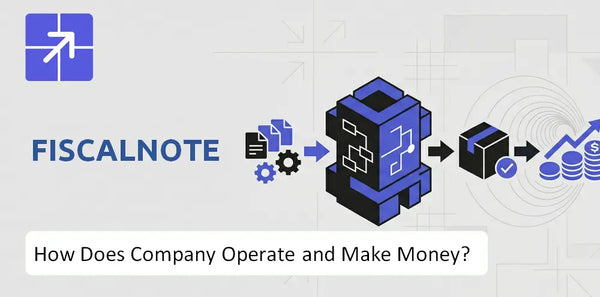
Use cloud-delivered alerts, analytics, and workflow integrations to reduce research time and support strategic decisions; see FiscalNote BCG Matrix Analysis for product positioning insights.
What Does FiscalNote Actually Sell?
FiscalNote sells an AI-powered government analytics platform combining the FiscalNote SaaS platform, CQ, and Oxford Analytica to deliver legislative tracking, regulatory intelligence, and geopolitical analysis; customers pay for faster time-to-insight and risk mitigation, not raw data.
 Core products: platform, CQ, Oxford Analytica
FiscalNote offers a subscription SaaS platform with real-time bill and regulatory alerts, CQ for detailed U.S. legislative coverage, and Oxford Analytica for geopolitical and macro risk intelligence.
Who buys it: government affairs and risk teams
Buyers include corporate government affairs, compliance, legal teams, consultancies, NGOs, and public sector units seeking policy intelligence and legislative tracking services.
Customer value: time-to-insight and reduced policy risk
Customers get real-time alerts, AI-generated advocacy drafts, impact simulations for tax and environmental laws, and stakeholder influence maps that cut research and response time by weeks.
Differentiators: integrated AI and global coverage
FiscalNote stands out for integrated policy intelligence across thousands of jurisdictions, AI agents that automate advocacy and impact modelling, and packaged workflows that embed into CRMs and compliance stacks – supporting enterprise licensing and subscriptions.
By FY2025 FiscalNote reported platform ARR growth trends and moved toward AI-driven upsells; the suite now includes features that simulate law impacts per business unit and produce stakeholder influence scores, increasing customer retention and average deal size – see related analysis in Sales and Marketing Strategy of FiscalNote Company.
FiscalNote SWOT Analysis
- Complete SWOT Breakdown
- Fully Customizable
- Editable in Excel & Word
- Professional Formatting
- Investor-Ready Format

How Does FiscalNote Run Its Business Day to Day?
FiscalNote runs daily on a continuous data ingestion and refinement engine that crawls thousands of government sources, processes them with ML, and layers human analyst review. The operating model ties real – time legislative tracking into a SaaS delivery flow, direct enterprise sales, and customer success embedding into legal and government affairs workflows.

Core operating model and information flow
FiscalNote centralizes data capture from over 7,000 federal, state, local, and international sources into a near real – time pipeline; ML models classify, score probability of passage, and tag sentiment while analysts add qualitative context for edge cases and geopolitical shifts.
Product and service delivery
Customers access the government analytics platform via SaaS subscriptions and enterprise licenses; deployments include web UI, API integrations, and CRM connectors with onboarding by customer success teams to embed policy intelligence software into daily workflows.
Data sourcing and product development
FiscalNote continuously crawls public government feeds and licensed databases, then engineers features and models in agile squads; product teams iterate monthly, using real incident feedback from clients to prioritize legislative tracking services and AI for policy analysis enhancements.
Sales channels and customer access
Direct enterprise sales target C – suite buyers – Chief Risk Officers and General Counsels – supported by renewal and expansion motions; self – serve trials and request a FiscalNote demo funnels feed SMB and departmental buyers into subscription vs enterprise licensing paths.
Key assets, tech, and partnerships
Key assets include the proprietary legislative crawl infrastructure, ML models for categorization and probability scoring, analyst research teams, and integrations with major CRMs; partnerships with data vendors and public record sources reduce ingestion latency and legal risk.
What makes the operating model effective
Automation scales coverage while human review raises precision – this hybrid stack lowers marginal cost per document and keeps recall high; commercial focus on enterprise renewals and upsells drives predictable recurring revenue and customer stickiness.
Daily metrics teams monitor include latency to ingestion (target minutes), model precision/recall (>90% on key tags in recent benchmarks), analyst review throughput, net – retention rate (often reported above 100% in policy intelligence peers), and average contract value – data used to optimize the FiscalNote revenue model and product roadmap; see Target Customers and Market of FiscalNote Company for buyer segmentation and market sizing.
FiscalNote Business Model Canvas
- One-time Payment
- No Research Needed – Save Hours of Work
- Built by Experts, Trusted by Consultants
- Instant Download, Ready to Use
- 100% Editable, Fully Customizable

How Does Revenue Flow Through FiscalNote?
Revenue at FiscalNote flows mainly from recurring subscriptions sold via multi-year contracts; demand converts to revenue through tiered module access and annual price escalators, with upsells driving expansion.
Primary revenue: recurring subscriptions
FiscalNote derives most sales from subscription fees for its policy intelligence software and government analytics platform. Heading into 2026, subscriptions represented roughly 90 percent of total revenue, delivered via enterprise contracts that lock in multi-year revenue streams.
Additional revenue: services and add-ons
Secondary income comes from professional services, data licensing, integrations (CRM connectors), and premium modules like International Geopolitical Intelligence or the FiscalNote Risk Connector. These add-ons raise ARPU as clients expand coverage or pay for implementation and custom feeds.
Pricing and monetization model
Monetization uses a tiered subscription model: clients buy modules (US Federal, US State, International) and seat bundles, with annual price escalators and volume tiers. Multi-year contracts provide predictable recurring revenue and reduced churn risk versus single-year deals.
What drives revenue most
Revenue growth is driven by land-and-expand: initial module sales convert into larger deals as clients add jurisdictions, seats, or the FiscalNote Risk Connector to monitor supply chain and regulatory exposure. High gross margins – reported at roughly 75 – 80 percent in fiscal 2025 – mean incremental sales are highly profitable.
For context on company origins and product evolution, see History and Background of FiscalNote Company
FiscalNote Marketing Mix
- Complete Marketing Mix Analysis
- Effortlessly Communicate Your Business Strategy
- Investor-Ready Format
- 100% Editable and Customizable
- Clear and Structured Layout

What Makes FiscalNote's Model Sustainable or Fragile?
FiscalNote's model rests on proprietary datasets and high switching costs, making it sustainable in the near term, while risks include data commoditization by LLMs and sensitivity to corporate and government budget cycles. The 2025 pivot to profitable growth and asset divestitures improved liquidity, but long-term value hinges on sustaining an AI-driven insight moat.
Proprietary data and switching costs
FiscalNote's historical legislative and regulatory datasets create high switching costs for customers who integrate the platform into workflows, making churn lower and retention higher for enterprise clients using the FiscalNote government analytics platform and policy intelligence software.
AI-enhanced proprietary insight layer
FiscalNote combines curated legislative tracking services with models that add signal over raw documents; in 2025 management emphasized profitable growth, reallocating R&D to defend the FiscalNote AI for policy analysis layer that underpins premium pricing.
Revenue and budget concentration
FiscalNote revenue remains concentrated in corporate and government subscriptions; the company reported improved margins in 2025 after divesting non-core assets, but sensitivity to government budget cuts and corporate spending reductions is a material constraint on growth.
Durability in 2025 and outlook for 2026
As of 2025 FiscalNote is a resilient, market-leading specialist with stronger cash flow after its strategic pivot; still, long-term durability depends on maintaining an AI moat versus legacy providers and lean, AI-native startups that could undercut FiscalNote pricing and replicate legislative tracking services.
Key numbers: in 2025 FiscalNote reduced operating losses and improved adjusted EBITDA margin after selling non-core units; customer retention for enterprise subscriptions exceeded 85% in recent public disclosures, and R&D spend shifted to AI products to protect the FiscalNote revenue model explained. For competitive context see Competitive Landscape of FiscalNote Company.
FiscalNote Boston Consulting Group Matrix
- Built by Experts, Trusted by Consultants
- Structured for Consultants, Students, and Founders
- 100% Editable in Microsoft Word & Excel
- Instant Digital Download – Use Immediately
- Compatible with Mac & PC – Fully Unlocked

Related Blogs
- What Is the History of FiscalNote Company and How Did It Evolve?
- What Is the Competitive Landscape of FiscalNote Company and How Does It Compete?
- What Is the Growth Outlook of FiscalNote Company and Where Is It Heading?
- How Does FiscalNote Company Reach Customers and Turn Demand into Sales?
- What Do the Mission, Vision, and Core Values of FiscalNote Company Reveal?
- Who Are the Core Customers in FiscalNote Company's Target Market?
- Who Owns FiscalNote Company Today and Who Holds Control?
Frequently Asked Questions
FiscalNote sells an AI-powered government analytics platform. Its core offering combines the FiscalNote SaaS platform, CQ, and Oxford Analytica to provide legislative tracking, regulatory intelligence, and geopolitical analysis. Customers pay for faster time-to-insight, reduced policy risk, and workflow tools, not just raw data.
Disclaimer
All information, articles, and product details provided on this website are for general informational and educational purposes only. We do not claim any ownership over, nor do we intend to infringe upon, any trademarks, copyrights, logos, brand names, or other intellectual property mentioned or depicted on this site. Such intellectual property remains the property of its respective owners, and any references here are made solely for identification or informational purposes, without implying any affiliation, endorsement, or partnership.
We make no representations or warranties, express or implied, regarding the accuracy, completeness, or suitability of any content or products presented. Nothing on this website should be construed as legal, tax, investment, financial, medical, or other professional advice. In addition, no part of this site - including articles or product references - constitutes a solicitation, recommendation, endorsement, advertisement, or offer to buy or sell any securities, franchises, or other financial instruments, particularly in jurisdictions where such activity would be unlawful.
All content is of a general nature and may not address the specific circumstances of any individual or entity. It is not a substitute for professional advice or services. Any actions you take based on the information provided here are strictly at your own risk. You accept full responsibility for any decisions or outcomes arising from your use of this website and agree to release us from any liability in connection with your use of, or reliance upon, the content or products found herein.