
How does Freshpet transform refrigerated pet food into a scalable branded business?
Freshpet builds a premium pet-food model by owning fresh manufacturing, distribution, and a proprietary fridge network that forces repeat purchase behavior. This matters because in 2025 Freshpet expanded fridge placements and reported rising same-store sales, signaling retail stickiness.
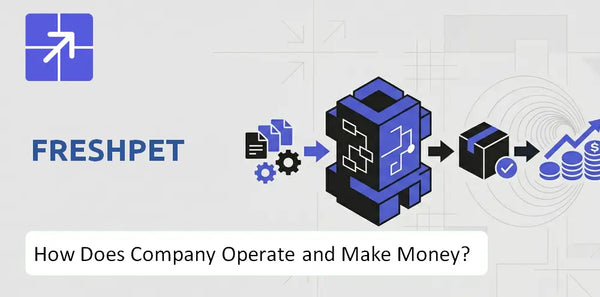
Focus on fridge density and cold-chain CAPEX: increasing fridge coverage raised household penetration in 2025, so prioritize retail execution and inventory cadence.
What Does Freshpet Actually Sell?
Freshpet sells refrigerated, fresh and minimally processed meals and treats for dogs and cats – products that require constant refrigeration and are sold in rolls, bags, and single-serve formats; customers pay for fresher, human-grade ingredients and perceived health benefits rather than commodity kibble.
 Core Product Lines
Freshpet company offers refrigerated rolls, sliced and chunk-style bags, and refrigerated treats made from cooked meat, vegetables, and limited preservatives; production emphasizes lower-temperature cooking to preserve nutrients and texture.
Primary Buyers
Buyers are premium-oriented pet owners who view pets as family, plus specialty pet retailers, grocery chains with refrigerated pet aisles, and online grocers; demographic skew: urban/suburban, higher household income, frequent buyer cohorts.
Customer Value Proposition
Customers get perceived nutritional integrity, fresher ingredient profiles, and convenience in portioned formats; value is a premium health solution that aligns with human-grade food trends and drives higher lifetime value per pet through repeat purchase.
Differentiators and Purchase Drivers
Freshpet business model explained: refrigerated cold-chain distribution, branded SKUs, and in-store refrigerated merchandising differentiate it from kibble and canned competitors; marketing targets premiumization and pet wellness, supporting higher ASPs and margins.
In 2025 Freshpet revenue drivers include retail penetration in >15,000 refrigerated locations, growing e-commerce and club channels, and a US premium pet food market projected to exceed $60,000,000,000 by late 2026; see Ownership and Control of Freshpet Company for governance context: Ownership and Control of Freshpet Company
Freshpet SWOT Analysis
- Complete SWOT Breakdown
- Fully Customizable
- Editable in Excel & Word
- Professional Formatting
- Investor-Ready Format

How Does Freshpet Run Its Business Day to Day?
Freshpet Company runs daily operations through a vertically integrated farm-to-fridge model: in-house Kitchens manufacture refrigerated pet food, company-controlled logistics deliver to retail partners, and proprietary Freshpet Fridge units in stores are installed, maintained, and restocked to keep products fresh and visible.

Operating model: vertically integrated refrigerated supply chain
Freshpet Company coordinates raw ingredient sourcing, processing at company Kitchens, cold-chain logistics, and retail fridge merchandising to keep short-shelf-life products fresh and premium-priced. Daily operations track production runs, inventory turnover, and fridge fill rates to meet demand.
Product delivery: fridge-first retail access
Customers buy Freshpet products primarily from refrigerated Freshpet Fridge units in grocery, mass, and pet specialty stores or via retailer e-commerce. The brand ensures consistent placement in over 39,000 retail locations as of early 2026 to drive trial and repeat purchases.
Production and sourcing: Kitchens and ingredient standards
Freshpet manufactures in company-owned Kitchens that handle fresh meat and vegetables under strict quality controls; production cycles are short and scheduled to match store replenishment windows. Sourcing emphasizes traceability and refrigeration-compatible suppliers to minimize spoilage.
Sales channels and distribution: retail-first with omnichannel support
Distribution centers ship refrigerated pallets to national grocers, mass merchants, and independent pet stores; Freshpet also supports retailer online ordering and click-and-collect. Closed-loop stocking of Freshpet Fridge units increases sell-through versus ambient shelf listings.
Key assets and systems: Kitchens, cold chain, and fridges
Core assets include company Kitchens, refrigerated DCs, proprietary Freshpet Fridge hardware, and inventory-management software that optimizes route frequency and fill rates. Strategic retail partnerships and national shelf placement are operational advantages.
What makes it work: control of the merchandising environment
Owning the refrigerated merchandising (Freshpet Fridge), aligning production cadence to weekly retail orders, and tight cold-chain logistics reduce out-of-stock and spoilage. This drives higher price points and repeat purchase, supporting Freshpet revenue and gross margins.
For operational marketing and retail execution details see Sales and Marketing Strategy of Freshpet Company
Freshpet Business Model Canvas
- One-time Payment
- No Research Needed – Save Hours of Work
- Built by Experts, Trusted by Consultants
- Instant Download, Ready to Use
- 100% Editable, Fully Customizable

How Does Revenue Flow Through Freshpet?
Revenue primarily flows from wholesale refrigerated product sales to national and regional retailers, which then sell to consumers; e-commerce and last-mile partnerships add incremental income. Demand converts to revenue via fridge-network density and repeat buy rates that boost per-fridge throughput and margin.
Wholesale refrigerated retail sales
Freshpet company earns most revenue by selling refrigerated pet food to major retailers like Walmart, Target, and Kroger, who handle front – end retail sales to consumers. For fiscal 2025, Freshpet reported revenue approaching 1.2 billion dollars, driven by wider household penetration and higher buy rates per customer.
E-commerce, delivery, and direct channels
Secondary revenue streams include e-commerce partnerships, subscription boxes, and last – mile refrigerated delivery, which increase reach but face high per – order shipping costs for chilled proteins and liquids. These channels improve customer lifetime value but remain smaller than in – store sales.
Pricing and monetization model
Freshpet monetizes through wholesale pricing sold to retailers, retail markup to end consumers, and fees or revenue shares on direct/e – commerce sales; pricing reflects refrigerated logistics and ingredient quality. Higher per – fridge throughput raises gross margin by spreading fixed cold – chain costs.
Key revenue drivers
Revenue growth is driven most by fridge network density (more SKUs stocked per retailer fridge), sales velocity (buy rate), and household penetration, now exceeding 13 million homes in 2025. Operational scale in manufacturing and cold – chain distribution improves return on invested capital as volume rises.
Competitive Landscape of Freshpet Company
Freshpet Marketing Mix
- Complete Marketing Mix Analysis
- Effortlessly Communicate Your Business Strategy
- Investor-Ready Format
- 100% Editable and Customizable
- Clear and Structured Layout

What Makes Freshpet's Model Sustainable or Fragile?
Freshpet company's model is sustainable because its fridge moat and first-mover scale lock in retail placement and refrigerated shelfshare, yet fragile due to high capital intensity, cold-chain energy exposure, and protein-cost sensitivity that can compress margins and slow growth.
Fridge moat and retail lock-in
Freshpet business model benefits from a first-mover advantage in refrigerated pet food: dedicated in-store coolers create switch costs for retailers and shelf visibility that competitors struggle to match. Retail partners must allocate floor space and electricity, a tangible barrier that preserves Freshpet revenue and category share.
Scaled manufacturing and distribution
Freshpet manufacturing and production process has scaled with multiple facilities and a national cold chain, enabling broader distribution and higher throughput. Scale supports procurement leverage for proteins and packaging, helping protect Freshpet profit margins as volumes rise.
Capital intensity and cold-chain costs
The model depends on heavy capital expenditure for refrigerated manufacturing and retailer coolers, plus ongoing energy costs for distribution. Protein inflation and higher utility rates directly impact Freshpet financials and can erode Freshpet revenue per unit and Adjusted EBITDA if not offset by pricing or efficiency.
Resilience vs. fragility in 2025/2026
As of fiscal 2025, Freshpet revenue growth remained above category peers but margin expansion depends on realizing efficiencies at the Ennis, Texas facility to hit the long-term target of 18 percent Adjusted EBITDA. The business looks durable as a scaled category leader, but its valuation premium requires sustaining >20 percent annual growth and managing price sensitivity among consumers.
See related context in History and Background of Freshpet Company
Freshpet Boston Consulting Group Matrix
- Built by Experts, Trusted by Consultants
- Structured for Consultants, Students, and Founders
- 100% Editable in Microsoft Word & Excel
- Instant Digital Download – Use Immediately
- Compatible with Mac & PC – Fully Unlocked

Related Blogs
- What Is the History of Freshpet Company and How Did It Evolve?
- What Is the Competitive Landscape of Freshpet Company and How Does It Compete?
- What Is the Growth Outlook of Freshpet Company and Where Is It Heading?
- How Does Freshpet Company Reach Customers and Turn Demand into Sales?
- What Do the Mission, Vision, and Core Values of Freshpet Company Reveal?
- Who Are the Core Customers in Freshpet Company's Target Market?
- Who Owns Freshpet Company Today and Who Holds Control?
Frequently Asked Questions
Freshpet sells refrigerated, fresh, minimally processed meals and treats for dogs and cats. Its products come in rolls, bags, and single-serve formats and rely on constant refrigeration. Customers are paying for fresher ingredients, human-grade positioning, and perceived health benefits rather than commodity kibble.
Disclaimer
All information, articles, and product details provided on this website are for general informational and educational purposes only. We do not claim any ownership over, nor do we intend to infringe upon, any trademarks, copyrights, logos, brand names, or other intellectual property mentioned or depicted on this site. Such intellectual property remains the property of its respective owners, and any references here are made solely for identification or informational purposes, without implying any affiliation, endorsement, or partnership.
We make no representations or warranties, express or implied, regarding the accuracy, completeness, or suitability of any content or products presented. Nothing on this website should be construed as legal, tax, investment, financial, medical, or other professional advice. In addition, no part of this site - including articles or product references - constitutes a solicitation, recommendation, endorsement, advertisement, or offer to buy or sell any securities, franchises, or other financial instruments, particularly in jurisdictions where such activity would be unlawful.
All content is of a general nature and may not address the specific circumstances of any individual or entity. It is not a substitute for professional advice or services. Any actions you take based on the information provided here are strictly at your own risk. You accept full responsibility for any decisions or outcomes arising from your use of this website and agree to release us from any liability in connection with your use of, or reliance upon, the content or products found herein.