
How does Goodwin Procter LLP convert specialized legal expertise into revenue across VC, PE, and life sciences deals?
Goodwin Procter LLP acts as a strategic legal partner for venture capital, private equity, and life sciences clients, monetizing niche expertise through high-fee transactions and advisory work. This matters because the firm's 2025 deal flow tracked broader IPO and funding slowdowns, signaling revenue sensitivity to capital markets.
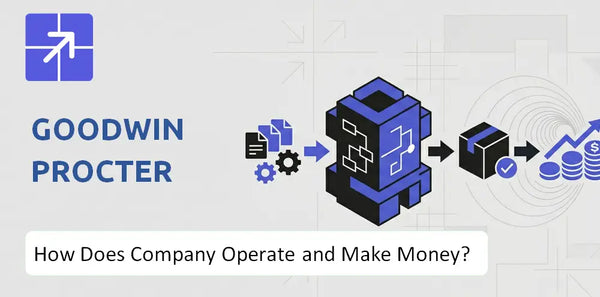
Track client pipeline and pricing by practice; prioritize retainers and cross-selling to stabilize margins. See detailed product analysis: Goodwin Procter BCG Matrix Analysis
What Does Goodwin Procter Actually Sell?
Goodwin Procter LLP sells high-end intellectual labor: legal counsel for complex corporate transactions, IP protection, and regulatory strategy. Clients pay for deal certainty, risk mitigation, and access to a global attorney network with deep SEC and FDA expertise.
 Core Legal Products and Services
Goodwin Procter delivers M&A advisory, private equity buyout execution, IPO and capital markets work, life-sciences regulatory counseling, patent and IP prosecution/defense, complex litigation, and compliance programs. The Goodwin business model mixes hourly billing with alternative fee arrangements for law firms on large deals and retainers for ongoing regulatory work.
Who Buys These Services
Buyers include private equity firms, venture capital-backed startups, public companies, biotech and life-sciences firms, fintech companies, and institutional investors. Corporate boards and C-suite legal teams contract Goodwin for cross-border mergers, high-stakes litigation, and SEC/FDA navigation.
Value Delivered to Clients
Clients receive deal-making certainty, preservation of asset value, reduced regulatory and execution risk, and faster time-to-close on transactions. For large buyouts the firm's involvement can mean the difference between a successful multi – billion dollar closing and structural or legal failure.
Why Goodwin's Offering Stands Out
Goodwin Procter combines industry-focused practice groups, lateral hiring to scale capabilities, and technology-driven knowledge management to lower execution risk. Its brand and track record provide institutional credibility that attracts high-value private equity and venture capital clients; see Competitive Landscape of Goodwin Procter Company.
Goodwin Procter SWOT Analysis
- Complete SWOT Breakdown
- Fully Customizable
- Editable in Excel & Word
- Professional Formatting
- Investor-Ready Format

How Does Goodwin Procter Run Its Business Day to Day?
Goodwin Procter runs day-to-day via a partner-led leverage model: senior partners direct client strategy while associates and counsel handle technical work, augmented in 2025 – 2026 by integrated AI platforms that automate document review and due diligence; practice groups align resources to client market cycles for rapid scaling.

Partner-led leverage operating model
Senior partners own client relationships and fee strategy, while associates, counsel, and support teams execute deliverables. Day-to-day decisions flow from practice group leaders who align resourcing to client demand across Technology, Life Sciences, Real Estate, and other sectors.
Product and service delivery to clients
Clients engage through partner relationships, firm pitches, and industry referrals; matters are staffed by mixed teams. Billing mixes hourly rates with alternative fee arrangements for law firms on large transactions and retainer models for high-value advisory work.
How legal work is produced and sourced
Work is produced by lawyers and managed through knowledge-management systems and AI tools that in 2025 – 2026 handle routine document review and due diligence, freeing attorneys for advisory tasks. Lateral hiring supplements capacity in growth sectors such as fintech and life sciences.
Sales channels and client access
Primary channels are partner-driven client relationships, industry conferences, referrals, and targeted outreach to private equity and venture capital clients. The firm also leverages published thought leadership and targeted sector teams to win mandates.
Key assets, systems, and partnerships
Critical assets include a roster of over 2,000 lawyers, integrated AI platforms, global office footprint, and firm-wide knowledge-management systems. Strategic alliances with tech vendors accelerate deal execution and scalability.
What makes the model work in practice
Efficiency comes from partner-led client ownership, leverage through junior lawyers, and AI automation that reduces review hours. Practice-group alignment to client market cycles allows rapid team scaling when sectors like AI-driven healthcare spike in deal volume; this drives the Goodwin business model and supports firm management and governance in law firms.
For client segmentation and market targeting details see Target Customers and Market of Goodwin Procter Company
Goodwin Procter Business Model Canvas
- One-time Payment
- No Research Needed – Save Hours of Work
- Built by Experts, Trusted by Consultants
- Instant Download, Ready to Use
- 100% Editable, Fully Customizable

How Does Revenue Flow Through Goodwin Procter?
Revenue at Goodwin Procter flows mainly from billed lawyer time and growing fixed-fee work, converting client demand – especially from private equity and venture-backed tech firms – into cash through hourly fees, success fees, and retained engagements.
Primary revenue: hourly and transaction billing
Goodwin Procter's main revenue comes from hourly billing for corporate, litigation, and regulatory work; for 2025 the firm emphasized high utilization across global offices to sustain top-line cash collection. Demand from M&A, capital markets, and contentious matters yields the largest billing hours and drives profitability.
Additional revenue: alternative fees and success fees
The firm increasingly uses alternative fee arrangements for standardized transactions and offers success fees in select M&A deals, plus retainers and subscription-style compliance programs that add predictable recurring revenue streams and capture lifecycle work from VC/PE clients.
Pricing and monetization model
Goodwin monetizes via blended hourly rates, fixed fees for repeatable work, and contingent or success-based uplift on transactions; partner-led pricing and deal economics align with firm management and governance to preserve margins. In 2025 blended realization remained a key metric.
What drives revenue most
Primary drivers are high utilization, mandates from private equity and venture capital clients, and repeat lifecycle work as startups scale to IPOs and secondaries; lateral hiring and international office expansion further boost capacity and cross-border fee capture. See History and Background of Goodwin Procter Company for context.
Goodwin Procter Marketing Mix
- Complete Marketing Mix Analysis
- Effortlessly Communicate Your Business Strategy
- Investor-Ready Format
- 100% Editable and Customizable
- Clear and Structured Layout

What Makes Goodwin Procter's Model Sustainable or Fragile?
Goodwin Procter's model is sustained by dominant share in high-growth sectors and deep life sciences and technology integration, yet it is fragile to capital markets swings and interest-rate sensitivity that can cut transactional revenue and trigger lateral exits. Structural strengths include industry focus and partner economics; key risks are IPO windows, private equity cycles, and the war for top talent.
Sector Concentration and Market Position Support Resilience
Goodwin Procter's focus on life sciences, technology, private equity, and venture capital creates a competitive moat that drives repeat mandates and premium billing. In 2025 transactional work and advisory fees benefited from record private equity dry powder estimated at $2.5 trillion globally, keeping deal flow elevated for the firm.
Key Assets, Capabilities, and Scale
Goodwin Procter leverages industry-focused practice groups, cross-border offices, and proprietary knowledge-management tools to win complex mandates. The firm's billing practices blend hourly rates with alternative fee arrangements for large PE and VC clients, supporting stable revenue diversification and higher margins per partner.
Dependencies, Concentration Risks, and Structural Constraints
Revenue is concentrated in transactional and advisory work tied to IPO and M&A windows; if IPO markets shut or private equity activity stalls, deal fees can drop sharply. The firm is also exposed to talent flight – maintaining Profits per Equity Partner at or above $4,000,000 in 2025 is crucial to deter lateral hires and preserve client relationships.
Durability Outlook for 2025 – 2026
For 2025 and 2026 the model looks stable to positive provided interest rates remain steady and private equity deployment continues; fee pipelines in Q1 – Q3 2025 showed resilience with sustained PE and VC activity. Still, short-term fragility remains from macro shocks; management and governance in law firms must hedge by expanding alternative fee arrangements and accelerating international expansion to smooth cycles.
Mission, Vision, and Values of Goodwin Procter Company
Goodwin Procter Boston Consulting Group Matrix
- Built by Experts, Trusted by Consultants
- Structured for Consultants, Students, and Founders
- 100% Editable in Microsoft Word & Excel
- Instant Digital Download – Use Immediately
- Compatible with Mac & PC – Fully Unlocked

Related Blogs
- What Is the History of Goodwin Procter Company and How Did It Evolve?
- What Is the Competitive Landscape of Goodwin Procter Company and How Does It Compete?
- What Is the Growth Outlook of Goodwin Procter Company and Where Is It Heading?
- How Does Goodwin Procter Company Reach Customers and Turn Demand into Sales?
- What Do the Mission, Vision, and Core Values of Goodwin Procter Company Reveal?
- Who Are the Core Customers in Goodwin Procter Company's Target Market?
- Who Owns Goodwin Procter Company Today and Who Holds Control?
Frequently Asked Questions
Goodwin Procter sells high-end legal counsel for complex transactions, IP protection, and regulatory strategy. Its services include M&A advisory, private equity buyouts, IPO and capital markets work, life-sciences counseling, litigation, and compliance programs. Clients pay for deal certainty, risk mitigation, and access to specialized attorneys.
Disclaimer
All information, articles, and product details provided on this website are for general informational and educational purposes only. We do not claim any ownership over, nor do we intend to infringe upon, any trademarks, copyrights, logos, brand names, or other intellectual property mentioned or depicted on this site. Such intellectual property remains the property of its respective owners, and any references here are made solely for identification or informational purposes, without implying any affiliation, endorsement, or partnership.
We make no representations or warranties, express or implied, regarding the accuracy, completeness, or suitability of any content or products presented. Nothing on this website should be construed as legal, tax, investment, financial, medical, or other professional advice. In addition, no part of this site - including articles or product references - constitutes a solicitation, recommendation, endorsement, advertisement, or offer to buy or sell any securities, franchises, or other financial instruments, particularly in jurisdictions where such activity would be unlawful.
All content is of a general nature and may not address the specific circumstances of any individual or entity. It is not a substitute for professional advice or services. Any actions you take based on the information provided here are strictly at your own risk. You accept full responsibility for any decisions or outcomes arising from your use of this website and agree to release us from any liability in connection with your use of, or reliance upon, the content or products found herein.