
How does iHuman Inc. convert gamified early-learning content into recurring revenue through its edutainment platform?
iHuman Inc. sells subscription-based, gamified learning apps and licensing to schools and parents, shifting from tutoring to scalable digital IP. This matters as iHuman reported strong 2025 subscription growth and improved gross margins amid tighter tutoring rules in China.
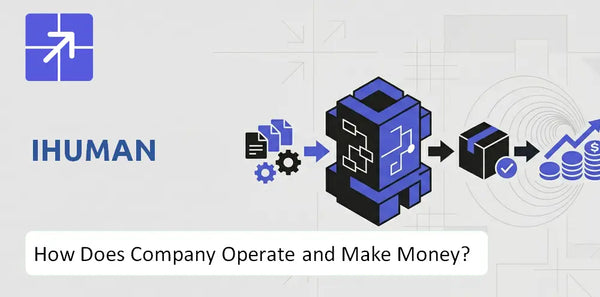
Focus on retention: prioritize daily active users and curriculum updates to boost LTV and lower churn; see the iHuman BCG Matrix Analysis for product-level insight.
What Does iHuman Actually Sell?
iHuman Inc. sells access to interactive learning apps and a hybrid suite of synced physical smart books and hardware for children aged 3 – 8, where customers pay for subscriptions, integrated content packs, and device-enabled learning experiences.
 Core interactive learning apps
iHuman Chinese, iHuman English, and iHuman Pinyin are flagship apps that use gamified mechanics, animation, and interactive storytelling to teach literacy, STEM basics, and creative thinking through a curriculum-aligned content library.
Who buys subscriptions and devices
Primary buyers are parents of preschool and early-elementary kids, preschools and tutoring centers purchasing B2B licenses, plus channel partners and retailers who stock smart books and companion hardware.
Value customers receive
Customers get measurable learning progress, adaptive practice (AI personalization), and reduced passive screen time by converting play into guided lessons; typical engagement metrics show session lengths of 12 – 18 minutes and retention boosters via new content drops.
Why iHuman's offering stands out
Hybrid hardware plus apps differentiates iHuman Group business model, enabling cross-sell of subscriptions and devices; in 2025 the company reported expanding subscription ARPU and growing paid users, supported by partnerships with schools and publishers – see Target Customers and Market of iHuman Company for market context.
iHuman SWOT Analysis
- Complete SWOT Breakdown
- Fully Customizable
- Editable in Excel & Word
- Professional Formatting
- Investor-Ready Format

How Does iHuman Run Its Business Day to Day?
iHuman Inc. runs daily like a blended animation studio and software house, producing content, deploying app updates, and operating AI-driven personalization across mobile-first delivery channels; key systems include content pipelines, ML inference servers, and app-store distribution with real-time analytics. The practical flow: create lessons, A/B test, push via Apple App Store, Google Play and Chinese Android marketplaces, then tune models based on live user signals.

Operating model: Content-plus-software engine
Daily ops center on scripted lesson production, animation rendering, backend engineering sprints, and data-science model training. Teams run short release cycles and continuous integration to keep iHuman education platform updated for 23,000,000 monthly active users in early 2026.
Product delivery: Mobile-first apps and in-app subscriptions
Customers access iHuman apps via Apple App Store, Google Play, and Chinese Android marketplaces; purchases are made through in-app subscriptions, family plans, and occasional one-off course bundles. Real-time sync and offline caching ensure lessons play smoothly on-device.
Production & development: Studio pipelines meet agile dev
Content teams storyboard, animate, and voice-record lessons while engineers build SDKs, APIs, and learning engines. Outsourced voice talent and in-house curriculum authors feed a central CMS; weekly builds push new content and bug fixes to staging and then production.
Sales & distribution: App stores plus organic channels
Distribution relies on app marketplaces and direct subscription flows; marketing focuses on digital acquisition, parental communities, KOLs, and social proof to lower CAC. Paid UA is used selectively; referral and content virality drive a large share of new sign-ups.
Key systems & partnerships: AI, CDNs, and reseller ties
The backbone includes ML personalization engines, CDNs for media delivery, a content management system, analytics stack, and partnerships with device makers and Chinese app marketplaces. Day-to-day ops also manage licensing deals with schools and publishers.
What makes it work: scale, personalization, and low marginal cost
Efficiency comes from reusable content modules, automated rendering pipelines, and AI-driven adaptive learning that personalizes difficulty in real time; this reduces churn and increases lifetime value, underpinning the iHuman revenue model and subscription economics. See Growth Outlook of iHuman Company for related analysis.
iHuman Business Model Canvas
- One-time Payment
- No Research Needed – Save Hours of Work
- Built by Experts, Trusted by Consultants
- Instant Download, Ready to Use
- 100% Editable, Fully Customizable

How Does Revenue Flow Through iHuman?
Revenue flows into iHuman Company mainly via subscription conversions from freemium users; demand becomes revenue when users upgrade to paid monthly, quarterly, or annual plans and when schools or partners license content. Digital services dominate receipts and convert high engagement into predictable recurring cash.
Main revenue stream: Subscription-based digital services
iHuman Company earns most revenue from paid subscriptions on its iHuman education platform and iHuman apps; parents and schools pay recurring fees for curriculum, animated content, and adaptive learning. As of fiscal 2025, reported annual revenues were 1.18 billion RMB, with digital services >90 percent of total.
Additional revenue streams: Licensing, B2B services, and in-app purchases
iHuman Group business model includes school and publisher licensing, enterprise B2B contracts, limited in-app purchases, and content licensing across platforms. These channels complement subscriptions and help monetize partnerships and international expansion.
Pricing and monetization: Freemium → tiered subscription plans
Users start on a freemium tier, then convert to paid tiers (monthly, quarterly, annual). Pricing plans bundle curriculum access, interactive animation, and AI personalization; enterprise licenses use per-seat or site fees for schools.
What drives revenue most: Scale, retention, and high operating leverage
After upfront content and animation costs, marginal cost per additional subscriber is near zero, producing gross margins around 70 – 75 percent. Growth depends on user acquisition, conversion from freemium, churn reduction, and international rollouts funded by those margins. See History and Background of iHuman Company for company context: History and Background of iHuman Company
iHuman Marketing Mix
- Complete Marketing Mix Analysis
- Effortlessly Communicate Your Business Strategy
- Investor-Ready Format
- 100% Editable and Customizable
- Clear and Structured Layout

What Makes iHuman's Model Sustainable or Fragile?
iHuman Company's model is sustained by a vast proprietary content library and strong brand equity, but is exposed to demographic decline in East Asia, platform fee pressure, and tightening data-privacy rules for children. Structural strengths include international diversification under Aha World and AI-driven personalization; key fragilities are user-base contraction risks and regulatory/platform dependencies.
Massive content moat keeps churn low
iHuman Company leverages a library of thousands of original early-learning lessons and characters that lock in families and lower marginal content costs; proprietary IP and brand equity translate into high retention and cross-sell across iHuman apps and Aha World international releases.
Assets: global reach, AI, and platform scale
Its scale in China plus expansion via Aha World gives diversified revenue streams; recent integration of generative AI for adaptive learning improved engagement metrics and supports B2B licensing and curriculum partnerships with schools and publishers.
Dependencies: demographics, app stores, and regs
Revenue remains concentrated in young-child cohorts in East Asia so falling birth rates reduce addressable users; the iHuman revenue model is sensitive to app-store fees (~15 – 30%) and to stricter data-privacy rules for minors that can raise compliance costs and limit targeted features.
Durability in 2025 – 2026: resilient but exposed
Professional judgment for 2025 and 2026: the model shows stable resilience – domestic growth has plateaued but international Aha World expansion and AI personalization sustain user LTV; still, a prolonged demographic decline or adverse regulation would materially weaken unit economics. See Competitive Landscape of iHuman Company for context: Competitive Landscape of iHuman Company
iHuman Boston Consulting Group Matrix
- Built by Experts, Trusted by Consultants
- Structured for Consultants, Students, and Founders
- 100% Editable in Microsoft Word & Excel
- Instant Digital Download – Use Immediately
- Compatible with Mac & PC – Fully Unlocked

Related Blogs
- What Is the History of iHuman Company and How Did It Evolve?
- What Is the Competitive Landscape of iHuman Company and How Does It Compete?
- What Is the Growth Outlook of iHuman Company and Where Is It Heading?
- How Does iHuman Company Reach Customers and Turn Demand into Sales?
- What Do the Mission, Vision, and Core Values of iHuman Company Reveal?
- Who Are the Core Customers in iHuman Company's Target Market?
- Who Owns iHuman Company Today and Who Holds Control?
Frequently Asked Questions
iHuman sells access to interactive learning apps and a hybrid set of smart books and hardware for children aged 3-8. Customers pay for subscriptions, content packs, and device-enabled learning experiences that combine play with guided lessons and measurable progress.
Disclaimer
All information, articles, and product details provided on this website are for general informational and educational purposes only. We do not claim any ownership over, nor do we intend to infringe upon, any trademarks, copyrights, logos, brand names, or other intellectual property mentioned or depicted on this site. Such intellectual property remains the property of its respective owners, and any references here are made solely for identification or informational purposes, without implying any affiliation, endorsement, or partnership.
We make no representations or warranties, express or implied, regarding the accuracy, completeness, or suitability of any content or products presented. Nothing on this website should be construed as legal, tax, investment, financial, medical, or other professional advice. In addition, no part of this site - including articles or product references - constitutes a solicitation, recommendation, endorsement, advertisement, or offer to buy or sell any securities, franchises, or other financial instruments, particularly in jurisdictions where such activity would be unlawful.
All content is of a general nature and may not address the specific circumstances of any individual or entity. It is not a substitute for professional advice or services. Any actions you take based on the information provided here are strictly at your own risk. You accept full responsibility for any decisions or outcomes arising from your use of this website and agree to release us from any liability in connection with your use of, or reliance upon, the content or products found herein.