
How does indie semiconductor generate revenue by selling automotive SoCs and mixed-signal devices?
indie semiconductor designs integrated System-on-Chips (SoCs) and mixed-signal devices for vehicles, selling chips and long-term design wins to OEMs and Tier 1s. This matters because its 2025 shift to higher production volumes should improve margins as R&D intensity eases and supply contracts scale.
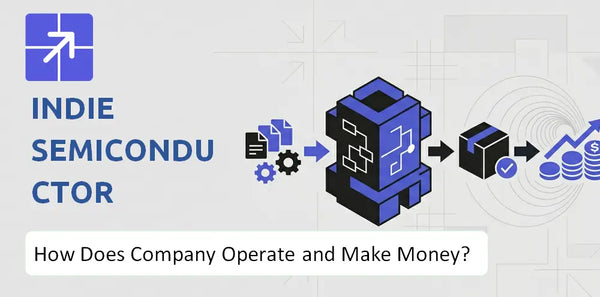
Focus on securing design wins and production ramps; prioritize manufacturing yield and automotive qualification to convert 2025 design wins into recurring revenue. See product context in indie semiconductor BCG Matrix Analysis.
What Does indie semiconductor Actually Sell?
indie semiconductor sells specialized automotive integrated circuits – system-on-chips (SoCs) and power management ICs – that embed processing, memory, sensors, and power functions. Customers pay for integrated safety, in – cabin user experience, and electrification building blocks that lower size, power, and bill – of – materials costs.
 Core product lineup: ADAS, In – Cabin, Electrification
indie semiconductor offers radar, lidar, and ultrasound SoCs for Advanced Driver Assistance Systems (ADAS); multimedia and sensor fusion SoCs for In – Cabin User Experience; and power management ICs and EV charging controllers for Electrification. The firm bundles processing, memory, RF front ends, and power circuits into single chips to simplify vehicle integration.
Main buyers: Tier 1s and OEMs
The primary customers are Tier 1 automotive suppliers and Original Equipment Manufacturers (OEMs) who buy modules and reference designs embedding indie semiconductor SoCs. Secondary buyers include automotive Tier 2s, EV charging system vendors, and aftermarket suppliers seeking turnkey semiconductor solutions.
Customer value: integration, lower cost, faster time – to – market
Customers get smaller PCB area, reduced power consumption, and a lower total bill – of – materials through multi – function SoCs; indie semiconductor's integration also shortens system validation and speeds OEM feature deployment. For EVs, its power management ICs improve charging efficiency and thermal performance.
Differentiators: system integration and automotive-grade support
indie semiconductor stands out by combining RF, compute, and power in automotive – qualified silicon plus reference software and calibration support, which lowers integration risk for automakers. This positioning drives indie semiconductor revenue streams and margins via higher ASPs for integrated solutions and recurring design wins.
For historical context on the company's formation, technology focus, and partnerships see History and Background of indie semiconductor Company
indie semiconductor SWOT Analysis
- Complete SWOT Breakdown
- Fully Customizable
- Editable in Excel & Word
- Professional Formatting
- Investor-Ready Format

How Does indie semiconductor Run Its Business Day to Day?
indie semiconductor runs a fabless operating model focused on design, engineering, and customer integration; daily work centers on design wins, long validation cycles, and global supply-chain coordination to deliver chips and platform software to automakers and Tier 1s.

Fabless design-led operating model
indie semiconductor focuses on IC architecture, firmware, and system integration while outsourcing wafer fabrication to foundries like TSMC and GlobalFoundries, driving an operating rhythm of R&D, customer engineering, and program management.
How customers buy and use products
Automakers and Tier 1s secure design wins via multi-year contracts; once integrated into vehicle platforms, chips are delivered JIT to assembly lines and updated through platform-level software for feature tweaks and performance tuning.
Production, sourcing, and development flow
Engineering cycles run on a three-to-five-year automotive horizon with safety certifications and validation labs; production uses foundry capacity booked in advance and a global logistics network to meet just-in-time demands.
Sales channels and distribution
Sales operate through direct OEM and Tier 1 engagements, long-term supply agreements, and program-based pricing; revenue recognition ties to milestones and shipped units across multi-year vehicle programs.
Key assets, systems, and partnerships
Core assets are IP portfolios, software platforms, and system engineering teams; strategic partnerships with TSMC, GlobalFoundries, and automotive Tier 1s anchor manufacturing and integration capabilities and reduce capex exposure.
What makes the model work in practice
Repeatable design-win processes, platform-level software that enables post-deployment feature changes, and contract-backed demand give predictable revenue streams; in 2025 the shift to software monetization boosts gross-margin leverage.
Key 2025 numbers that shape day-to-day operations: R&D headcount percentage of revenue near 25%, design-win program pipelines spanning 3 – 5 years, foundry spend commitments representing a large portion of production cost, and an increasing share of revenue tied to software and platform services versus discrete IC sales. See Competitive Landscape of indie semiconductor Company for market context: Competitive Landscape of indie semiconductor Company
indie semiconductor Business Model Canvas
- One-time Payment
- No Research Needed – Save Hours of Work
- Built by Experts, Trusted by Consultants
- Instant Download, Ready to Use
- 100% Editable, Fully Customizable

How Does Revenue Flow Through indie semiconductor?
Revenue flows mainly from high-volume sales of semiconductor units to automakers; demand turns into revenue as vehicle models enter production and chips ship over a typical seven-to-ten-year lifecycle, creating steady cash flows tied to awarded programs.
Primary revenue: high-volume automotive ASIC sales
indie semiconductor earns most revenue by selling custom chips and power management ICs at scale to OEMs and tier-1 suppliers; winning a socket on one vehicle model lets the company expand to multiple systems across a fleet, locking in long-lived production revenue.
Additional revenue: software, services, and IP licensing
Secondary streams include software/system integration services, vehicle validation, and limited licensing of design IP; these add-ons increase per-vehicle wallet share and support the indie semiconductor product roadmap 2026.
Pricing and monetization: unit pricing plus program economics
The company prices chips per unit under multi-year supply contracts and program awards; revenue recognition ramps as models enter production, converting strategic backlog into booked revenue and predictable gross margins.
What drives revenue most: design wins and production ramps
Key drivers are new design wins (land), program expansion across vehicle systems (expand), and production ramp schedules – indie semiconductor reported a strategic backlog of $7.1 billion by late 2024, which converts to revenue as vehicle programs enter active production; for fiscal 2025 the company targets gross margins around 50 percent with a long-term goal near 60 percent.
See the Growth Outlook of indie semiconductor Company for more on backlog conversion, margin targets, and how indie semiconductor works with automakers: Growth Outlook of indie semiconductor Company
indie semiconductor Marketing Mix
- Complete Marketing Mix Analysis
- Effortlessly Communicate Your Business Strategy
- Investor-Ready Format
- 100% Editable and Customizable
- Clear and Structured Layout

What Makes indie semiconductor's Model Sustainable or Fragile?
indie semiconductor's model is sustainable where deep OEM integration and high switching costs lock designs across multi-year vehicle programs, but fragile because of customer concentration, exposure to global vehicle production swings, and heavy R&D burn. Structural strengths include mandatory safety and electrification megatrends; key risks are revenue timing, reliance on a small set of automakers, and competition from NXP and Infineon.
High OEM Lock-In and Design Win Stickiness
Once indie semiconductor parts are integrated into a vehicle platform, replacement mid-cycle is rare, creating elevated switching costs and multi-year revenue visibility. This underpins recurring production volumes across model years and supports predictable revenue streams when OEM production is steady.
Specialized Automotive Mixed-Signal and Power Capabilities
indie semiconductor's focus on power management ICs, mixed-signal bridge chips, and security for electrification and advanced driver-assistance systems (ADAS) aligns with OEM needs for safety and EV powertrain control. Proprietary IP plus software/system integration raise technical switching costs versus generic components.
Customer Concentration and Production Cyclicality
A handful of automaker programs drive the majority of indie semiconductor revenue; if any large OEM delays production or shifts suppliers, revenue and margins can swing materially. The business is also sensitive to global light-vehicle production, which fell/increased in recent years and directly impacts fulfillment of backlog and revenue timing.
Resilience in 2025/2026: Cautious Optimism
Professional judgment for 2025/2026 is cautiously optimistic: indie semiconductor is converting a large backlog into revenue and targets non-GAAP operating break-even by mid-2025. If achieved, the company can capitalize on mandatory safety updates and EV adoption through the late 2020s; failure to reach break-even would increase liquidity strain given sustained R&D spend.
Key numbers to watch: 2025 backlog conversion rate, non-GAAP operating break-even timing (target mid-2025), R&D as a percent of revenue, and OEM revenue share concentration. Also monitor global light-vehicle production trends and OEM timelines for software-defined vehicles. For go-to-market and commercial detail see Sales and Marketing Strategy of indie semiconductor Company
indie semiconductor Boston Consulting Group Matrix
- Built by Experts, Trusted by Consultants
- Structured for Consultants, Students, and Founders
- 100% Editable in Microsoft Word & Excel
- Instant Digital Download – Use Immediately
- Compatible with Mac & PC – Fully Unlocked

Related Blogs
- What Is the History of indie semiconductor Company and How Did It Evolve?
- What Is the Competitive Landscape of indie semiconductor Company and How Does It Compete?
- What Is the Growth Outlook of indie semiconductor Company and Where Is It Heading?
- How Does indie semiconductor Company Reach Customers and Turn Demand into Sales?
- What Do the Mission, Vision, and Core Values of indie semiconductor Company Reveal?
- Who Are the Core Customers in indie semiconductor Company's Target Market?
- Who Owns indie semiconductor Company Today and Who Holds Control?
Frequently Asked Questions
indie semiconductor sells specialized automotive integrated circuits, including SoCs and power management ICs. Its products support ADAS, in-cabin user experience, and electrification by combining processing, memory, sensors, RF front ends, and power circuits into fewer chips for easier vehicle integration.
Disclaimer
All information, articles, and product details provided on this website are for general informational and educational purposes only. We do not claim any ownership over, nor do we intend to infringe upon, any trademarks, copyrights, logos, brand names, or other intellectual property mentioned or depicted on this site. Such intellectual property remains the property of its respective owners, and any references here are made solely for identification or informational purposes, without implying any affiliation, endorsement, or partnership.
We make no representations or warranties, express or implied, regarding the accuracy, completeness, or suitability of any content or products presented. Nothing on this website should be construed as legal, tax, investment, financial, medical, or other professional advice. In addition, no part of this site - including articles or product references - constitutes a solicitation, recommendation, endorsement, advertisement, or offer to buy or sell any securities, franchises, or other financial instruments, particularly in jurisdictions where such activity would be unlawful.
All content is of a general nature and may not address the specific circumstances of any individual or entity. It is not a substitute for professional advice or services. Any actions you take based on the information provided here are strictly at your own risk. You accept full responsibility for any decisions or outcomes arising from your use of this website and agree to release us from any liability in connection with your use of, or reliance upon, the content or products found herein.