
How does Investor AB manage a concentrated portfolio to drive long-term NAV growth as an industrial holding?
Investor AB runs a concentrated, long-term equity portfolio focused on industrials, healthcare, and financial services; it steers holdings through active ownership and board influence. This matters because Investor AB reported a 2025 NAV signal of resilient composition amid European industrial recovery and rising tech exposure.
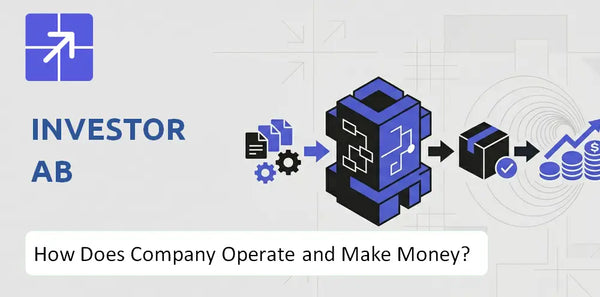
Active governance and patient capital lower turnover and support compounding returns; monitor payout policy and board seats for practical ownership insight. See a portfolio diagnostic: Investor AB BCG Matrix Analysis
What Does Investor AB Actually Sell?
Investor AB sells specialist capital allocation and active ownership: a curated portfolio of listed stakes, wholly owned industrial companies, and a large private equity holding. Shareholders pay for disciplined governance, board-level influence, and long-term value creation rather than physical products.
 What Investor AB Offers
Investor AB offers exposure to three pillars: Listed Companies (large equity stakes in Atlas Copco, ABB, AstraZeneca, SEB), Patricia Industries (wholly owned industrial and healthcare businesses such as Mölnlycke and Permobil), and a strategic holding in EQT. The firm provides active ownership, capital allocation expertise, and a fortress balance sheet that supports dividend capacity and reinvestment.
Who Buys It
Buyers are equity investors – private and institutional – seeking steady long-term returns, dividend income, and diversified exposure to Swedish and global blue-chip companies. Family offices, pension funds, and retail investors buy Investor AB shares for exposure to its ownership structure and governance-led investment strategy.
What Value Customers Get
Investors receive a portfolio designed to outperform via active selection and governance, a historical track record of outperformance, and access to private equity upside via EQT. As of fiscal 2025, Investor AB reported an equity portfolio market value and net asset value supporting a sustainable dividend policy and liquidity buffer.
Why the Offering Stands Out
Investor AB stands out for combining public equity stakes, wholly owned industrial assets, and a meaningful private equity position, enabling diversified revenue streams and board influence across holdings. Its investment approach – long term holdings, active governance, and selective acquisitions – differentiates its Investor AB business model and investment strategy. See further context in Mission, Vision, and Values of Investor AB Company Mission, Vision, and Values of Investor AB Company.
Investor AB SWOT Analysis
- Complete SWOT Breakdown
- Fully Customizable
- Editable in Excel & Word
- Professional Formatting
- Investor-Ready Format

How Does Investor AB Run Its Business Day to Day?
Investor AB runs day-to-day through a lean investment team practicing active ownership: staff split time between listed holdings oversight and hands-on management of Patricia Industries, focusing on strategy, CEO hires, capital structure, operational improvements, and decarbonization roadmaps.

Active ownership operating model
Investment professionals sit on boards, set strategic priorities, and decide capital allocation; routine work is governance, performance reviews, and transaction execution aligned with the Investor AB business model.
How portfolio companies receive support
Listed portfolio companies receive governance and capital structure oversight; Patricia Industries companies get operational programs, digital transformation plans, and bolt-on acquisition execution to boost market share.
Development and value creation processes
Private assets follow structured improvement playbooks: lean operations, ERP and cloud upgrades, ESG decarbonization roadmaps, and targeted M&A; teams set KPI targets and monitor monthly operational dashboards.
Decision and distribution channels
Senior management coordinates with board directors and CFOs of holdings; capital moves via centralized treasury for dividends, share buybacks, and debt issuance; investor relations handle public reporting and dividend communications.
Key assets, systems, and partnerships
Core assets are equity stakes in industrial and healthcare companies; systems include consolidated financial reporting, transaction teams, and digital transformation partners; strategic partnerships enable bolt-on M&A and tech adoption.
Why this operating model works
The model scales because the lean central team leverages board influence and specialist operators inside Patricia Industries, focusing capital and managerial attention where returns and decarbonization impact are highest.
As of early 2026 Investor AB emphasized industrial technology and sustainable healthcare across its portfolio; the firm reports ongoing initiatives to ensure each subsidiary has a decarbonization plan and tech upgrade path, supporting long-term holdings and dividend capacity – see related analysis in Sales and Marketing Strategy of Investor AB Company.
Investor AB Business Model Canvas
- One-time Payment
- No Research Needed – Save Hours of Work
- Built by Experts, Trusted by Consultants
- Instant Download, Ready to Use
- 100% Editable, Fully Customizable

How Does Revenue Flow Through Investor AB?
Revenue at Investor AB flows mainly from dividends, operating cash flow from subsidiaries, and capital distributions from private equity stakes; demand for portfolio products and services converts to cash via dividends, EBITDA and fund distributions, which funds reinvestment and shareholder returns.
Main revenue: Listed dividends
The Listed Companies segment is the primary cash engine, producing predictable dividend income from large holdings such as SEB and Epiroc; in 2025 listed dividends accounted for the bulk of operating cash, enabling Investor AB to fund its dividend policy and new investments.
Additional revenue: Patricia Industries and EQT distributions
Patricia Industries generates operating cash flow and excess free cash from subsidiaries (EBITDA minus reinvestment), while the EQT stake yields management fees and carried interest distributions; both provide supplemental, often lumpy, capital distributions.
Pricing and monetization model
Investor AB monetizes via equity income (dividends), operating profits from consolidated subsidiaries, and private equity fund economics (management fees and carry); cash is either reinvested to grow NAV or returned as dividends to shareholders.
What drives revenue most
Revenue is driven primarily by dividend levels from listed holdings and EBITDA performance at Patricia Industries, plus exit and carry events at EQT; in 2025 Investor AB reported a management cost ratio of 0.08 percent of net asset value, keeping cash flow available for compounding and distributions. Read more on governance in Ownership and Control of Investor AB Company
Investor AB Marketing Mix
- Complete Marketing Mix Analysis
- Effortlessly Communicate Your Business Strategy
- Investor-Ready Format
- 100% Editable and Customizable
- Clear and Structured Layout

What Makes Investor AB's Model Sustainable or Fragile?
Investor AB's model is sustained by permanent capital and the Wallenberg ecosystem, allowing counter – cyclical holding and access to deal flow; it is fragile to geopolitical shocks, EU regulatory shifts, and concentration in major industrial and healthcare holdings.
Permanent capital and counter – cyclical edge
Investor AB's permanent capital lets it avoid fixed fund lifecycles, hold through downturns, and invest when valuations fall, supporting long – term value creation.
Wallenberg ecosystem and deal flow
The Wallenberg network provides privileged access to global talent, board seats, and proprietary deal flow, reinforcing Investor AB investment strategy and portfolio sourcing.
Concentration in industrials and healthcare
Significant exposure to Atlas Copco and AstraZeneca equivalents creates concentration risk: a single large disruption can swing net asset value materially.
Regulatory and geopolitical dependencies
Heavy linkage to Swedish exports and global healthcare markets makes the model sensitive to EU regulation, trade barriers, and geopolitical shifts affecting supply chains and sales.
Balance sheet strength and NAV stability
As of 2025 Investor AB reports a net asset value above 900 billion SEK, and historically trades at a narrow discount, underpinning defensive growth positioning and dividend capacity.
Strategic pivot to automation and med – tech
Shifts toward automation and med – tech in portfolio companies align with mid – 2020s inflation and tight labor markets, improving resilience and recurring revenue potential.
Investor AB's durability rests on permanent capital, scale, and the Wallenberg network, but it remains exposed to concentrated holdings, sectoral cyclicality, EU regulatory risk, and geopolitical shocks; see History and Background of Investor AB Company for deeper context: History and Background of Investor AB Company
Investor AB Boston Consulting Group Matrix
- Built by Experts, Trusted by Consultants
- Structured for Consultants, Students, and Founders
- 100% Editable in Microsoft Word & Excel
- Instant Digital Download – Use Immediately
- Compatible with Mac & PC – Fully Unlocked

Related Blogs
- What Is the History of Investor AB Company and How Did It Evolve?
- What Is the Competitive Landscape of Investor AB Company and How Does It Compete?
- What Is the Growth Outlook of Investor AB Company and Where Is It Heading?
- How Does Investor AB Company Reach Customers and Turn Demand into Sales?
- What Do the Mission, Vision, and Core Values of Investor AB Company Reveal?
- Who Are the Core Customers in Investor AB Company's Target Market?
- Who Owns Investor AB Company Today and Who Holds Control?
Frequently Asked Questions
Investor AB sells specialist capital allocation and active ownership, not physical products. Its value comes from a curated portfolio of listed stakes, wholly owned industrial companies, and a strategic holding in EQT, alongside board-level influence, disciplined governance, and long-term value creation for shareholders.
Disclaimer
All information, articles, and product details provided on this website are for general informational and educational purposes only. We do not claim any ownership over, nor do we intend to infringe upon, any trademarks, copyrights, logos, brand names, or other intellectual property mentioned or depicted on this site. Such intellectual property remains the property of its respective owners, and any references here are made solely for identification or informational purposes, without implying any affiliation, endorsement, or partnership.
We make no representations or warranties, express or implied, regarding the accuracy, completeness, or suitability of any content or products presented. Nothing on this website should be construed as legal, tax, investment, financial, medical, or other professional advice. In addition, no part of this site - including articles or product references - constitutes a solicitation, recommendation, endorsement, advertisement, or offer to buy or sell any securities, franchises, or other financial instruments, particularly in jurisdictions where such activity would be unlawful.
All content is of a general nature and may not address the specific circumstances of any individual or entity. It is not a substitute for professional advice or services. Any actions you take based on the information provided here are strictly at your own risk. You accept full responsibility for any decisions or outcomes arising from your use of this website and agree to release us from any liability in connection with your use of, or reliance upon, the content or products found herein.