
How does Javer Company convert land, financing, and construction into repeatable home sales?
Javer Company bundles land banking, institutional financing, and standardized construction to deliver affordable homes near industrial hubs. This matters because nearshoring lifted residential demand in 2025, and Javer's land-bank scale and financing access drive volume and margins.
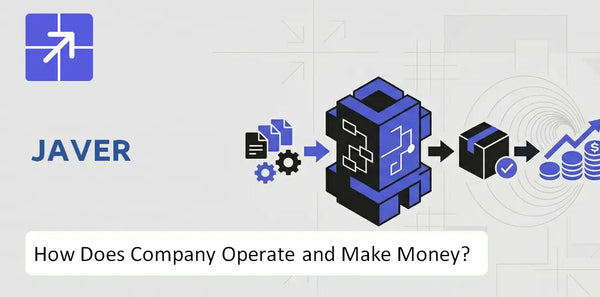
Javer Company optimizes cash flow by phasing developments and selling en masse to credit-backed buyers; watch build-to-rent and mortgage origination trends for growth signals. See Javer BCG Matrix Analysis
What Does Javer Actually Sell?
Javer Company sells standardized residential housing units across three price tiers and an integrated, government-backed financing service that turns mortgage credits into turnkey move-in homes; customers pay for homes plus facilitated homeownership. In 2025 the mix shifted toward middle-income and higher-end segments, which now drive most revenue.
 Core products and financing platform
Javer Company offers standardized, scalable homes: affordable entry-level, middle-income, and higher-end residential units, bundled with an integrated financing solution that converts government-backed mortgage credits into immediate occupancy. The product is both a physical home and a financing service that simplifies government mortgage credit realization for buyers.
Primary buyers and channels
The main buyers are Mexican workforce households: first-time buyers using government mortgage subsidies, middle-income families seeking better-quality homes, and buyers of higher-end properties. Acquisition channels include developer sales offices, employer partnerships, and mortgage-credit brokers.
Customer value and outcomes
Customers get a move-in ready home plus end-to-end handling of mortgage-credit paperwork, reducing time-to-occupancy and bureaucratic friction. In 2025 middle-income and higher-end sales accounted for over 75 percent of Javer Company revenue, delivering higher gross margins than social housing.
Differentiators and ease of purchase
Javer Company stands out by packaging construction scale, standardized designs, and a financing facilitation platform that realizes government-backed mortgage credits as a turnkey service; this reduces customer effort and accelerates unit sales compared with competitors who sell homes and financing separately. See a deeper company profile in History and Background of Javer Company.
Javer SWOT Analysis
- Complete SWOT Breakdown
- Fully Customizable
- Editable in Excel & Word
- Professional Formatting
- Investor-Ready Format

How Does Javer Run Its Business Day to Day?
Javer Company runs a high-velocity land-to-cash operation: acquire land in industrial corridors, industrialize construction with standardized modular units, and close buyers through INFONAVIT/FOVISSSTE-backed mortgages to hit a 12 – 18 month turnover from ground-breaking to delivery.

Operating model: land-to-cash at scale
Daily ops center on sourcing land in Nuevo Leon, Queretaro, and Jalisco, underwriting parcels to match regional employment growth and logistics demand; construction, sales, and finance teams work to convert plots into mortgage-ready inventory quickly. The Javer Company business model prioritizes rapid inventory turnover and mortgage eligibility to accelerate cash realization.
Product delivery: standardized, fast handovers
Customers access housing through on-site sales and digital pre-qualification tied to INFONAVIT and FOVISSSTE systems; agents pre-qualify buyers, reserve units, and shepherd mortgage approvals so buyers take possession shortly after final inspection and paperwork.
Production model: modular industrial construction
Javer Company builds hundreds of units concurrently using standardized designs and modular techniques to reduce waste and labor hours; off-site prefabrication and repeatable floorplans cut cycle time and improve quality control.
Sales channels: public-institution integration
Field sales teams integrate daily with INFONAVIT and FOVISSSTE portals to validate employment and benefit data, streamlining mortgage eligibility; primary customer acquisition channels include employer partnerships in industrial parks, on-site walk-ins, and targeted digital leads.
Key assets and partnerships: land pipeline and institutional links
Core assets are strategically located land parcels, standardized design IP, and prefabrication facilities; crucial partnerships include INFONAVIT, FOVISSSTE, local developers, and construction suppliers that together form the Javer Company technology platform and partner ecosystem.
Why the model works: velocity and mortgage alignment
Standardization plus direct links to mortgage systems keep inventory moving and reduce carrying costs; by targeting fast-growing employment corridors, Javer Company revenue model captures demand where buyer eligibility is concentrated, supporting repeatable 12 – 18 month project cycles and predictable cash flow.
Daily metric focus: lot acquisitions per month, build starts, units in production, INFONAVIT/FOVISSSTE pre-approvals, and days-to-delivery; performance targets drive pricing strategy and capital allocation. See related analysis on Sales and Marketing Strategy of Javer Company
Javer Business Model Canvas
- One-time Payment
- No Research Needed – Save Hours of Work
- Built by Experts, Trusted by Consultants
- Instant Download, Ready to Use
- 100% Editable, Fully Customizable

How Does Revenue Flow Through Javer?
Revenue for Javer Company flows mainly from the sale of completed housing units, with demand monetized when institutional mortgage lenders disburse funds upon titling; this converts pipeline inventory into predictable cash within about one week. The firm's pivot to higher-value segments and institutional pre-funding underpins its revenue model.
Primary revenue: sale of titled homes
Javer Company business model earns nearly all revenue from completed-unit sales financed by institutional mortgages. When a house is titled, mortgage proceeds are typically released to Javer within a week, creating a near-cash sale despite buyers paying via lender programs.
Secondary revenue: value-adds and services
Secondary income includes upgrades, warranty services, and lot or infrastructure sales; these add-ons modestly boost margins and are tied to the Javer Company services and product offerings explained in corporate materials.
Pricing and monetization mechanics
Javer pricing strategy centers on unit sale prices paid via mortgage disbursements rather than upfront buyer cash; average selling price reached approximately 1.25 million MXN by early 2026. Revenue recognition aligns with title transfer and lender payment timing.
What drives revenue most
Revenue is driven primarily by inventory pipeline of certified homes, institutional lender partnerships, and the mix shift to higher-value segments; EBITDA margin has been approximately 15 percent in recent fiscal periods despite raw-material volatility. See this analysis on Ownership and Control of Javer Company for context: Ownership and Control of Javer Company
Javer Marketing Mix
- Complete Marketing Mix Analysis
- Effortlessly Communicate Your Business Strategy
- Investor-Ready Format
- 100% Editable and Customizable
- Clear and Structured Layout

What Makes Javer's Model Sustainable or Fragile?
Javer Company's model is sustained by a massive land bank and post-merger scale, yet remains sensitive to Mexican interest rates and INFONAVIT lending policy shifts; labor-cost inflation or subsidy cuts can quickly compress margins. Structural strengths include bargaining power and lower-cost capital access; key risks concentrate on financing and policy dependence.
Scale and Consolidation Support
Scale from the land bank – sufficient for over 60,000 units – plus the strategic integration with Vinte gives Javer Company business model enhanced supplier leverage, procurement savings, and access to lower-cost capital, strengthening the revenue model and go-to-market strategy.
Key Assets and Capabilities
Significant land reserves, construction capacity in Northern Mexico, and relationships with INFONAVIT and private lenders underpin How Javer Company works operationally; the technology stack and partnerships and clients enable faster project rollout and standardized pricing strategy.
Critical Dependencies and Constraints
Revenue and margins are highly sensitive to Mexican interest rates and INFONAVIT lending rules; if government housing subsidies fall or labor costs rise faster than home price appreciation, the Javer Company revenue model faces rapid margin compression and cash-flow stress.
Durability in 2025/2026
Professional judgment for 2025/2026 is cautiously positive: the nearshoring boom in Northern Mexico creates a structural demand floor that offsets macro cyclical risk, making the model resilient mid-term; still, sensitivity to policy and rates leaves it exposed in adverse scenarios. Read the Competitive Landscape of Javer Company for context.
Javer Boston Consulting Group Matrix
- Built by Experts, Trusted by Consultants
- Structured for Consultants, Students, and Founders
- 100% Editable in Microsoft Word & Excel
- Instant Digital Download – Use Immediately
- Compatible with Mac & PC – Fully Unlocked

Related Blogs
- What Is the History of Javer Company and How Did It Evolve?
- What Is the Competitive Landscape of Javer Company and How Does It Compete?
- What Is the Growth Outlook of Javer Company and Where Is It Heading?
- How Does Javer Company Reach Customers and Turn Demand into Sales?
- What Do the Mission, Vision, and Core Values of Javer Company Reveal?
- Who Are the Core Customers in Javer Company's Target Market?
- Who Owns Javer Company Today and Who Holds Control?
Frequently Asked Questions
Javer sells standardized residential homes in three price tiers plus an integrated financing service. The company bundles construction with help turning government-backed mortgage credits into turnkey move-in homes, so customers get both a property and a smoother path to ownership.
Disclaimer
All information, articles, and product details provided on this website are for general informational and educational purposes only. We do not claim any ownership over, nor do we intend to infringe upon, any trademarks, copyrights, logos, brand names, or other intellectual property mentioned or depicted on this site. Such intellectual property remains the property of its respective owners, and any references here are made solely for identification or informational purposes, without implying any affiliation, endorsement, or partnership.
We make no representations or warranties, express or implied, regarding the accuracy, completeness, or suitability of any content or products presented. Nothing on this website should be construed as legal, tax, investment, financial, medical, or other professional advice. In addition, no part of this site - including articles or product references - constitutes a solicitation, recommendation, endorsement, advertisement, or offer to buy or sell any securities, franchises, or other financial instruments, particularly in jurisdictions where such activity would be unlawful.
All content is of a general nature and may not address the specific circumstances of any individual or entity. It is not a substitute for professional advice or services. Any actions you take based on the information provided here are strictly at your own risk. You accept full responsibility for any decisions or outcomes arising from your use of this website and agree to release us from any liability in connection with your use of, or reliance upon, the content or products found herein.