
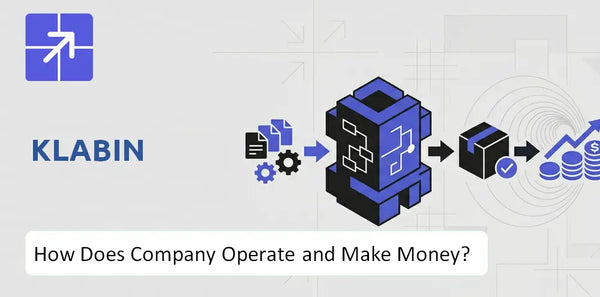
How does Klabin S.A. integrate forestry, pulp, and packaging to generate value?
Klabin S.A. runs a vertically integrated operation from planted forests to corrugated packaging, reducing input cost volatility and capturing margin across stages. This matters as 2025 saw demand recovery in Brazil and stable pulp prices, supporting integrated margins.
Klabin S.A. leverages scale in forestry genetics, pulp mills, and box plants to lower unit costs and shorten lead times; monitor pulp prices and domestic consumption trends for signals. Klabin BCG Matrix Analysis
What Does Klabin Actually Sell?
Klabin sells market pulp, high-performance paper, and converted packaging solutions – customers pay for renewable fiber, specialty paper grades, and finished corrugated and bagged packaging tailored to industry needs. The offer includes supply-chain traceability and sustainable forestry-backed raw materials.
 Core product lines: pulp, paper, converted packaging
Klabin markets hardwood, softwood, and fluff market pulp produced at integrated mills, kraftliner and coated paperboard for liquid packaging and luxury packaging, plus corrugated boxes and industrial bags. Sales mix in 2025 reflects pulp, paperboard, and packaging streams.
Who buys Klabin products
Buyers include tissue and hygiene manufacturers, food and beverage brands, e – commerce retailers, and construction/materials firms that need industrial bags and protective packaging. OEMs and converters purchase specialty paper grades for premium packaging.
Customer value: traceable, renewable, performance-focused
Customers get fiber traceability from over 700,000 hectares of managed forest, certified supply chains, and products that replace plastics – supporting sustainability goals and regulatory compliance while ensuring supply reliability.
Differentiators: vertical integration and scale
Klabin's integrated model – plantations, pulp mills, paperboard lines, and converting units – lowers input risk and improves margins; in 2025 installed pulp capacity and board production allowed steady export volumes and diversified revenue streams. See Mission, Vision, and Values of Klabin Company for corporate context.
Klabin SWOT Analysis
- Complete SWOT Breakdown
- Fully Customizable
- Editable in Excel & Word
- Professional Formatting
- Investor-Ready Format

How Does Klabin Run Its Business Day to Day?
Klabin runs daily on vertically integrated forestry-to-paper operations: timber is harvested from company-managed eucalyptus and pine plantations, moved by owned logistics to mills like Puma II, and processed into pulp, paper, and packaging in a continuous, energy – self – sufficient flow focused on fiber yield and transport efficiency.

Operating model: vertically integrated industrial scale
Klabin business model centers on owning the full value chain from forest to finished product. Daily ops coordinate plantation maintenance, timber harvest, mill throughput, and logistics to keep a continuous production cadence across multiple sites.
Product delivery: global shipments from dedicated terminals
Customers access Klabin products through direct contracts and distributors; finished paperboard, kraftliner, and pulp ship from Paranaguá and other terminals to more than 70 countries using company rail spurs and chartered ocean freight.
Production and sourcing: managed plantations and cyclic harvests
Daily production starts in forests – eucalyptus with ~7 – year cycles and pine ~15 years – and moves harvested logs to mills like Puma II (full maturity in 2025) where continuous pulping and papermaking lines run 24/7.
Sales channels: B2B contracts and global distribution
Sales are driven by long – term supply contracts with packaging converters, retailers, and paper merchants; daily order fulfillment balances mill output with shipping slots and inventory at regional warehouses.
Key assets and systems: mills, logistics, and energy
Core daily assets include forest concessions, industrial complexes (Puma II), rail spurs, and Paranaguá port terminals. Mills run cogeneration plants that convert biomass to power, covering a significant share of site energy needs and reducing operating costs.
What makes the model work: integration, scale, and energy balance
Efficiency comes from synchronized harvest schedules, automated mill lines, and self – supply of energy and fiber. This lowers per – ton production costs, stabilizes supply for clients, and supports Klabin sustainability targets and profitability metrics.
See the company context in this piece on the firm: History and Background of Klabin Company
Klabin Business Model Canvas
- One-time Payment
- No Research Needed – Save Hours of Work
- Built by Experts, Trusted by Consultants
- Instant Download, Ready to Use
- 100% Editable, Fully Customizable

How Does Revenue Flow Through Klabin?
Revenue at Klabin flows from exports and domestic sales: USD – priced pulp and kraftliner exports and BRL – priced converted packaging products sold in Brazil. Demand converts to revenue via long – term contracts with FMCG firms and spot pulp sales, plus higher – margin converted goods after Figueira ramp – up.
Main revenue: USD exports of pulp and kraftliner
About 45 – 50% of Klabin revenue in 2025 comes from exports, mainly market pulp and kraftliner denominated in US dollars, which buffers currency depreciation and drives topline in hard currency.
Additional revenue: domestic converted products
Domestic sales of corrugated boxes and industrial bags account for the remaining revenue and track Brazil GDP and consumer staples demand; the Figueira project reaching full capacity in 2025 shifted mix toward higher – margin converted products.
Pricing and monetization model: contracts plus spot sales
Monetization occurs via long – term supply contracts with major consumer goods companies (fixed volumes/pricing formulas) and spot market pulp sales; converted product pricing captures value per ton versus raw pulp, improving gross margin.
What drives revenue most: mix, FX and capacity
Revenue is driven by product mix (higher share of converted goods), USD exposure on exports (FX tailwind when BRL weakens), and utilization of new capacity at Figueira; in 2025 Klabin recorded rising pulp realizations and improved converted – product margins per ton.
See detailed ownership context in Ownership and Control of Klabin Company
Klabin Marketing Mix
- Complete Marketing Mix Analysis
- Effortlessly Communicate Your Business Strategy
- Investor-Ready Format
- 100% Editable and Customizable
- Clear and Structured Layout

What Makes Klabin's Model Sustainable or Fragile?
Klabin's model rests on low-cost pulp and paper production driven by fast eucalyptus growth in Brazil, multi-fiber flexibility, and scale in sustainable packaging; it is fragile from high capital intensity and leverage after Puma II, and vulnerable to prolonged pulp-price weakness or rising logistics and chemical costs.
Low-cost production and fiber flexibility
Klabin benefits from one of the world's lowest cash costs per tonne of bleached eucalyptus pulp thanks to Brazil's rapid growth cycles; multi-fiber flexibility (eucalyptus and pine) lets Klabin shift output between pulp and paper grades to capture margins across cycles.
Scale in sustainable packaging markets
Klabin's integrated kraftliner and paperboard plants plus forest-to-mill logistics support large-volume packaging sales for e-commerce and industrial customers, helping drive volume growth in packaging solutions and higher-value corrugated boxboard contracts.
High capital intensity and leverage
The Puma II expansion raised fixed assets and gross debt materially; Klabin reported capital expenditures peaking in 2021 – 2023 and entered 2025/2026 with net leverage elevated versus pre – investment levels, making cash generation and deleveraging critical risks.
Resilience outlook for 2025 – 2026
With major capex largely completed, management guidance and 2025 cash flows point to a deleveraging phase supported by strong pulp and packaging demand; however, a sustained global pulp-price slump or >10 – 20% rise in logistics/chemical costs would materially stress margins and debt metrics. See market positioning and customers: Target Customers and Market of Klabin Company
Klabin Boston Consulting Group Matrix
- Built by Experts, Trusted by Consultants
- Structured for Consultants, Students, and Founders
- 100% Editable in Microsoft Word & Excel
- Instant Digital Download – Use Immediately
- Compatible with Mac & PC – Fully Unlocked

Related Blogs
- What Is the History of Klabin Company and How Did It Evolve?
- What Is the Competitive Landscape of Klabin Company and How Does It Compete?
- What Is the Growth Outlook of Klabin Company and Where Is It Heading?
- How Does Klabin Company Reach Customers and Turn Demand into Sales?
- What Do the Mission, Vision, and Core Values of Klabin Company Reveal?
- Who Are the Core Customers in Klabin Company's Target Market?
- Who Owns Klabin Company Today and Who Holds Control?
Frequently Asked Questions
Klabin sells market pulp, high-performance paper, and converted packaging solutions. Its offer includes hardwood, softwood, and fluff pulp, kraftliner and coated paperboard, corrugated boxes, and industrial bags. The company also emphasizes renewable fiber, traceable supply chains, and sustainable forestry-backed raw materials.
Disclaimer
All information, articles, and product details provided on this website are for general informational and educational purposes only. We do not claim any ownership over, nor do we intend to infringe upon, any trademarks, copyrights, logos, brand names, or other intellectual property mentioned or depicted on this site. Such intellectual property remains the property of its respective owners, and any references here are made solely for identification or informational purposes, without implying any affiliation, endorsement, or partnership.
We make no representations or warranties, express or implied, regarding the accuracy, completeness, or suitability of any content or products presented. Nothing on this website should be construed as legal, tax, investment, financial, medical, or other professional advice. In addition, no part of this site - including articles or product references - constitutes a solicitation, recommendation, endorsement, advertisement, or offer to buy or sell any securities, franchises, or other financial instruments, particularly in jurisdictions where such activity would be unlawful.
All content is of a general nature and may not address the specific circumstances of any individual or entity. It is not a substitute for professional advice or services. Any actions you take based on the information provided here are strictly at your own risk. You accept full responsibility for any decisions or outcomes arising from your use of this website and agree to release us from any liability in connection with your use of, or reliance upon, the content or products found herein.