
How does Life Insurance Corp. of India deploy premium inflows to generate returns and support national finance?
Life Insurance Corp. of India pools premiums from millions of households and invests across government bonds, corporate credit, and equities to deliver guaranteed and participating life products. This matters because LIC's over $660 billion AUM (2026) shapes bond yields and equity flows in India, affecting fiscal and market stability. Life Insurance Corp. of India BCG Matrix Analysis
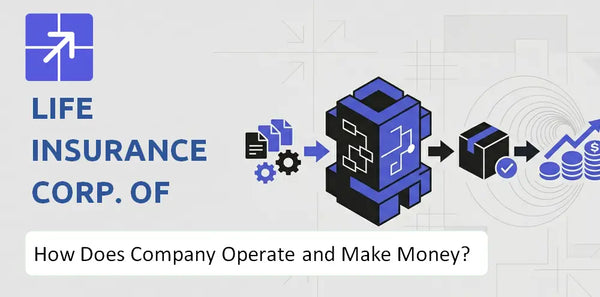
LIC's mix of guaranteed and participating policies drives liability duration and asset allocation; monitor new business margins and sovereign exposure as short practical signals for solvency and return trends.
What Does Life Insurance Corp. of India Actually Sell?
Life Insurance Corp. of India sells long-term financial security and structured savings through participating (Par) and non-participating (Non-Par) plans, plus term, annuity, and Unit Linked Insurance Plans (ULIPs). Customers pay for guaranteed life cover, periodic bonuses or market-linked returns, and retirement income solutions backed by a sovereign guarantee.
 Core product mix
Life Insurance Corporation of India offers Par endowments and whole-life plans that add annual bonuses; Non-Par term plans, annuities, and ULIPs that are fixed or market-linked; group schemes for employers and pension plans for retirees.
Primary buyers
Individual risk-averse savers, salaried employees buying tax-efficient LIC policies under Section 80C, retirees seeking pension plans, and corporates buying group covers through LIC distribution channels including agency and bancassurance.
Customer value delivered
Customers get death benefit protection, structured savings with bonuses (Par) or market-linked returns (ULIPs), predictable annuities for retirement, and perceived safety from the government-backed guarantee – driving high persistency and claim trust.
Why LIC stands out
LIC business model rests on brand trust, a nationwide agency force, bancassurance partnerships, and a sovereign guarantee on policy sums that private competitors lack; in FY2025 LIC reported over 200 million policies in force and a claim settlement ratio above 97%.
Growth Outlook of Life Insurance Corp. of India Company
Life Insurance Corp. of India SWOT Analysis
- Complete SWOT Breakdown
- Fully Customizable
- Editable in Excel & Word
- Professional Formatting
- Investor-Ready Format

How Does Life Insurance Corp. of India Run Its Business Day to Day?
Life Insurance Corp. of India runs daily through a human-led distribution engine supported by central underwriting, claims processing, and a large in-house investment desk; staff and agents collect premiums, underwrite new business, and the investment team allocates assets to back policy liabilities and generate returns. Key systems include policy admin, e-payments for renewal premiums, underwriting workflow, and a trading desk managing government securities and listed equities.

Operating model: Agent – centric insurer with centralized back office
Day to day, Life Insurance Corporation of India relies on an army of roughly 1.4 million agents who source retail customers while 2,000+ branches and 1,500 satellite offices handle underwriting, policy servicing, and claims. Central processing systems route new business through medicals, financial checks, and portfolio allocation to the policyholder fund.
Product or service delivery: In-person sales plus digital servicing
Customers mainly buy LIC policies via agents and branch visits; online payment and e – service portals support renewal premiums and policy downloads. For new business, agents submit proposals, underwriting clears risk, and policies are issued electronically or as paper documents.
Production, sourcing, or development: Product design and actuarial control
Actuaries design LIC traditional plans and ULIPs (unit-linked insurance plans) using mortality tables and reserve calculations; IT teams maintain policy admin systems and digital sales tools. Product updates follow Insurance Regulatory and Development Authority (IRDAI) guidance and market demand.
Sales channels or distribution: Massive agency network with branch support
The dominant LIC distribution channels are the agency force, branch offices, and digital platforms; bancassurance and corporate agency are smaller complements. Agents drive new business and persistent renewals; branches handle complex cases and corporate clients.
Key assets, systems, or partnerships: Investment portfolio and branch network
LIC's investment desk manages a portfolio that historically includes about 25% of India's government securities and large equity stakes in major corporates, which supports solvency and dividend payouts to policyholders. Core systems: policy administration, claims processing, e – payment rails, and trading platforms.
What makes the model work in practice: Scale, trust, and investment power
Scale gives LIC predictable cash flows: on a normal day it processes millions of renewal premiums and a steady underwriting pipeline, enabling large-scale investment in government bonds and equities that generate returns to cover guaranteed benefits. Trust and agent relationships sustain persistency and new sales.
Operational touchpoints include agent commission payouts (paid from premium cashflows), claims adjudication teams maintaining LIC claim settlement ratio 2024 figures, and an in-house treasury executing bulk trades to rebalance asset – liability matching; daily workflows emphasize renewals, underwriting clearance, premium collections, and treasury operations. Read a concise corporate history here: History and Background of Life Insurance Corp. of India Company
Life Insurance Corp. of India Business Model Canvas
- One-time Payment
- No Research Needed – Save Hours of Work
- Built by Experts, Trusted by Consultants
- Instant Download, Ready to Use
- 100% Editable, Fully Customizable

How Does Revenue Flow Through Life Insurance Corp. of India?
Revenue at Life Insurance Corp. of India flows mainly from premium income and investment returns: customers pay New Business Premiums and renewal premiums, and the firm invests the resulting float to generate investment income that funds claims and profits.
Core revenue: Premiums (NBP and renewals)
New Business Premiums (NBP) and renewal premiums form the predictable cash engine; in FY2025 LIC reported robust renewal inflows supporting persistency and predictable claims funding.
Complementary revenue: Investment returns on float
LIC's massive investment float earns interest, dividends, and capital gains; in FY2025 investment income remained the second pillar, driving net surplus and solvency support.
Monetization: Pricing and surplus allocation
LIC monetizes demand via premiums set per actuarial pricing (traditional plans and ULIPs differ) and agency/bancassurance distribution; post-IPO surplus distribution shifts more Non-Par profits toward shareholders rather than policyholders.
Primary revenue drivers: Product mix and investment yield
Revenue grows most from higher-margin Non-Par product sales and improved investment yields; LIC's FY2025 Value of New Business (VNB) margins trended toward 16.5%, reflecting a strategic pivot to Non-Par offerings.
See related market and customer detail in Target Customers and Market of Life Insurance Corp. of India Company.
Life Insurance Corp. of India Marketing Mix
- Complete Marketing Mix Analysis
- Effortlessly Communicate Your Business Strategy
- Investor-Ready Format
- 100% Editable and Customizable
- Clear and Structured Layout

What Makes Life Insurance Corp. of India's Model Sustainable or Fragile?
Life Insurance Corporation of India's model is sustainable due to massive scale, deep trust, and high persistency, yet fragile from rising private competition, heavy equity concentration, and legacy agency dependence that slow digital transition.
Scale and Trust Support Long-Term Cash Flows
LIC business model benefits from over 290 million policies in force by FY2025 and a persistency profile that keeps policyholder cash inflows steady; trust in Life Insurance Corporation of India underpins retail uptake in urban and rural segments.
Distribution Density and Embedded Distribution Value
Extensive LIC distribution channels – over 1.5 million agents, bancassurance tie-ups, and rural outreach – create high sales coverage and low marginal customer acquisition cost versus new entrants.
Concentration in Indian Markets and Investment Portfolio
LIC investment strategy and portfolio allocation remains heavily weighted to Indian equities and government bonds; this drives LIC revenue streams in bull markets but makes Embedded Value (EV) and surplus generation sensitive to domestic volatility.
Modernization and Channel Shift Are Critical Dependencies
How LIC works today depends on agency-led sales and legacy IT systems; without faster tech upgrades and improved online distribution (how to buy LIC policy online step by step), market share in urban ULIP and term segments may decline.
Persistency, Claims Track Record, and Policyholder Trust
High persistency ratios and a claim settlement ratio above national averages (claim settlement ratio 2024 near 97%) reinforce lifetime value of policies, supporting predictable liabilities and cross-sell into LIC pension plans features and returns.
2025/2026 Durability Assessment
In 2025 LIC remains a stable, cash – generative giant with solid solvency; long-term valuation hinges on reducing reliance on agency commissions, improving digital distribution, and diversifying investments to lower EV sensitivity to Indian market swings. Read more in the company overview: Mission, Vision, and Values of Life Insurance Corp. of India Company
Life Insurance Corp. of India Boston Consulting Group Matrix
- Built by Experts, Trusted by Consultants
- Structured for Consultants, Students, and Founders
- 100% Editable in Microsoft Word & Excel
- Instant Digital Download – Use Immediately
- Compatible with Mac & PC – Fully Unlocked

Related Blogs
- What Is the History of Life Insurance Corp. of India Company and How Did It Evolve?
- What Is the Competitive Landscape of Life Insurance Corp. of India Company and How Does It Compete?
- What Is the Growth Outlook of Life Insurance Corp. of India Company and Where Is It Heading?
- How Does Life Insurance Corp. of India Company Reach Customers and Turn Demand into Sales?
- What Do the Mission, Vision, and Core Values of Life Insurance Corp. of India Company Reveal?
- Who Are the Core Customers in Life Insurance Corp. of India Company's Target Market?
- Who Owns Life Insurance Corp. of India Company Today and Who Holds Control?
Frequently Asked Questions
Life Insurance Corp. of India sells long-term financial security through Par and Non-Par plans, term insurance, annuities, and ULIPs. The products combine life cover with structured savings, bonuses or market-linked returns, and retirement income solutions backed by a sovereign guarantee.
Disclaimer
All information, articles, and product details provided on this website are for general informational and educational purposes only. We do not claim any ownership over, nor do we intend to infringe upon, any trademarks, copyrights, logos, brand names, or other intellectual property mentioned or depicted on this site. Such intellectual property remains the property of its respective owners, and any references here are made solely for identification or informational purposes, without implying any affiliation, endorsement, or partnership.
We make no representations or warranties, express or implied, regarding the accuracy, completeness, or suitability of any content or products presented. Nothing on this website should be construed as legal, tax, investment, financial, medical, or other professional advice. In addition, no part of this site - including articles or product references - constitutes a solicitation, recommendation, endorsement, advertisement, or offer to buy or sell any securities, franchises, or other financial instruments, particularly in jurisdictions where such activity would be unlawful.
All content is of a general nature and may not address the specific circumstances of any individual or entity. It is not a substitute for professional advice or services. Any actions you take based on the information provided here are strictly at your own risk. You accept full responsibility for any decisions or outcomes arising from your use of this website and agree to release us from any liability in connection with your use of, or reliance upon, the content or products found herein.