
How does Life360 drive revenue by turning family location and safety features into a recurring subscription business?
Life360 sells location, safety, and driving services to households via a freemium app, monetizing through tiered subscriptions and partnerships; $ figures mattered in 2025 as subscriber ARPU and retention rose after product upgrades and partnerships in late 2025.
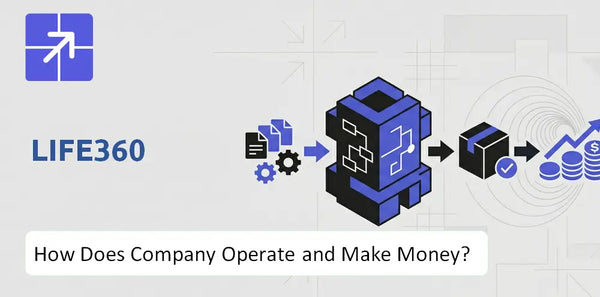
Focus on subscriber conversion: optimize onboarding, promote family-wide plans, and push value adds like roadside assistance; see product strategy in Life360 BCG Matrix Analysis.
What Does Life360 Actually Sell?
Life360 sells a family safety platform: mobile apps for real-time location sharing, driving safety analytics, emergency dispatch, plus Tile-branded Bluetooth trackers for lost items; customers pay for premium subscription features and add-on hardware that combine digital monitoring with on – demand roadside and identity protection services.
 Core Products and Services
Life360's core is a mobile platform that provides live location sharing, geofencing (places), arrival/departure alerts, and driving safety (crash detection, driving diagnostics). It sells Tile Bluetooth trackers for keys/wallets and bundles premium services: 24/7 roadside assistance, crash response with emergency dispatch, identity theft protection, and disaster response subscriptions.
Who Buys It
Primary buyers are parents and multi – member households seeking child and teen monitoring, plus older-adult caregivers and small fleets using Life360 for basic telematics. Consumers choose free plans for basic location sharing; paying subscribers buy safety, identity, and roadside services; some partnerships serve insurers and enterprise fleet customers.
Customer Value Delivered
Customers get continuous situational awareness (location and driving behavior), faster emergency response via integrated crash detection and dispatch, and recovery tools for lost items and identities. Paid tiers convert location sharing into actionable protection: 24/7 roadside, automated crash alerts, and identity monitoring bundled into subscription revenue.
Why This Offering Stands Out
Life360 combines software, hardware (Tile), and third – party emergency services into one paid ecosystem, moving from social utility to household safety subscription. Its tiered monetization – free location features to drive user acquisition, plus recurring subscription and hardware sales – supports diversified revenue channels and higher lifetime value per household. Read more on its go – to – market in this article: Sales and Marketing Strategy of Life360 Company
Life360 SWOT Analysis
- Complete SWOT Breakdown
- Fully Customizable
- Editable in Excel & Word
- Professional Formatting
- Investor-Ready Format

How Does Life360 Run Its Business Day to Day?
Life360 runs daily by ingesting and processing billions of location pings from over 75,000,000 monthly active users, delivering services via mobile apps and a small hardware line while converting free users into subscription tiers. The operating model centers on a real-time data pipeline, app storefront delivery, platform stability engineering, and Tile hardware logistics supported by third – party integrations and targeted family marketing.

Real-time Data and Platform Operations
Engineering teams run a high-throughput ingestion engine that handles billions of GPS pings daily, ensuring sub-minute location updates and uptime SLAs. Site reliability focuses on scaling microservices, event streams, and databases to keep life360 location sharing reliable for families and fleets.
App Delivery and Customer Access
Customers access Life360 via Apple App Store and Google Play Store downloads; in – app purchases unlock subscription plans. Daily metrics track DAU/MAU, session frequency, and funnel conversion from free to Silver, Gold, or Platinum tiers to grow life360 revenue.
Product Development and Tile Hardware Logistics
Software roadmaps prioritize safety features and driver protection; hardware teams manage Tile sourcing, manufacturing quality checks, and distribution to retail and direct channels. Inventory and returns are reconciled daily with logistics partners to maintain Tile availability.
Sales Channels and Distribution Flow
Primary distribution is direct-to-consumer via app stores and the company website, supplemented by retail and carrier partnerships. Marketing targets parents across lifecycle stages to drive installs and subscriptions; paid UA and organic ASO are monitored for CAC and LTV ratios.
Key Systems, Assets, and Partnerships
Infrastructure includes event streaming (Kafka or equivalent), real-time geolocation engines, map APIs, and secure data stores; partnerships span emergency response centers, insurance programs, and Tile OEMs. Daily ops coordinate API integrations, compliance checks, and partner SLAs.
Conversion Funnel and Monetization Mechanics
Growth teams optimize onboarding, freemium feature gating, and targeted prompts to upgrade based on family size and safety needs; A/B tests and cohort analytics guide pricing and feature placement to increase subscription ARPU. Advertising and data partnerships add ancillary life360 revenue streams.
Operational Risks and Daily Controls
Daily risk checks include privacy audits, rate – limit controls, and incident response drills to address data security and user privacy concerns. Compliance teams review integrations and partner data flows to limit exposure and maintain trust for families using life360 features.
What Keeps the Model Working Every Day
Reliable low-latency location processing, strong app-store distribution, focused family marketing, and recurring subscription economics sustain operations; daily engineering and product iterations keep churn low and conversion improving. Read a focused operational growth analysis in Growth Outlook of Life360 Company
Life360 Business Model Canvas
- One-time Payment
- No Research Needed – Save Hours of Work
- Built by Experts, Trusted by Consultants
- Instant Download, Ready to Use
- 100% Editable, Fully Customizable

How Does Revenue Flow Through Life360?
Revenue flows into Life360 primarily through subscriptions paid by households, supplemented by hardware sales, insurance leads, and data services; demand converts via free-to-paid conversion and household virality, turning location-sharing into predictable recurring revenue.
Subscription revenue: the core high-margin engine
Life360 generates most revenue from paid subscription plans – family-level monthly or annual fees – accounting for roughly 75 percent of top-line growth and driving an ARR run rate above 480,000,000 dollars in fiscal 2025. Subscriptions matter because they are high-margin and sticky, with retention often above 80 percent after year one.
Secondary revenue: hardware, leads, and data products
Tile hardware device sales act as an on-ramp into the Life360 ecosystem and add one-time revenue and attachment opportunities. Life360 also sells insurance lead generation and aggregated data insights to partners, which diversify income beyond subscriptions.
Pricing and monetization model
Life360 monetizes via tiered subscription plans (monthly and annual), plus hardware sales and partner fees; the free app serves as organic customer acquisition, lowering CAC and increasing lifetime value per family.
Key revenue drivers
Revenue is driven by household penetration (nearly 2.4 million paying circles in 2025), high post-year-one retention, low CAC from viral family onboarding, and upsells to premium safety features and driver protection. For context on ownership impacts and governance, see Ownership and Control of Life360 Company.
Life360 Marketing Mix
- Complete Marketing Mix Analysis
- Effortlessly Communicate Your Business Strategy
- Investor-Ready Format
- 100% Editable and Customizable
- Clear and Structured Layout

What Makes Life360's Model Sustainable or Fragile?
Life360's model is sustained by strong network effects and high switching costs as families embed location-sharing and safety routines into daily life, but it is fragile because it depends on Apple and Google OS permissions and faces competition from free tools like Find My plus regulatory risks around location data.
Network effects and subscriber stickiness
Life360 gains durability as households add members and configure geofences, increasing utility per user and raising switching friction; by FY2025 the company reported 5.2 million paid subscribers and subscription revenue accounting for roughly 68% of total revenue, which stabilizes cash flows.
Assets, partnerships, and multi-product scale
Integration of Tile (acquired 2022) and expansion into international markets in 2025 diversified life360 revenue streams and added hardware + subscription bundles; partnerships with insurers and auto-safety vendors bolster distribution and B2B monetization.
Platform dependence and competitive pressure
Life360 relies critically on Apple and Google location APIs and OS-level background permissions; any tightening of privacy controls or API access can degrade location accuracy. Apple's Find My and free OS features create continuous downward pricing pressure on life360 subscription plans.
Resilience outlook for 2025 – 2026
As of FY2025 the shift to subscription-heavy revenue reduced dependence on advertising/data sales, making the model more resilient, but regulatory scrutiny of location data and platform policy risk leave it exposed; continued product diversification into identity and home security is needed to sustain growth.
For context on company history and strategic moves that shaped these strengths and risks, see History and Background of Life360 Company
Life360 Boston Consulting Group Matrix
- Built by Experts, Trusted by Consultants
- Structured for Consultants, Students, and Founders
- 100% Editable in Microsoft Word & Excel
- Instant Digital Download – Use Immediately
- Compatible with Mac & PC – Fully Unlocked

Related Blogs
- What Is the History of Life360 Company and How Did It Evolve?
- What Is the Competitive Landscape of Life360 Company and How Does It Compete?
- What Is the Growth Outlook of Life360 Company and Where Is It Heading?
- How Does Life360 Company Reach Customers and Turn Demand into Sales?
- What Do the Mission, Vision, and Core Values of Life360 Company Reveal?
- Who Are the Core Customers in Life360 Company's Target Market?
- Who Owns Life360 Company Today and Who Holds Control?
Frequently Asked Questions
Life360 sells a family safety platform and Tile-branded Bluetooth trackers. Its app offers live location sharing, geofencing, arrival and departure alerts, driving safety features, emergency dispatch, roadside assistance, and identity protection services. Customers can use free plans or pay for premium subscription tiers and add-on hardware.
Disclaimer
All information, articles, and product details provided on this website are for general informational and educational purposes only. We do not claim any ownership over, nor do we intend to infringe upon, any trademarks, copyrights, logos, brand names, or other intellectual property mentioned or depicted on this site. Such intellectual property remains the property of its respective owners, and any references here are made solely for identification or informational purposes, without implying any affiliation, endorsement, or partnership.
We make no representations or warranties, express or implied, regarding the accuracy, completeness, or suitability of any content or products presented. Nothing on this website should be construed as legal, tax, investment, financial, medical, or other professional advice. In addition, no part of this site - including articles or product references - constitutes a solicitation, recommendation, endorsement, advertisement, or offer to buy or sell any securities, franchises, or other financial instruments, particularly in jurisdictions where such activity would be unlawful.
All content is of a general nature and may not address the specific circumstances of any individual or entity. It is not a substitute for professional advice or services. Any actions you take based on the information provided here are strictly at your own risk. You accept full responsibility for any decisions or outcomes arising from your use of this website and agree to release us from any liability in connection with your use of, or reliance upon, the content or products found herein.