
How does LyondellBasell Industries Company convert feedstocks into polymers and generate margins?
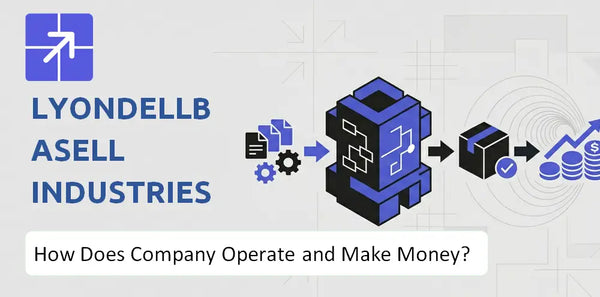
LyondellBasell Industries Company refines hydrocarbons into ethylene, propylene and polymers, selling to packaging, automotive and construction sectors; margins hinge on feedstock spreads and operational uptime. In 2025 the US Gulf feedstock advantage and rising demand for recycled resin shaped results.
LyondellBasell Industries Company must scale mechanical and chemical recycling to defend margins and meet regulation; prioritize plants with lowest cash costs. See LyondellBasell Industries BCG Matrix Analysis
What Does LyondellBasell Industries Actually Sell?
LyondellBasell Industries Company sells polyethylene and polypropylene resins, chemical intermediates like propylene oxide, and refined fuels; customers pay for reliable polymer performance, feedstock-derived intermediates, and certified recycled/renewable polymer grades. The company monetizes scale across the integrated petrochemical value chain and growing sustainable product lines.
 Core product lines: polymers, intermediates, fuels
LyondellBasell business model centers on polyethylene (PE) and polypropylene (PP), plus ethylene- and propylene-derived intermediates such as propylene oxide and ethylene oxide, and refined fuels from integrated refining units. In 2025 the company's polyolefins drive the majority of volumes and EBITDA, reflecting its plastic and polymer production focus and downstream chemical manufacturing value chain.
Who buys it: converters, brand owners, industrial users
Buyers include plastic converters and compounders, consumer-goods brand owners seeking certified recycled content, packaging firms, automotive and construction manufacturers, and chemical peers that use intermediates. Procurement teams value predictable supply and consistent polymer properties tied to LyondellBasell operations and logistics.
Customer value: performance, scale, and sustainability
Customers get durability, flexibility, moisture resistance, and tight spec control for PE/PP used in packaging, consumer goods, and industrial parts; intermediates enable polyurethane, solvents, and coatings. The Circulen suite provides certified recycled or renewable-based polymers so brand owners can meet sustainability mandates and reporting targets.
Differentiators: vertical integration and certified recycled grades
LyondellBasell's vertical integration across feedstock, refining, and polymerization lowers feedstock cost sensitivity and supports high utilization rates; the Circulen offering and global footprint differentiate it in sustainability and supply reliability. See Mission, Vision, and Values of LyondellBasell Industries Company for context on corporate strategy and sustainability commitments: Mission, Vision, and Values of LyondellBasell Industries Company
LyondellBasell Industries SWOT Analysis
- Complete SWOT Breakdown
- Fully Customizable
- Editable in Excel & Word
- Professional Formatting
- Investor-Ready Format

How Does LyondellBasell Industries Run Its Business Day to Day?
Day-to-day, LyondellBasell Industries Company runs continuous petrochemical complexes and steam crackers, balancing feedstock, production rates, and logistics to sell polymers and intermediates worldwide. Operations hinge on real-time feedstock switching, integrated downstream plants, and a logistics network that moves large volumes to industrial customers and distributors.

Operating model: continuous, integrated chemical manufacturing
Plants run 24/7 with steam crackers feeding polymer lines; production planning optimizes cracker yields and downstream loading to match customer contracts and spot demand. Control rooms use process automation and real-time pricing signals to switch feedstocks and maximize margins across the LyondellBasell business model.
Product and service delivery: bulk industrial supply
Customers access products via long-term contracts, spot sales, and tolling agreements; shipments go by pipeline, vessel, rail, or truck to converters and distributors. Technical service teams and licensing support (Spheripol, Hostalen) help customers scale formulations and processes.
Production, sourcing, development: feedstock flexibility and tech licensing
In the U.S., ethane from shale gives a cost edge; Europe and Asia use naphtha. Feedstock swaps are executed based on spot spreads; R&D refines catalysts and polymer grades while a technology-licensing arm generates high-margin royalties from Spheripol and Hostalen process deployments.
Sales channels and distribution: integrated and third-party networks
Main channels are direct industrial sales, global distributors, and tolling partners; distribution relies on company-owned pipelines, storage terminals, and third-party logistics. Inventory hubs near key markets reduce lead times for converters in packaging, automotive, and construction.
Key assets, systems, partnerships: global complexes and logistics
Major assets include steam crackers, polymerization trains, and licenses; systems include advanced process control, trader desks, and supply-chain optimization software. Strategic partnerships and joint ventures secure feedstock, off-take, and access to regional markets – supporting scale and resilience.
Why the model works: margin optionality and vertical integration
Feedstock flexibility, integrated value chains, and technology licensing drive margin resilience; U.S. ethane advantage lowered COGS in 2025, while licensing fees bolster profitability. Continuous operations and logistics scale allow LyondellBasell operations to respond quickly to oil and gas price swings.
For ownership details and governance context, see Ownership and Control of LyondellBasell Industries Company
LyondellBasell Industries Business Model Canvas
- One-time Payment
- No Research Needed – Save Hours of Work
- Built by Experts, Trusted by Consultants
- Instant Download, Ready to Use
- 100% Editable, Fully Customizable

How Does Revenue Flow Through LyondellBasell Industries?
Revenue flows through LyondellBasell Industries Company mainly from high-volume sales of polymers and chemicals to packaging, construction, and transportation manufacturers; demand converts to revenue via long-term contracts and spot sales, while licensing and catalysts add profitable secondary income.
Olefins and Polyolefins Americas: Core Revenue Driver
The Olefins and Polyolefins Americas segment generated the largest share of LyondellBasell business model revenue in 2025, benefiting from $41.5 billion company-wide sales and advantaged North American energy costs that widened spreads. High-volume sales of polyethylene and polypropylene to packaging and transport manufacturers drive cash flow and profitability.
Technology Licensing, Catalysts, and Specialty Products
Beyond physical product sales, LyondellBasell company overview shows technology licensing and catalyst sales provide high-margin revenue and recurring fees; specialty polymers and additives further diversify income and capture downstream value in the chemical manufacturing value chain.
Pricing Mechanics and Spread-Driven Monetization
Monetization hinges on spreads – the difference between feedstock costs (naphtha, ethane) and selling prices for plastics; LyondellBasell vertical integration and operations smooth margin volatility via feedstock sourcing, long-term contracts, and opportunistic spot-market sales.
Primary Revenue Drivers: Volume, Spreads, Contracts
Revenue rises with production volume and favorable spreads; long-term supply agreements with consumer goods firms stabilize top-line, while spot exposure captures commodity price upswings. See demand patterns and target markets in Target Customers and Market of LyondellBasell Industries Company.
LyondellBasell Industries Marketing Mix
- Complete Marketing Mix Analysis
- Effortlessly Communicate Your Business Strategy
- Investor-Ready Format
- 100% Editable and Customizable
- Clear and Structured Layout

What Makes LyondellBasell Industries's Model Sustainable or Fragile?
LyondellBasell's model leans on massive scale, integrated sites, and a Value Park layout that cuts waste and energy use, but it's exposed to cyclicality and feedstock price swings that can erode margins. Key sustainability drivers are circularity investments and MoReTec expansion in 2025; main fragility is oil-to-gas ratio sensitivity and execution risk converting Houston Refining into a circularity hub.
Scale and Value Park integration support resilience
LyondellBasell business model captures cost and margin advantages through integrated petrochemical company operations: co-located crackers, polymer plants, and refineries reduce feedstock transport and energy losses. In 2025 the firm reported adjusted EBITDA of approximately $12.8 billion, reflecting cash generation from scale and operational integration that underpins long-term competitiveness.
Advanced recycling and asset conversion bolster circularity
Key assets include worldwide polymer production plants, the 2025 MoReTec advanced recycling expansion, and ongoing conversion of Houston Refining assets into a circularity hub. These capabilities support growth in recycled polymer volumes and diversify LyondellBasell revenue streams and profitability toward lower-carbon products.
Feedstock mix and oil-to-gas exposure
The model depends heavily on feedstock economics: North American ethane/NGL advantage versus naphtha shifts with the oil-to-gas price ratio, which in 2025 narrowed at times as Brent traded around $80 – 90/bbl while Henry Hub averaged roughly $3.50 – 4.50/MMBtu. That concentration risk directly affects margins in plastic and polymer production and the chemical manufacturing value chain.
Resilience assessment for 2025/2026
Overall, LyondellBasell Industries Company appears resilient and cash-generative in 2025, supported by $6+ billion free cash flow capacity target range and disciplined capex (~$2.0 – 2.5 billion guidance). The model is still fragile if recycled polymer scale-up stalls or if feedstock spreads compress further; successful execution of Houston conversion and expansion of recycled volumes is decisive for medium-term durability. See Growth Outlook of LyondellBasell Industries Company for deeper context.
LyondellBasell Industries Boston Consulting Group Matrix
- Built by Experts, Trusted by Consultants
- Structured for Consultants, Students, and Founders
- 100% Editable in Microsoft Word & Excel
- Instant Digital Download – Use Immediately
- Compatible with Mac & PC – Fully Unlocked

Related Blogs
- What Is the History of LyondellBasell Industries Company and How Did It Evolve?
- What Is the Competitive Landscape of LyondellBasell Industries Company and How Does It Compete?
- What Is the Growth Outlook of LyondellBasell Industries Company and Where Is It Heading?
- How Does LyondellBasell Industries Company Reach Customers and Turn Demand into Sales?
- What Do the Mission, Vision, and Core Values of LyondellBasell Industries Company Reveal?
- Who Are the Core Customers in LyondellBasell Industries Company's Target Market?
- Who Owns LyondellBasell Industries Company Today and Who Holds Control?
Frequently Asked Questions
LyondellBasell Industries sells polyethylene and polypropylene resins, chemical intermediates such as propylene oxide, and refined fuels. The company also offers certified recycled or renewable polymer grades through its Circulen suite. Its business model monetizes scale across an integrated petrochemical value chain and growing sustainable product lines.
Disclaimer
All information, articles, and product details provided on this website are for general informational and educational purposes only. We do not claim any ownership over, nor do we intend to infringe upon, any trademarks, copyrights, logos, brand names, or other intellectual property mentioned or depicted on this site. Such intellectual property remains the property of its respective owners, and any references here are made solely for identification or informational purposes, without implying any affiliation, endorsement, or partnership.
We make no representations or warranties, express or implied, regarding the accuracy, completeness, or suitability of any content or products presented. Nothing on this website should be construed as legal, tax, investment, financial, medical, or other professional advice. In addition, no part of this site - including articles or product references - constitutes a solicitation, recommendation, endorsement, advertisement, or offer to buy or sell any securities, franchises, or other financial instruments, particularly in jurisdictions where such activity would be unlawful.
All content is of a general nature and may not address the specific circumstances of any individual or entity. It is not a substitute for professional advice or services. Any actions you take based on the information provided here are strictly at your own risk. You accept full responsibility for any decisions or outcomes arising from your use of this website and agree to release us from any liability in connection with your use of, or reliance upon, the content or products found herein.