
How does Manutan International operate as a B2B distributor and what drives its margins and growth?
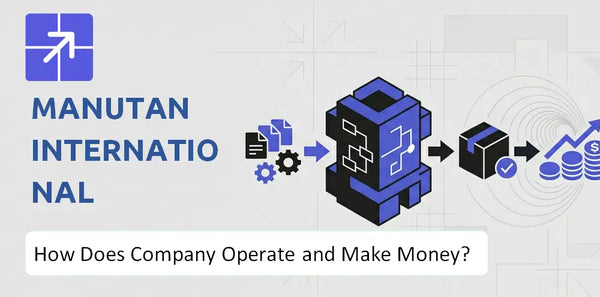
Manutan International sells MRO and workplace products across 17 European countries via a digital-first catalogue and logistics network. This matters because its 2025 shift to platform services and centralized logistics reduced order-to-delivery time and signaled improving EBITDA margins.
Focus on SKU rationalization and cross-border fulfillment to cut costs and boost repeat sales; see product insight: Manutan International BCG Matrix Analysis
What Does Manutan International Actually Sell?
Manutan International sells over 800,000 SKUs spanning industrial supplies, warehouse equipment, office furniture, and safety gear; customers pay for a consolidated procurement service that streamlines purchasing and reduces vendor management costs.
 Core product mix and procurement platform
Manutan offers a vast Manutan product range: maintenance consumables, material handling, storage, ergonomic office furniture, PPE, and technical equipment. The offering includes private-label lines that in 2025 represented a growing share of revenue and typically price about 15% below premium brands while improving margins.
Primary buyers and account types
Buyers are professional clients: mid-to-large corporates, public sector bodies, and SMEs buying for facilities and operations. Procurement teams and local authorities use Manutan's B2B sales channels, account management, and centralized invoicing to consolidate spend.
Practical value delivered to customers
Customers gain lower administrative cost, faster fulfillment via Manutan distribution network, and predictable pricing through private-label assortments. In 2025, omnichannel fulfillment and inventory management supported order fill rates consistently above industry averages per company reports.
Differentiators in the market
Manutan stands out for catalogue depth, integrated e-commerce and account portals, and logistics scale across Europe – backed by dedicated customer service and vendor partnerships that simplify procurement. See History and Background of Manutan International Company for company context: History and Background of Manutan International Company
Manutan International SWOT Analysis
- Complete SWOT Breakdown
- Fully Customizable
- Editable in Excel & Word
- Professional Formatting
- Investor-Ready Format

How Does Manutan International Run Its Business Day to Day?
Manutan International runs on a multi-channel sales engine and automated logistics: digital channels process most orders, sales teams handle complex accounts, and robotics-driven warehouses enable 24 – 48 hour delivery across Europe.

Operating model: digital-first, service-led
Manutan operates a hybrid model where web shops and EDI integrations handle high-volume B2B transactions while a field sales force manages large accounts and public-sector contracts. Daily order flow ties e-commerce, ERP links, and local sales for end-to-end fulfilment.
Product and service delivery: fast, visible fulfilment
Customers buy via online catalogs, dedicated portals, or EDI; orders route to the nearest automated distribution center, pick/pack robots prepare shipments, and carriers deliver within 24 – 48 hours in core markets.
Sourcing and product development: broad catalogue, targeted procurement
Manutan sources a wide product range from global suppliers and local vendors, manages category sourcing centrally, and updates the catalogue with business-focused SKUs and workplace design services to meet client specifications.
Sales channels and distribution: omnichannel reach
More than 75 percent of orders are processed digitally via web shops and EDI; remaining revenue comes from direct sales, telesales, and public tender activity that require bespoke quotes and consulting.
Key assets, systems, and partnerships: automation plus integrations
Core assets include large automated warehouses with robotics, integrated WMS and OMS, ERP connectors for customers, and logistics partnerships that sustain the Manutan distribution network and support pan-European coverage.
Why the model works: scale, speed, and service
Automation drives low unit costs and fast lead times; digital channels scale transaction volume; and sales/account teams retain complex, high-margin contracts – together sustaining Manutan business model efficiency and resilience.
For operational context and financial signals tied to these processes, see the Growth Outlook of Manutan International Company
Manutan International Business Model Canvas
- One-time Payment
- No Research Needed – Save Hours of Work
- Built by Experts, Trusted by Consultants
- Instant Download, Ready to Use
- 100% Editable, Fully Customizable

How Does Revenue Flow Through Manutan International?
Revenue flows from direct sales of physical goods and growing value-added services, converting customer demand into repeat orders and subscription-like services; high volumes and integration into procurement workflows turn demand into recurring revenue.
Main revenue from product sales
Manutan International earns most revenue by selling industrial and office supplies across its Manutan product range; this B2B retail core drives turnover and supports a gross margin of 37 – 40 percent, which underpins profitability.
Additional revenue from services and software
In 2025, growth came from value-added services such as the Savvy procurement software and bespoke furniture installation projects, adding service fees and recurring software revenue alongside product sales; see Target Customers and Market of Manutan International Company for customer segmentation.
Pricing and monetization logic
Manutan business model monetizes via unit sales, project fees, and software subscriptions; high volume purchasing lets the firm secure supplier discounts, widening the spread between acquisition cost and sale price and enabling competitive list prices and margin protection.
What drives revenue most
Revenue is driven by repeat orders from a diversified customer base, integration into procurement workflows (reducing churn), scale-enabled supplier terms, and expansion of Manutan e-commerce strategy and services; in 2025, services contributed a materially higher share of revenue growth versus prior years.
Manutan International Marketing Mix
- Complete Marketing Mix Analysis
- Effortlessly Communicate Your Business Strategy
- Investor-Ready Format
- 100% Editable and Customizable
- Clear and Structured Layout

What Makes Manutan International's Model Sustainable or Fragile?
Manutan International's model is sustainable thanks to a deep logistical moat and a shift toward circular offerings, but it's fragile due to exposure to Eurozone industrial cycles and competitive pressure from Amazon Business. Structural strengths include localized service and private-label margins; risks stem from cyclical demand and platform-led price competition.
Logistics and Circularity Drive Resilience
Manutan's distribution network and localized fulfillment reduce lead times and return costs, supporting steady B2B reorder rates. The 2025 push into refurbished equipment aligns with upcoming 2026 EU environmental mandates, lowering regulatory risk and opening margin-accretive reuse revenue.
Private Label and Service Differentiation
Manutan's private-label assortment and account-managed B2B sales strategy protect gross margins versus pure-play marketplaces. Superior customer service and a broad Manutan product range sustain higher lifetime value for corporate clients.
Macroeconomic and Concentration Dependencies
Order volume correlates closely with Eurozone industrial production; 2025 data show European manufacturing PMI swings drive quarter-on-quarter sales volatility. Energy cost shocks and manufacturing slowdowns materially reduce MRO spend and inventory turns.
Competitive Pressure from Platform Players
Amazon Business's expansion into European MRO compresses price-sensitive categories and threatens share in long-tail SKUs. Manutan's model is exposed where buyers prioritize price and one-click delivery over account services.
How Durable the Model Looks in 2025/2026
Professional judgment for 2025/2026: Manutan remains a resilient market leader if it keeps leveraging localized logistics, private-label margins, and account management to differentiate from Manutan e-commerce strategy competitors. Revenue sensitivity to Eurozone industrial output and growing platform competition are visible fragilities to monitor.
Quantitative Signals to Watch
Track these KPIs: order frequency, average basket value, private-label penetration, and inventory days. In 2025, a 5-8% swing in Eurozone manufacturing output historically maps to single-digit percentage changes in Manutan's quarterly revenues – watch for energy-price-driven contractions.
For governance and ownership context see Ownership and Control of Manutan International Company
Manutan International Boston Consulting Group Matrix
- Built by Experts, Trusted by Consultants
- Structured for Consultants, Students, and Founders
- 100% Editable in Microsoft Word & Excel
- Instant Digital Download – Use Immediately
- Compatible with Mac & PC – Fully Unlocked

Related Blogs
- What Is the History of Manutan International Company and How Did It Evolve?
- What Is the Competitive Landscape of Manutan International Company and How Does It Compete?
- What Is the Growth Outlook of Manutan International Company and Where Is It Heading?
- How Does Manutan International Company Reach Customers and Turn Demand into Sales?
- What Do the Mission, Vision, and Core Values of Manutan International Company Reveal?
- Who Are the Core Customers in Manutan International Company's Target Market?
- Who Owns Manutan International Company Today and Who Holds Control?
Frequently Asked Questions
Manutan International sells over 800,000 SKUs across industrial supplies, warehouse equipment, office furniture, safety gear, and technical products. Its value is not just the catalogue itself, but the consolidated procurement service that helps professional buyers simplify purchasing, reduce vendor management, and keep spending under control.
Disclaimer
All information, articles, and product details provided on this website are for general informational and educational purposes only. We do not claim any ownership over, nor do we intend to infringe upon, any trademarks, copyrights, logos, brand names, or other intellectual property mentioned or depicted on this site. Such intellectual property remains the property of its respective owners, and any references here are made solely for identification or informational purposes, without implying any affiliation, endorsement, or partnership.
We make no representations or warranties, express or implied, regarding the accuracy, completeness, or suitability of any content or products presented. Nothing on this website should be construed as legal, tax, investment, financial, medical, or other professional advice. In addition, no part of this site - including articles or product references - constitutes a solicitation, recommendation, endorsement, advertisement, or offer to buy or sell any securities, franchises, or other financial instruments, particularly in jurisdictions where such activity would be unlawful.
All content is of a general nature and may not address the specific circumstances of any individual or entity. It is not a substitute for professional advice or services. Any actions you take based on the information provided here are strictly at your own risk. You accept full responsibility for any decisions or outcomes arising from your use of this website and agree to release us from any liability in connection with your use of, or reliance upon, the content or products found herein.