
How does Mitsui Fudosan Company integrate development, asset management, and capital recycling to drive returns?
Mitsui Fudosan Company builds mixed-use urban ecosystems, manages assets for steady yields, then recycles capital by selling to REITs and funds. This matters as its 2025 strategy offsets inflation with real assets while boosting fee income from global asset management.
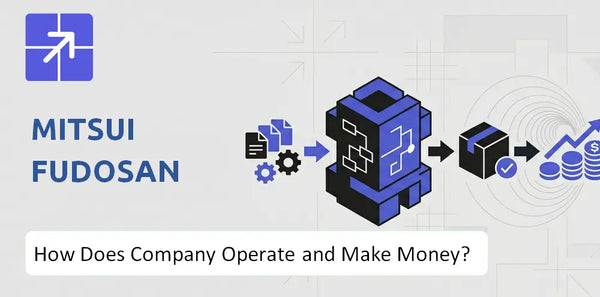
Mitsui Fudosan Company monetizes projects via long-term leases and selective disposals to sustain a high-velocity development pipeline; see the Mitsui Fudosan BCG Matrix Analysis for product-level positioning.
What Does Mitsui Fudosan Actually Sell?
Mitsui Fudosan sells integrated urban environments and high-efficiency real estate solutions: premium offices, large retail malls, luxury residences, hospitality, and institutional investment products. Customers pay for location, operational services, sustainability features, and managed yield via J – REITs and private funds.
 Core real estate products and platforms
Mitsui Fudosan offers premium office space in central Tokyo districts such as Nihonbashi and Yaesu, large-scale retail through LaLaport and Mitsui Outlet Park, and luxury condominiums under Park Tower and Park Mansion. It also operates Mitsui Garden Hotels and luxury partnerships like the Bulgari Hotel Tokyo, plus asset-management platforms including J-REITs and private funds.
Main buyer groups
Corporate tenants (multinationals, financial firms) lease sustainable, tech-enabled offices; retailers and brands lease flagship mall space; affluent individuals buy luxury residences; institutional investors and pension funds buy stakes via Mitsui Fudosan's J-REITs and private funds.
Customer value delivered
Clients receive location premium, integrated services (property management Mitsui Fudosan), and sustainability features – energy-efficient systems and TOD (transit-oriented development). Investors get managed yield: as of FY2025 Mitsui Fudosan reported consolidated revenue of ¥1.5 trillion and recurring income drivers from leasing and asset management supporting predictable cash flows.
Differentiators and buying ease
The Mitsui Fudosan business model links urban redevelopment projects Japan with in-house property management, construction, and retail operations, creating turnkey, high-margin assets. Vertical integration, branded retail (LaLaport), and J-REIT platforms simplify acquisition and scale – so tenants and investors access ready-built, ESG-aligned assets and transparent returns. Read more on Ownership and Control of Mitsui Fudosan Company Ownership and Control of Mitsui Fudosan Company.
Mitsui Fudosan SWOT Analysis
- Complete SWOT Breakdown
- Fully Customizable
- Editable in Excel & Word
- Professional Formatting
- Investor-Ready Format

How Does Mitsui Fudosan Run Its Business Day to Day?
Mitsui Fudosan runs daily via a three-stage lifecycle: Create, Manage, Recycle – coordinating long-term redevelopments, operating a large leased portfolio, and recycling assets through sales or JV exits. Day-to-day work ties project delivery systems, tenant services, and digital platforms into a consistent flow that supports cash returns and urban value capture.

Operating model: lifecycle-led urban value creation
Mitsui Fudosan bases operations on Create, Manage, Recycle. Project pipeline teams plan multi-year redevelopments with government and landowners, asset managers run stabilized properties, and investment groups execute JV exits to recycle capital.
Product and service delivery: leasing, brokerage, and flexible work
Customers access office, retail, and residences through leasing teams and Mitsui Rehouse brokerage; flexible Work Styling units serve hybrid workers. Tenant onboarding, lease negotiations, and digital booking platforms handle transactions and usage.
Production, sourcing, and development: in-house planning plus partners
Development is managed by in-house planners and construction managers who coordinate with contractors and municipal authorities. For 2025 projects the firm runs complex block-scale redevelopments that span 3 – 10 years and require land aggregation, permitting, and phased construction.
Sales channels and distribution: direct leasing, brokerage, and digital platforms
Main customer connections are direct corporate leasing, retail leasing teams, Mitsui Rehouse for residential transactions, and online portals for Work Styling and tenant services. Corporate client relationship managers secure long-term anchor tenants.
Key assets, systems, and partnerships: portfolio, tech, and JVs
Key assets include a 2025 operating portfolio with over 3,000,000 square meters of office and retail space, large mixed-use redevelopments, and Mitsui Rehouse brokerage channels. Core systems: integrated ERP/property management, energy-management platforms, and JV partnerships with local landowners and developers.
What makes the model work in practice: scale, integration, and recycling
The model scales because Mitsui Fudosan combines block-scale development expertise, steady rental cash flow from a large leased base, and capital recycling via JV exits and asset sales. Digital initiatives like Work Styling improve occupancy and match hybrid demand, boosting revenue per sqm.
Mitsui Fudosan integrates these daily operations into investment planning and reporting; see related market focus in Target Customers and Market of Mitsui Fudosan Company
Mitsui Fudosan Business Model Canvas
- One-time Payment
- No Research Needed – Save Hours of Work
- Built by Experts, Trusted by Consultants
- Instant Download, Ready to Use
- 100% Editable, Fully Customizable

How Does Revenue Flow Through Mitsui Fudosan?
Revenue at Mitsui Fudosan flows from leasing, property sales, and management fees; demand from tenants, buyers, and third – party owners converts into rents, asset disposals, and recurring service income.
Leasing: Core, Stable Income
The Leasing segment is the backbone of Mitsui Fudosan, supplying long – term rental cashflows from office and retail tenants and accounting for about 35 percent of total revenue in fiscal 2025. Stable, contracted rents and occupancy in Tokyo and regional hubs smooth earnings and support valuation of the development pipeline.
Property Sales and Asset Disposals
Property Sales convert developed residential units and commercial assets into large, lumpy cash inflows; Mitsui Fudosan sells to individual buyers and to sponsored REITs such as Mitsui Fudosan Logistics Park Inc. Sales activity drove part of fiscal 2025 revenue, contributing to a total revenue exceeding 2.5 trillion yen.
Management Fees and Asset Management
Management fees are an asset – light, high – margin stream earned from operating properties for third parties and Mitsui Fudosan funds. Asset management and property management Mitsui Fudosan services expand recurring income and boost returns on equity for its funds and REIT partnerships.
Pricing and Monetization Model
Mitsui Fudosan monetizes through long – term lease contracts, one – time property sales, and recurring management fees plus performance incentives for fund operations. Hotel operations add room revenue and ancillary services with variable pricing tied to RevPAR trends.
What Drives Revenue Most
Key drivers in fiscal 2025 were leasing occupancy and rent growth, a surge in hotel RevPAR now > 25 percent above 2019, and international project income from the US and UK composing nearly 15 percent of operating income. Urban redevelopment projects Japan and targeted international expansion underpin medium – term growth.
For context on market positioning and competitors see Competitive Landscape of Mitsui Fudosan Company
Mitsui Fudosan Marketing Mix
- Complete Marketing Mix Analysis
- Effortlessly Communicate Your Business Strategy
- Investor-Ready Format
- 100% Editable and Customizable
- Clear and Structured Layout

What Makes Mitsui Fudosan's Model Sustainable or Fragile?
Mitsui Fudosan's model rests on a Tokyo-centric land bank and capital recycling that secures premium rents, yet it is exposed to rising interest rates and Japan's demographic decline. Structural strengths include irreplaceable urban locations and diversified income; key fragilities are interest-rate sensitivity and residential demand erosion.
Prime urban land and rent pricing power
Mitsui Fudosan commands premium rents in central Tokyo thanks to an irreplaceable land bank concentrated in key wards; this supports stable cash flow even during cycles. High-quality commercial assets and long-term leases underpin predictable NOI and tenant retention.
Capital recycling and balance-sheet management
The Mitsui Fudosan business model uses asset sales, J-REIT sponsorships, and joint ventures to recycle capital, funding new urban redevelopment projects and logistics expansion while keeping liquidity. Management targets disciplined capex and asset-light investment vehicles to protect returns.
Interest-rate and leverage sensitivity
Mitsui Fudosan real estate company carries substantial debt; as of fiscal 2025 the Debt-to-EBITDA ratio is approximately 8.2x, making earnings vulnerable to Bank of Japan policy normalization and higher borrowing costs. Refinancing risk concentrates around large maturities in a rising-rate environment.
Demographics and residential demand constraint
Japan's shrinking population reduces long-term domestic residential demand, pressuring the residential development pipeline and sales margins. Mitsui Fudosan offsets this via logistics, international expansion, and mixed-use redevelopment to diversify revenue streams.
Resilience in 2025/2026: Resilient but Transitioning
For 2025/2026 the professional judgment is Resilient but Transitioning: Mitsui Fudosan is a high-quality defensive player with moderate growth upside as it expands logistics and international portfolios. Strategic redevelopments and strong urban leasing demand support cash flow while management navigates higher interest costs.
Actionable indicators to watch
Monitor Debt-to-EBITDA, average interest rate on debt, and Tokyo office vacancy and rent trends; track logistics leasing take-up and international project backlogs. See the Growth Outlook of Mitsui Fudosan Company for related analysis and project lists.
Mitsui Fudosan Boston Consulting Group Matrix
- Built by Experts, Trusted by Consultants
- Structured for Consultants, Students, and Founders
- 100% Editable in Microsoft Word & Excel
- Instant Digital Download – Use Immediately
- Compatible with Mac & PC – Fully Unlocked

Related Blogs
- What Is the History of Mitsui Fudosan Company and How Did It Evolve?
- What Is the Competitive Landscape of Mitsui Fudosan Company and How Does It Compete?
- What Is the Growth Outlook of Mitsui Fudosan Company and Where Is It Heading?
- How Does Mitsui Fudosan Company Reach Customers and Turn Demand into Sales?
- What Do the Mission, Vision, and Core Values of Mitsui Fudosan Company Reveal?
- Who Are the Core Customers in Mitsui Fudosan Company's Target Market?
- Who Owns Mitsui Fudosan Company Today and Who Holds Control?
Frequently Asked Questions
Mitsui Fudosan sells integrated urban environments and high-efficiency real estate solutions. Its offerings include premium offices, large retail malls, luxury residences, hospitality assets, and institutional investment products. Customers pay for location premium, operational services, sustainability features, and managed yield through J-REITs and private funds.
Disclaimer
All information, articles, and product details provided on this website are for general informational and educational purposes only. We do not claim any ownership over, nor do we intend to infringe upon, any trademarks, copyrights, logos, brand names, or other intellectual property mentioned or depicted on this site. Such intellectual property remains the property of its respective owners, and any references here are made solely for identification or informational purposes, without implying any affiliation, endorsement, or partnership.
We make no representations or warranties, express or implied, regarding the accuracy, completeness, or suitability of any content or products presented. Nothing on this website should be construed as legal, tax, investment, financial, medical, or other professional advice. In addition, no part of this site - including articles or product references - constitutes a solicitation, recommendation, endorsement, advertisement, or offer to buy or sell any securities, franchises, or other financial instruments, particularly in jurisdictions where such activity would be unlawful.
All content is of a general nature and may not address the specific circumstances of any individual or entity. It is not a substitute for professional advice or services. Any actions you take based on the information provided here are strictly at your own risk. You accept full responsibility for any decisions or outcomes arising from your use of this website and agree to release us from any liability in connection with your use of, or reliance upon, the content or products found herein.