
How does Molbase turn molecular data into a scalable B2B marketplace and revenue?
Molbase connects chemical buyers and suppliers through a digital catalog and analytics, shifting procurement from offline brokering to transparent e-commerce. This matters as Molbase targets inefficiencies in a $5 trillion market while 2025 moves it toward data and financial services revenue streams.
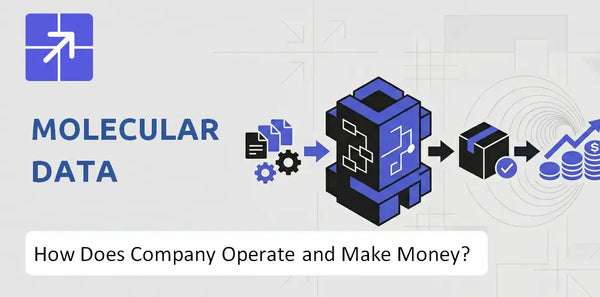
Molbase can monetize via transaction fees, premium data products, and financing; watch its 2025 margin mix for signs of a shift to higher-margin services. See Molecular Data BCG Matrix Analysis for product positioning.
What Does Molecular Data Actually Sell?
Molbase sells access to a digital chemical marketplace, a proprietary molecular database, and integrated supply – chain and financial services; customers pay for transactional sourcing, MolData market intelligence subscriptions, and logistics/payment facilitation that together reduce procurement and R&D friction.
 Core product suite: marketplace, MolData, logistics
Molbase operates a three – tier platform: transactional access to a marketplace with over 60 million SKUs; MolData, a subscription suite delivering real – time pricing, chemical properties, and regulatory flags; and supply – chain plus payments services that close international deals and mitigate counterparty and delivery risk.
Who buys it: pharma, biotech, industry suppliers
Primary buyers include pharmaceutical and biotech R&D teams, chemical manufacturers, and industrial formulators; sellers are chemical producers and distributors using digital storefronts and lead generation to reach global demand and monetize long – tail inventory.
Customer value: speed, certainty, data – driven sourcing
Buyers gain faster sourcing and reduced discovery time – R&D teams report shortened screening cycles when integrating MolData pricing and property feeds – while sellers access demand signals and higher fill rates; logistics and escrow reduce failed cross – border transactions and working capital drag.
Differentiation: scale of inventory and integrated data
Molbase combines a 60M+ SKU long – tail marketplace with licensed molecular data feeds and compliance content, a bundled model that converts data monetization genomics – style insights into actionable procurement and licensing workflows, simplifying buy/sell and reducing vendor fragmentation.
See more context on company origins and strategy in History and Background of Molecular Data Company
Molecular Data SWOT Analysis
- Complete SWOT Breakdown
- Fully Customizable
- Editable in Excel & Word
- Professional Formatting
- Investor-Ready Format

How Does Molecular Data Run Its Business Day to Day?
Molbase runs as a high-frequency molecular data company and procurement platform: a Chemical Search Engine matches thousands of daily inquiries while an integrated supply-chain system executes sourcing, verification, logistics and documentation. Core systems include supplier credentialing, batch quality checks, AI predictive pricing and inventory analytics, and third-party logistics coordination for hazardous shipments.

Operating model: live matching plus procurement execution
Molbase combines a searchable molecular data platform with a transaction engine: users query chemicals, the system ranks supplier matches, then automated and human workflows verify credentials and quality before orders proceed.
Product or service delivery: platform-to-logistics handoff
Customers access offers via web and API, place orders through the Chemical Search Engine, and receive end-to-end service where Molbase manages order documentation, customs clearance, warehousing milestones and carrier coordination.
Production, sourcing, or development: supplier network and verification
Molbase does not manufacture chemicals; it aggregates suppliers, collects molecular and batch-level data, and enforces supplier qualification through certificates, lab reports and on-site audits to ensure marketplace integrity.
Sales channels or distribution: digital marketplace and APIs
Primary channels are the web marketplace and enterprise APIs connecting procurement systems; sales teams and channel partners convert high-value accounts and manage logistics integrations with third-party carriers and regional warehouses.
Key assets, systems, or partnerships: data, AI, and logistics partners
Critical assets include the Chemical Search Engine dataset, AI-driven predictive analytics, supplier credentialing database, and partnerships with carriers and bonded warehouses; these enable scale and compliance across jurisdictions.
What makes the model work in practice: speed, trust, and predictive ops
High-frequency matching, rigorous verification and AI forecasting shift Molbase from a passive directory to an active procurement partner; in 2025 predictive analytics reduced stockouts and enabled customers to lower holding costs by 15% in pilots.
Operational metrics in 2025: Molbase processes thousands of daily RFQs, verifies over 2,000 supplier credentials annually, integrates AI price and inventory forecasts used by > 1,200 enterprise users, and manages hazardous-material shipments through certified carriers and customs clearance workflows. See Competitive Landscape of Molecular Data Company for market context: Competitive Landscape of Molecular Data Company
Molecular Data Business Model Canvas
- One-time Payment
- No Research Needed – Save Hours of Work
- Built by Experts, Trusted by Consultants
- Instant Download, Ready to Use
- 100% Editable, Fully Customizable

How Does Revenue Flow Through Molecular Data?
Revenue at Molbase flows from transactional commissions, subscription licenses, and service fees; demand converts to revenue when platform trades, data subscriptions, or financing products are transacted. High-frequency transactions feed commission income while SaaS and financing embed recurring, higher-margin revenue.
Platform commissions on GMV
Molbase earns a commission or take rate on Gross Merchandise Volume (GMV), typically between 0.5 percent and 2.0 percent for standard trades; this converts high transaction volumes into steady fee income and scales with marketplace activity.
SaaS subscriptions and premium memberships
Subscription revenue from data products and premium supplier memberships delivers recurring, higher-margin cash flows; enterprise genomic data customers pay annual licenses and tiered pricing for analytics and API access.
Pricing and monetization mix
Molbase monetizes via commissions, SaaS licensing, membership fees, pay-per-report services, and financing spreads; the blended take rate plus subscription ARPU shapes total revenue. In FY2025, subscription and services share rose as average contract value increased.
What drives revenue most
The largest drivers are GMV scale for commission income and enterprise SaaS renewals for recurring margin; FY2025 emphasis on supply chain financing grew financial-services revenue, adding spreads and processing fees and increasing customer stickiness.
Key FY2025 facts: Molbase's marketplace GMV exceeded $1.2 billion, take-rate range produced estimated transactional revenue between $6 million and $24 million, and SaaS plus membership contracts generated roughly $42 million in subscription ARR; financial services contributed $9 million in spreads and fees as supply-chain financing volume expanded. For more context see Mission, Vision, and Values of Molecular Data Company
Molecular Data Marketing Mix
- Complete Marketing Mix Analysis
- Effortlessly Communicate Your Business Strategy
- Investor-Ready Format
- 100% Editable and Customizable
- Clear and Structured Layout

What Makes Molecular Data's Model Sustainable or Fragile?
The molecular data company model is sustainable when network effects and proprietary molecular databases strengthen pricing power, yet fragile due to trade, regulatory, and margin pressures. Key structural strengths include data depth and marketplace liquidity; key risks are cross-border data rules, thin bulk-chemical margins, and concentration in Chinese manufacturing.
Network effects as the primary moat
Higher user density boosts marketplace liquidity, helping set industry pricing and creating stickiness for buyers and sellers. As the molecular data company adds listings and transactions, the platform becomes a reference point for spot and contract pricing across specialty chemicals and reagent markets.
Proprietary molecular database and analytics
Owning a database of millions of molecules plus analytics and molecular data services creates a high-margin, defensible asset that generalist e-commerce players struggle to replicate. Data monetization genomics and molecular data licensing enable recurring revenue through enterprise subscriptions and API access.
Concentration, regulatory and geopolitical dependencies
Heavy reliance on the Chinese manufacturing base concentrates operational and supply-chain risk; geopolitical de-risking and reshoring trends threaten supplier density and cost advantages. Tightening data privacy regulations for molecular data companies and new cross-border data transfer limits raise compliance costs and constrain data flows.
Resilience assessment for 2025/2026
In 2025 the model looks transitional: physical trading retains scale but low gross margins (industry bulk chemical margins often 3 – 6%) make returns volatile, while SaaS and molecular data analytics platforms for pharma can deliver mid-to-high teens gross margins. Success hinges on pivoting to higher-margin data products and enterprise solutions from molecular data companies to offset logistics capital intensity.
Operational metrics to watch: active marketplace users, molecules indexed (millions), percentage revenue from data/software versus physical trading, cross-border revenue share, and compliance costs as a percent of revenue. For commercial positioning, see related work on go-to-market: Sales and Marketing Strategy of Molecular Data Company
Molecular Data Boston Consulting Group Matrix
- Built by Experts, Trusted by Consultants
- Structured for Consultants, Students, and Founders
- 100% Editable in Microsoft Word & Excel
- Instant Digital Download – Use Immediately
- Compatible with Mac & PC – Fully Unlocked

Related Blogs
- What Is the History of Molecular Data Company and How Did It Evolve?
- What Is the Competitive Landscape of Molecular Data Company and How Does It Compete?
- What Is the Growth Outlook of Molecular Data Company and Where Is It Heading?
- How Does Molecular Data Company Reach Customers and Turn Demand into Sales?
- What Do the Mission, Vision, and Core Values of Molecular Data Company Reveal?
- Who Are the Core Customers in Molecular Data Company's Target Market?
- Who Owns Molecular Data Company Today and Who Holds Control?
Frequently Asked Questions
Molecular Data sells access to a digital chemical marketplace, a proprietary molecular database, and integrated supply-chain and financial services. Customers pay for transactional sourcing, MolData market intelligence subscriptions, and logistics and payment facilitation that help reduce procurement and R&D friction.
Disclaimer
All information, articles, and product details provided on this website are for general informational and educational purposes only. We do not claim any ownership over, nor do we intend to infringe upon, any trademarks, copyrights, logos, brand names, or other intellectual property mentioned or depicted on this site. Such intellectual property remains the property of its respective owners, and any references here are made solely for identification or informational purposes, without implying any affiliation, endorsement, or partnership.
We make no representations or warranties, express or implied, regarding the accuracy, completeness, or suitability of any content or products presented. Nothing on this website should be construed as legal, tax, investment, financial, medical, or other professional advice. In addition, no part of this site - including articles or product references - constitutes a solicitation, recommendation, endorsement, advertisement, or offer to buy or sell any securities, franchises, or other financial instruments, particularly in jurisdictions where such activity would be unlawful.
All content is of a general nature and may not address the specific circumstances of any individual or entity. It is not a substitute for professional advice or services. Any actions you take based on the information provided here are strictly at your own risk. You accept full responsibility for any decisions or outcomes arising from your use of this website and agree to release us from any liability in connection with your use of, or reliance upon, the content or products found herein.