
How does Mota-Engil Group connect European engineering with project delivery in emerging markets?
Mota-Engil Group combines engineering, construction, and concessions to win large infrastructure projects across Africa and Latin America. This matters because 2025 revenues show growth in concessions and services, signaling lower cyclical exposure versus pure EPC peers. Mota-Engil Group BCG Matrix Analysis
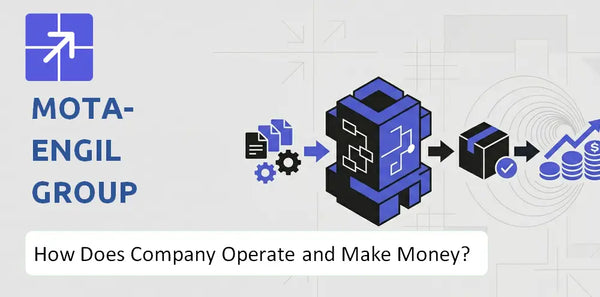
Mota-Engil Group leans on concessions and waste/mining services for recurring cashflow; focus on regional hubs cuts execution risk and supports margins under volatile tender cycles.
What Does Mota-Engil Group Actually Sell?
Mota-Engil Group sells end-to-end infrastructure lifecycle solutions: engineering, procurement and construction (EPC) for large civil works plus long-term operations and maintenance services. Customers pay for delivery of technically complex projects and multi-year service reliability across transport, energy, environment and mining.
 Core Offerings: Integrated infrastructure delivery
Mota-Engil Group provides turnkey EPC for high-speed rail, hydroelectric dams, ports, roads and heavy civil works and adds concessions, O&M and asset management. The firm's Environment division runs waste collection and treatment for over 5,000,000 people; Mining delivers contract mining to Tier-1 resource companies.
Main buyers: Governments and multinationals
Primary clients are national governments, state agencies and multinational developers in transport, energy and extractives. Secondary buyers include municipalities, private concessionaires and mining firms needing outsourced mine services.
Customer value: Risk transfer and technical execution
Clients obtain execution capability in logistically hard geographies, reduced delivery risk via EPC and concession structures, and predictable cashflows from long-term O&M contracts; these drive Mota-Engil revenue streams and profitability through combined project margins and concession toll or availability receipts.
Differentiators: Scale, footprint and lifecycle approach
Mota-Engil business model stands out for cross-border Mota-Engil operations in Africa and Latin America, an integrated concessions and toll road business model, and a portfolio that blends one-off EPC wins with recurring O&M and concession cashflows. See Competitive Landscape of Mota-Engil Group Company for peers and market positioning.
Mota-Engil Group SWOT Analysis
- Complete SWOT Breakdown
- Fully Customizable
- Editable in Excel & Word
- Professional Formatting
- Investor-Ready Format

How Does Mota-Engil Group Run Its Business Day to Day?
Mota-Engil Group runs daily through regional hubs that convert a global backlog into revenue via staged milestone management, heavy-equipment deployment, and local project teams; systems include ERP-driven scheduling, centralized treasury, and decentralized procurement to keep projects moving across Europe, Africa and Latin America.

Decentralized regional operating model
The Mota-Engil business model relies on three core hubs – Europe, Africa, Latin America – each with profit-and-loss responsibility and local project managers who adapt contracts, permitting and labour to local markets while following group standards.
Project delivery and customer access
Clients engage through bid-led EPC (engineering, procurement, construction) contracts and public – private partnership tenders; customers pay via milestone-linked invoices, availability payments on concessions, or toll collections for infrastructure concessions.
Production, sourcing and on-site execution
Daily production focuses on backlog burn: site crews, plant and a heavy-equipment fleet operate across more than 20 countries; procurement uses preferred Chinese supply chains via strategic partner CCCC to shorten lead times and cut input costs.
Sales channels and contract origination
Sales come from competitive international tenders, repeat relationships with governments and multilaterals, and concessions pipeline; business development teams in hubs pursue 'Belt and Road' style mega-project bids alongside partners.
Key assets, systems and partnerships
Key assets are the backlog (record €14.2 billion at start of 2026), fleet, concessions portfolio and the 32.4 percent strategic stake held by China Communications Construction Company (CCCC), which supplies equipment and joint-bidding access to large infrastructure projects.
What makes the model work day-to-day
Milestone-driven revenue recognition, strict cash collection, local procurement flexibility, and partner-backed supply chains make operations scalable; daily dashboards track backlog burn, cash-to-contract ratio and equipment utilization to keep margins stable.
For deeper financial context and strategic outlook see Growth Outlook of Mota-Engil Group Company
Mota-Engil Group Business Model Canvas
- One-time Payment
- No Research Needed – Save Hours of Work
- Built by Experts, Trusted by Consultants
- Instant Download, Ready to Use
- 100% Editable, Fully Customizable

How Does Revenue Flow Through Mota-Engil Group?
Revenue at Mota-Engil Group flows from project fees, long-term service contracts, and cash-generating concessions; demand converts to revenue through milestone billing, recurring contracts, and operational cash flows from assets under management.
Engineering and Construction: Core Project Revenue
The Engineering and Construction (E&C) segment is the primary revenue engine, accounting for roughly 75 percent of turnover with 2025 revenues above €6.2 billion; revenue is milestone-based, recognized as stages of completion under EPC and project delivery contracts.
Environment and Mining: Recurring, Stable Cash Flows
Environment and Mining divisions supply multi-year, steady cash flows via long-term contracts and concessions; these recurring revenue streams reduce cyclicality and support working capital during E&C turnover swings.
Integrated Solutions and Monetization Model
Monetization is shifting to Integrated Solutions where Mota-Engil Group captures value from construction plus operation and maintenance (O&M), concessions, and availability-based payments – turning one-off project fees into recurring service revenue.
Key Revenue Drivers: Orders, Concessions, Geography
Top revenue drivers are new order intake replacing completed work, income from concessions/toll roads, and higher-margin operations in Africa and Latin America; Mota-Engil maintained an EBITDA margin near 15 percent in 2025, driven by these regional mixes.
For ownership, governance and how concession rights feed strategic cash flows, see Ownership and Control of Mota-Engil Group Company.
Mota-Engil Group Marketing Mix
- Complete Marketing Mix Analysis
- Effortlessly Communicate Your Business Strategy
- Investor-Ready Format
- 100% Editable and Customizable
- Clear and Structured Layout

What Makes Mota-Engil Group's Model Sustainable or Fragile?
The Mota-Engil Group model is sustained by a >two-year order book and wide geographic diversification, yet it is vulnerable to geopolitics and FX swings in key markets like Angola and Mexico. Strong partner backing and a shift into contract mining and environmental services reduce cyclicality but high leverage and market concentration remain fragilities.
Order book visibility and backlog support
The Mota-Engil Group business model benefits from an order book that provides just over two years of revenue visibility, giving predictable near-term cash flows and the ability to plan resources across construction, concessions, and EPC contracts. This backlog underpins bidding credibility for new international infrastructure projects.
Strategic partnerships and balance-sheet muscle
Partnership with China Communications Construction Company (CCCC) acts as a financial moat: it strengthens balance-sheet capacity to bid on multi-billion dollar projects and improves competitive positioning in global tendering. This partnership supports Mota-Engil operations across Africa and Latin America.
Revenue concentration and FX exposure
Key constraints include heavy exposure to Angola and Mexico where a substantial share of cash flow is generated; currency devaluations and local political shifts can compress margins quickly. Dependence on government-funded PPPs and concessions also links revenue to public-sector fiscal health.
Resilience assessment for 2025/2026
Professional judgment for 2026 indicates a robust outlook: Net Debt to EBITDA improved to 1.8x in the 2025/2026 period, reducing financial fragility versus historical peaks. The pivot toward contract mining and environmental services diversifies Mota-Engil revenue streams and cushions the boom-bust cycle common to construction conglomerates.
For complementary context on customers and regional markets, see Target Customers and Market of Mota-Engil Group Company
Mota-Engil Group Boston Consulting Group Matrix
- Built by Experts, Trusted by Consultants
- Structured for Consultants, Students, and Founders
- 100% Editable in Microsoft Word & Excel
- Instant Digital Download – Use Immediately
- Compatible with Mac & PC – Fully Unlocked

Related Blogs
- What Is the History of Mota-Engil Group Company and How Did It Evolve?
- What Is the Competitive Landscape of Mota-Engil Group Company and How Does It Compete?
- What Is the Growth Outlook of Mota-Engil Group Company and Where Is It Heading?
- How Does Mota-Engil Group Company Reach Customers and Turn Demand into Sales?
- What Do the Mission, Vision, and Core Values of Mota-Engil Group Company Reveal?
- Who Are the Core Customers in Mota-Engil Group Company's Target Market?
- Who Owns Mota-Engil Group Company Today and Who Holds Control?
Frequently Asked Questions
Mota-Engil Group sells end-to-end infrastructure lifecycle solutions. Its work includes EPC for large civil works, plus long-term operations, maintenance, concessions, and asset management across transport, energy, environment, and mining. Customers pay for technical execution, project delivery, and reliable service over multi-year contracts.
Disclaimer
All information, articles, and product details provided on this website are for general informational and educational purposes only. We do not claim any ownership over, nor do we intend to infringe upon, any trademarks, copyrights, logos, brand names, or other intellectual property mentioned or depicted on this site. Such intellectual property remains the property of its respective owners, and any references here are made solely for identification or informational purposes, without implying any affiliation, endorsement, or partnership.
We make no representations or warranties, express or implied, regarding the accuracy, completeness, or suitability of any content or products presented. Nothing on this website should be construed as legal, tax, investment, financial, medical, or other professional advice. In addition, no part of this site - including articles or product references - constitutes a solicitation, recommendation, endorsement, advertisement, or offer to buy or sell any securities, franchises, or other financial instruments, particularly in jurisdictions where such activity would be unlawful.
All content is of a general nature and may not address the specific circumstances of any individual or entity. It is not a substitute for professional advice or services. Any actions you take based on the information provided here are strictly at your own risk. You accept full responsibility for any decisions or outcomes arising from your use of this website and agree to release us from any liability in connection with your use of, or reliance upon, the content or products found herein.