
How does NCC Group monetize cybersecurity services and technical IP through its mixed consulting and escrow model?
NCC Group sells high-margin consulting, managed services, and software-escrow products that stabilize revenue while consulting remains project-based. This matters as 2025 revenue mix shifts toward recurring contracts after a 2025 uptick in managed-services renewals tied to tighter regulatory cyber-resilience rules. NCC Group BCG Matrix Analysis
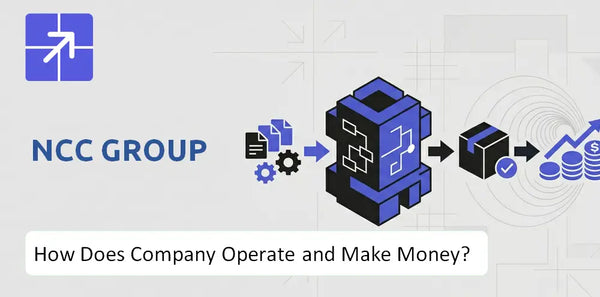
NCC Group's recurring escrow and managed services reduce revenue volatility; focus on cross-sell raises client lifetime value and margins.
What Does NCC Group Actually Sell?
NCC Group sells two core offerings: cyber security services – penetration testing, strategic consulting, incident response – and software resilience services, including software escrow and verification. Customers pay for expert risk reduction and a legal-technical safety net that keeps critical software operational during vendor failure.
 Core Offerings: Cyber Security and Software Resilience
NCC Group cybersecurity services include high-end penetration testing, managed security, threat intelligence, incident response, and advisory consulting. The software resilience business (software escrow and verification services) stores and verifies source code so clients can continue operations if a vendor stops supporting software.
Who Buys It
Buyers are large enterprises, regulated firms (finance, healthcare, utilities), government agencies, and software vendors wanting third-party escrow. Procurement and risk teams buy security tests and escrow to meet compliance and operational continuity requirements.
Customer Value Delivered
Clients receive reduced breach probability through proactive vulnerability assessment and penetration testing, faster containment via incident response, and guaranteed access to source code to avoid downtime. In 2025 NCC Group reported recurring revenue growth driven by managed services and escrow contracts, reflecting predictable protection and continuity value.
Why This Offering Stands Out
NCC Group business model pairs deep technical expertise with legal-technical escrow contracts, creating complementary revenue streams: high-margin advisory and testing plus steady, subscription-like escrow fees. Their scale in penetration testing and verified escrow gives faster resourcing and trusted custody, aiding compliance and mitigating operational risk; see Sales and Marketing Strategy of NCC Group Company
NCC Group SWOT Analysis
- Complete SWOT Breakdown
- Fully Customizable
- Editable in Excel & Word
- Professional Formatting
- Investor-Ready Format

How Does NCC Group Run Its Business Day to Day?
NCC Group runs day-to-day through two distinct delivery models: a labor-intensive Cyber Security consultancy and an automated Software Resilience platform. Operations center on utilising 2,500+ technical experts for client engagements while a global, secure infrastructure automates code escrow, verification, and resilience checks.

Dual operating model: consultancy and platform
The day-to-day splits between NCC Group cybersecurity services as an elite consulting outfit and a platform-led Software Resilience unit; management tracks utilization rates on the security side and uptime/automation metrics on the resilience side.
Customer access and service delivery
Clients buy advisory or managed engagements through sales teams and channels, and access platform services via subscription or contract; incident response is dispatched 24/7 while escrow and verification run on scheduled automated cycles.
Production, sourcing and technical delivery
Cyber teams are staffed from regional talent pools and deployed for red teaming, penetration testing, and incident response; resilience services run on secure data centers and CI/CD integrations to perform routine automated verifications.
Sales channels and distribution
Revenue flows through direct enterprise sales, channel partners, and platform subscriptions; large contracts and retained managed security services drive recurring revenue while one-off consultancy bookings impact utilization and billing.
Key assets, systems and partnerships
Core assets include the global bench of >2,500 security specialists, secure escrow infrastructure, threat intelligence feeds, and integrations with cloud providers and SIEM vendors; strategic partnerships expand distribution and technical reach.
Why the model works in practice
Scalability comes from automation in software escrow and verification, while high-margin consulting relies on utilization management and specialist skill retention; balancing these two models supports diversified NCC Group revenue streams.
Operational metrics to watch: 2,500+ technical staff utilisation, managed services recurring revenue mix, platform uptime, and average contract length; see a market analysis here: Competitive Landscape of NCC Group Company
NCC Group Business Model Canvas
- One-time Payment
- No Research Needed – Save Hours of Work
- Built by Experts, Trusted by Consultants
- Instant Download, Ready to Use
- 100% Editable, Fully Customizable

How Does Revenue Flow Through NCC Group?
Revenue at NCC Group flows from two main channels: project-based Cyber Security engagements and multi-year Software Resilience subscriptions. Demand from compliance cycles, transactions, and security incidents converts into time-and-materials or fixed-fee projects and recurring SaaS-like contracts.
Cyber Security services: volume and scale
Cyber Security generates roughly 70 – 75 percent of NCC Group revenue in fiscal 2025 through penetration testing, managed security services, incident response, and consulting. These are largely project-based fees tied to annual compliance cycles, mergers, or ad hoc incident work, so revenue spikes with corporate events and regulatory deadlines.
Software Resilience: recurring high-margin engine
Software Resilience accounts for about 25 – 30 percent of 2025 revenue but drives operating profit; it sells multi-year subscriptions for escrow, verification, and assurance tools with retention often above 90 percent. This creates predictable ARR and strong contribution margins exceeding 50 percent.
Pricing and monetization mechanics
NCC Group monetizes via time-and-materials and fixed-price engagements for consulting, recurring subscription and licensing for resilience software, plus support and professional services upsells. Transaction-linked pricing and annual renewal cycles anchor cash flow and ARR.
Primary revenue drivers and margin dynamics
Top drivers are regulatory compliance, merger activity, and enterprise cyber risk programs that fuel consulting demand, while software subscriptions deliver margin leverage. In 2025, consulting margins remain in the lower double digits versus resilience margins above 50 percent, so profitability is concentrated in the Resilience segment; see History and Background of NCC Group Company for context: History and Background of NCC Group Company
NCC Group Marketing Mix
- Complete Marketing Mix Analysis
- Effortlessly Communicate Your Business Strategy
- Investor-Ready Format
- 100% Editable and Customizable
- Clear and Structured Layout

What Makes NCC Group's Model Sustainable or Fragile?
NCC Group's model is supported by incumbency in software resilience and rising regulatory demand for cyber-readiness, yet it is fragile due to heavy reliance on elite human capital and margin pressure from rising 2025/2026 talent costs and AI automation shifts.
Incumbency and Contractual Moat
The Software Resilience business is often embedded in enterprise contracts and procurement frameworks, creating a legal and commercial lock-in that supports recurring revenue and high retention for NCC Group cybersecurity services.
Key Assets and Capabilities
NCC Group combines proprietary escrow and verification operations, global testing labs, and threat intelligence capabilities, giving it scale and trust in the market; its 2025 escrow-related cash flows remain a stable revenue pillar.
Critical Dependencies and Constraints
The model depends on elite security researchers for penetration testing and consulting; in 2025/2026, intense hiring competition drove industry salary inflation, pressuring NCC Group services margins if price pass-through is limited.
Durability Assessment for 2025/2026
Overall, NCC Group appears resilient – software escrow and managed offerings provide steady cash – but the firm is exposed: successful transition to predictable NCC Group managed security services overview and automation-led efficiency will determine whether margins and growth hold.
For more on customer segments and market positioning see Target Customers and Market of NCC Group Company
NCC Group Boston Consulting Group Matrix
- Built by Experts, Trusted by Consultants
- Structured for Consultants, Students, and Founders
- 100% Editable in Microsoft Word & Excel
- Instant Digital Download – Use Immediately
- Compatible with Mac & PC – Fully Unlocked

Related Blogs
- What Is the History of NCC Group Company and How Did It Evolve?
- What Is the Competitive Landscape of NCC Group Company and How Does It Compete?
- What Is the Growth Outlook of NCC Group Company and Where Is It Heading?
- How Does NCC Group Company Reach Customers and Turn Demand into Sales?
- What Do the Mission, Vision, and Core Values of NCC Group Company Reveal?
- Who Are the Core Customers in NCC Group Company's Target Market?
- Who Owns NCC Group Company Today and Who Holds Control?
Frequently Asked Questions
NCC Group sells cyber security services and software resilience services. Its security work includes penetration testing, strategic consulting, incident response, threat intelligence, and managed security. Its software resilience business provides software escrow and verification so clients can keep critical software operational if a vendor fails.
Disclaimer
All information, articles, and product details provided on this website are for general informational and educational purposes only. We do not claim any ownership over, nor do we intend to infringe upon, any trademarks, copyrights, logos, brand names, or other intellectual property mentioned or depicted on this site. Such intellectual property remains the property of its respective owners, and any references here are made solely for identification or informational purposes, without implying any affiliation, endorsement, or partnership.
We make no representations or warranties, express or implied, regarding the accuracy, completeness, or suitability of any content or products presented. Nothing on this website should be construed as legal, tax, investment, financial, medical, or other professional advice. In addition, no part of this site - including articles or product references - constitutes a solicitation, recommendation, endorsement, advertisement, or offer to buy or sell any securities, franchises, or other financial instruments, particularly in jurisdictions where such activity would be unlawful.
All content is of a general nature and may not address the specific circumstances of any individual or entity. It is not a substitute for professional advice or services. Any actions you take based on the information provided here are strictly at your own risk. You accept full responsibility for any decisions or outcomes arising from your use of this website and agree to release us from any liability in connection with your use of, or reliance upon, the content or products found herein.