
How does NCE Power operate as a power semiconductor designer and capture value across electronics and EV supply chains?
NCE Power designs power MOSFETs and IGBTs that control and convert electricity across consumer electronics and EVs; its sales track semiconductor content trends. In 2025 the EV and industrial electrification demand spike reinforced its revenue exposure and supply-chain positioning.
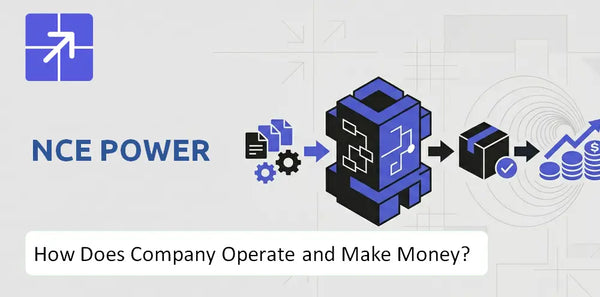
NCE Power links chip design to mass manufacturing; focus on efficient MOSFETs raises ASPs and margin mix. See the product lens in NCE Power BCG Matrix Analysis.
What Does NCE Power Actually Sell?
NCE Power Company sells high-performance power switches – primarily MOSFETs and IGBTs – and expanded wide – bandgap SiC and GaN devices in 2025. Customers pay for components that control electricity flow with minimal loss, higher temperature/voltage tolerance, and improved system efficiency.
 Core product lineup
NCE Power Company offers over 1,000 discrete power-switch models across low-, medium-, and high-voltage ranges, centered on MOSFETs and IGBTs and, in 2025, a marked expansion of Silicon Carbide (SiC) and Gallium Nitride (GaN) offerings for high-efficiency power conversion.
Primary buyers
Buyers include electric vehicle (EV) OEMs and tier – 1 suppliers, solar inverter manufacturers, and consumer electronics firms seeking better battery life and charging speed; utilities and industrial power-system integrators also purchase high-voltage SiC/IGBT modules.
Customer value
Customers gain higher energy efficiency, reduced thermal losses, faster switching (improving charging times), and smaller thermal management needs – translating to longer battery life, lower system costs, and improved grid reliability.
Differentiation and buyability
NCE Power business model focuses on breadth (1,000+ SKUs), specialization in wide – bandgap SiC/GaN launched in 2025, and supply-chain integration that shortens lead times – so customers pick proven thermal/voltage performance and faster time-to-market. Read the Growth Outlook of NCE Power Company for market context.
NCE Power SWOT Analysis
- Complete SWOT Breakdown
- Fully Customizable
- Editable in Excel & Word
- Professional Formatting
- Investor-Ready Format

How Does NCE Power Run Its Business Day to Day?
NCE Power Company runs daily as a fabless-plus semiconductor supplier: in-house chip design and R&D, foundry wafer fabrication, and controlled testing/packaging before high-volume distribution and OEM design-ins. Operations center on reducing on-resistance, managing IP, and coordinating supply, logistics, and direct technical sales to industrial and automotive customers.

Operating model: Fabless-plus R&D and supply control
NCE Power Company uses a fabless-plus model combining agile in-house design with outsourced wafer fabrication. Engineers run continuous R&D cycles to lower on-resistance (heat and loss), while internal teams manage packaging and testing to protect IP and ensure quality.
Product delivery: Distributed inventory and design-in support
Customers access parts via a global distribution network serving thousands of small-to-medium enterprises and via direct sales for OEM design-ins. Technical field engineers support prototypes, qualification runs, and production ramp to secure long-term supply agreements.
Production & sourcing: Foundry partnerships and OSAT control
Wafers are fabricated at major foundries under long-term wafer-supply agreements; NCE Power Company then uses internal test-and-package or trusted OSAT partners to control yields and reliability. Quarterly yield metrics and supplier KPIs drive sourcing decisions.
Sales channels: Distribution plus direct OEM engagement
Main channels combine broadline distributors for volume orders and a direct-sales team for automotive and industrial OEMs. Design-ins are pursued with dedicated application engineers, yielding multi-year contracts and recurring revenue streams.
Key assets & partnerships: IP, foundries, OSAT, and channels
Core assets are semiconductor IP, device libraries, testing facilities, and distribution agreements. Strategic partnerships include TSMC-style foundries and tier-1 OSATs, plus logistics partners to support high-volume fulfillment and traceability.
Why the model works: Focused R&D and supply discipline
Efficiency comes from concentrated R&D that cuts on-resistance, tight foundry contracts that secure capacity, and controlled packaging/testing that preserves yield and reliability. This alignment converts design wins into predictable revenue and margin expansion.
Operational metrics: typical product development cycles run 12 – 24 months; wafer supply agreements often span 3 – 5 years; top-line mix includes distribution sales (~60%) and OEM direct sales (~40%) in comparable fabless-plus peers; targeted on-resistance reductions improve device efficiency by up to 20 – 30% versus prior gens. Read more on corporate purpose and strategic priorities Mission, Vision, and Values of NCE Power Company
NCE Power Business Model Canvas
- One-time Payment
- No Research Needed – Save Hours of Work
- Built by Experts, Trusted by Consultants
- Instant Download, Ready to Use
- 100% Editable, Fully Customizable

How Does Revenue Flow Through NCE Power?
Revenue at NCE Power Company flows from high-volume sales of semiconductor components – mainly MOSFETs, IGBTs, and SiC devices – where demand converts into multi-year contracts after design wins with OEMs in EV, industrial, and consumer markets.
Main revenue: high-volume component sales
NCE Power Company derives most revenue from selling physical semiconductors to device manufacturers; pricing varies by voltage capacity, material type, and power density, and scale is essential because individual MOSFETs sell for cents while shipments reach hundreds of millions annually.
Additional revenue: industrial, automotive, and services
Secondary streams include higher-margin industrial and automotive contracts, value-added testing and packaging services, and long-term supply agreements; as of early 2026 industrial and automotive now account for over 45% of total sales.
Pricing and monetization model
Monetization hinges on unit pricing by technical specs and on design-wins that convert to recurring revenue across a vehicle or product model life; premium SiC lines command higher ASPs, supporting gross margins in the 22 – 25% range in fiscal 2025.
Primary revenue drivers
Revenue is driven most by design-win conversion at EV and industrial OEMs, scale of unit shipments (hundreds of millions yearly), and product mix shift toward higher-margin SiC and industrial/automotive segments; contract tenure creates predictable multi-year streams.
See related governance context in this article: Ownership and Control of NCE Power Company
NCE Power Marketing Mix
- Complete Marketing Mix Analysis
- Effortlessly Communicate Your Business Strategy
- Investor-Ready Format
- 100% Editable and Customizable
- Clear and Structured Layout

What Makes NCE Power's Model Sustainable or Fragile?
NCE Power Company's model is sustainable because it captures the China-for-China supply shift and a diversified product mix, but it is fragile due to outsourced foundry dependence and low-end price erosion. Structural strengths include market access and vertical integration with domestic EV supply chains; main risks are wafer-capacity constraints and intensifying commodity competition.
China-for-China Demand Tailwind
NCE Power business model benefits from Chinese OEMs replacing Western chips with local suppliers, giving NCE Power Company preferred-vendor status in the world's largest EV market. This structural demand supports steady revenue growth in NCE energy generation and NCE utility services segments.
Diversified Product Portfolio
By selling across automotive, industrial, and consumer power semiconductors, NCE Power Company reduces exposure to any single downturn; its revenue streams include power ICs, SiC/GaN devices, and system-level modules. Diversification stabilizes margins compared with pure-play commodity vendors.
Outsourced Foundry and Capacity Risk
NCE Power relies on third-party wafer fabs; if foundry utilization tightens or prices rise, gross margins compress and time-to-market slows. In 2025, industry fab utilization spikes pushed wafer prices up by mid-single digits, exposing NCE Power to supplier concentration risk.
Commoditization and Price Erosion
The low end of the power semiconductor market is commoditizing, triggering price wars and margin pressure; parity products from global giants such as Infineon and STMicroelectronics compress ASPs. For 2025/2026, pricing pressure remains a key fragility despite product upgrades.
Pivot to SiC/GaN and Ecosystem Integration
NCE Power Company's move into third-generation semiconductors (SiC/GaN) strengthens its moat: SiC design wins typically carry ASPs 20 – 50% higher and support higher gross margins. Deep integration with Chinese automotive suppliers increases stickiness and recurring power purchase agreements.
2025/2026 Durability Assessment
Professional judgment for 2025/2026 is cautiously optimistic: NCE Power looks resilient where it sells differentiated SiC/GaN and system modules, but exposed in commodity low-end chips and to foundry pricing shocks. See Competitive Landscape of NCE Power Company for competitive context: Competitive Landscape of NCE Power Company
NCE Power Boston Consulting Group Matrix
- Built by Experts, Trusted by Consultants
- Structured for Consultants, Students, and Founders
- 100% Editable in Microsoft Word & Excel
- Instant Digital Download – Use Immediately
- Compatible with Mac & PC – Fully Unlocked

Related Blogs
- What Is the History of NCE Power Company and How Did It Evolve?
- What Is the Competitive Landscape of NCE Power Company and How Does It Compete?
- What Is the Growth Outlook of NCE Power Company and Where Is It Heading?
- How Does NCE Power Company Reach Customers and Turn Demand into Sales?
- What Do the Mission, Vision, and Core Values of NCE Power Company Reveal?
- Who Are the Core Customers in NCE Power Company's Target Market?
- Who Owns NCE Power Company Today and Who Holds Control?
Frequently Asked Questions
NCE Power sells high-performance power switches, mainly MOSFETs and IGBTs, and in 2025 it expanded into SiC and GaN devices. The company focuses on components that control electricity flow with low loss, higher temperature and voltage tolerance, and better system efficiency for customers in EVs, solar, electronics, and industrial power systems.
Disclaimer
All information, articles, and product details provided on this website are for general informational and educational purposes only. We do not claim any ownership over, nor do we intend to infringe upon, any trademarks, copyrights, logos, brand names, or other intellectual property mentioned or depicted on this site. Such intellectual property remains the property of its respective owners, and any references here are made solely for identification or informational purposes, without implying any affiliation, endorsement, or partnership.
We make no representations or warranties, express or implied, regarding the accuracy, completeness, or suitability of any content or products presented. Nothing on this website should be construed as legal, tax, investment, financial, medical, or other professional advice. In addition, no part of this site - including articles or product references - constitutes a solicitation, recommendation, endorsement, advertisement, or offer to buy or sell any securities, franchises, or other financial instruments, particularly in jurisdictions where such activity would be unlawful.
All content is of a general nature and may not address the specific circumstances of any individual or entity. It is not a substitute for professional advice or services. Any actions you take based on the information provided here are strictly at your own risk. You accept full responsibility for any decisions or outcomes arising from your use of this website and agree to release us from any liability in connection with your use of, or reliance upon, the content or products found herein.