
How does Nel ASA convert renewable power into sellable hydrogen and drive revenue as an industrial manufacturer?
Nel ASA makes electrolyzers that turn renewable electricity into hydrogen for industry and fuel. This matters because Nel shifted to high-volume manufacturing by 2025, with a multi-billion NOK backlog affecting near-term cash flow and execution risk. NEL BCG Matrix Analysis
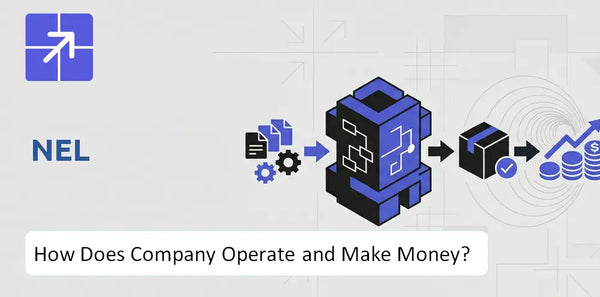
Nel's revenue hinges on factory throughput, module reliability, and EPC partnerships; improving OPEX per kg lowers customer payback and accelerates orders. Monitor 2025 production ramp metrics and contract bankability for valuation signals.
What Does NEL Actually Sell?
NEL ASA sells the infrastructure to produce and dispense green hydrogen: modular Alkaline and PEM electrolyzers, containerized full-system plants, and hydrogen refueling station equipment for heavy-duty and industrial fleets. Customers pay for turnkey hydrogen production and fueling solutions that enable decarbonization where direct electrification isn't viable.
 Electrolyzers and Station Systems
NEL ASA's core products are Alkaline and Proton Exchange Membrane (PEM) electrolyzer stacks sold as modular units or complete containerized systems. The company also supplies hydrogen fueling equipment for heavy transport and industrial refueling depots, plus balance-of-plant and control systems for turnkey delivery.
Industrial and Fleet Operators
Buyers include steel, chemical (ammonia), and fertilizer producers, heavy-duty transport fleets, hydrogen infrastructure developers, and energy companies pursuing green hydrogen projects. Public-sector and utility customers also contract for large-scale electrolyzer plants under subsidy-backed tenders.
Decarbonization as a Turnkey Service
Customers receive on-site hydrogen production, storage, and dispensing that replaces fossil feedstocks or diesel, reducing Scope 1 emissions. Typical value metrics: ~5 – 20 kgH2/h for small modular units up to utility-scale MW-class plants; projects aim for levelized hydrogen costs competitive with fossil alternatives under current subsidies.
Competitive and Modular Advantage
NEL Hydrogen differentiates by offering both Alkaline and PEM options, standardized modular stacks for faster deployment, and integrated station hardware – making procurement and project financing simpler. The modular design helps scale capacity quickly and lowers installation lead times versus bespoke builds.
For background on the firm's evolution and milestones see History and Background of NEL Company
NEL SWOT Analysis
- Complete SWOT Breakdown
- Fully Customizable
- Editable in Excel & Word
- Professional Formatting
- Investor-Ready Format

How Does NEL Run Its Business Day to Day?
NEL ASA runs day-to-day through project-driven delivery of large-scale electrolyzer systems, operating high-capacity automated plants and coordinated field integration teams. Daily work centers on supply – chain management for specialty inputs, precision stack engineering, and tight coordination with EPC partners to deliver multi – megawatt and gigawatt projects on schedule.

Operating model: centralized manufacturing, project delivery
NEL ASA combines centralized, high-throughput factories with a project-based sales and delivery flow. Operations teams translate contract specs into production orders, QA checks, and site integration plans so electrolyzer technology ships ready for grid or industrial connection.
Product delivery: contract-to-commission workflow
Customers buy via large tenders or direct project contracts; sales and project management oversee engineering, procurement, and site commissioning. Nel Hydrogen often provides turnkey supply of stacks, balance – of – plant, and commissioning services for green hydrogen solutions.
Production and sourcing: high-capacity, specialized inputs
Core manufacturing is the 1 GW Herøya electrolyzer facility in Norway and expanded lines in Wallingford, Connecticut. Daily ops manage sourcing of iridium, nickel, membranes and precision modules; iridium availability and price heavily affect unit costs.
Sales channels: project bids, strategic partnerships
NEL ASA sells via competitive bids for multi – MW and GW projects, direct negotiations with utilities and industrials, plus alliances with EPCs and electrolyzer integrators. Sales cycles are long and tied to government subsidies and offtake agreements.
Key assets and partnerships: factories, EPCs, technology IP
Key assets include the Herøya 1 GW line, Wallingford capacity, electrolyzer stack IP, and partnerships with EPCs and component suppliers. Daily ops rely on ERP, MES, and project management systems to coordinate cross – border logistics and field teams.
Why the model works: scale, standardization, project expertise
Scale in manufacturing lowers per – unit costs; standardized stack designs speed commissioning; and experienced project teams reduce integration risk. Nel ASA's day-to-day focus on supply chain, test protocols, and EPC coordination keeps delivery timelines tight and margins defendable.
Daily metrics tracked include production throughput (Herøya targets aggregated annual capacity at 1 GW), order backlog MW, conversion yields of stacks, iridium and nickel procurement costs, project milestones met, and installed – capacity commissioning rates. Financially, project margins vary by contract size and local incentives; 2025 project wins and backlog figures drive near – term revenue recognition.
For broader context on market positioning and growth assumptions, see Growth Outlook of NEL Company
NEL Business Model Canvas
- One-time Payment
- No Research Needed – Save Hours of Work
- Built by Experts, Trusted by Consultants
- Instant Download, Ready to Use
- 100% Editable, Fully Customizable

How Does Revenue Flow Through NEL?
Revenue at NEL ASA mainly comes from selling large-scale electrolyzer systems and follows milestone payments: down payment, progress payments during manufacture, and final payment on commissioning. Recurring revenue from long-term service contracts and digital monitoring is growing and improves margins over time.
Large-scale electrolyzer equipment sales
NEL ASA's core revenue is from capital equipment sales of alkaline electrolyzers; 2025 contracts increasingly exceed 100 MW per order, turning project wins into multi – year cash flows. Big orders translate into high single-sale turnover and project-based margin variability.
Aftermarket services and digital monitoring
Recurring revenue comes from long-term service agreements, spare parts, and remote monitoring subscriptions; these carry significantly higher gross margins than hardware and stabilize cash flow across the project lifecycle.
Milestone-based pricing and payment structure
Deals typically use milestone payments: an initial down payment on signing (often 20 – 30% of contract value), staged payments during manufacturing, and a final commissioning payment; this reduces working capital strain and links revenue recognition to delivery milestones.
Order size and project pipeline drive revenue
Revenue is driven most by large project wins, public procurement and commercial offtake deals, plus catalysts like government subsidies and corporate green hydrogen commitments; in 2025 NEL Hydrogen saw a higher share of >100 MW orders, boosting near – term revenue visibility.
For sales strategy and commercial positioning context see Sales and Marketing Strategy of NEL Company.
NEL Marketing Mix
- Complete Marketing Mix Analysis
- Effortlessly Communicate Your Business Strategy
- Investor-Ready Format
- 100% Editable and Customizable
- Clear and Structured Layout

What Makes NEL's Model Sustainable or Fragile?
NEL ASA's model rests on a massive order backlog and bankable electrolyzer reputation, yet it is fragile to high capital costs, policy uncertainty, and margin squeeze from low-cost Chinese entrants; success in 2025/2026 hinges on manufacturing yield and cost-down execution more than new tech.
Backlog and Bankability Support Revenue Visibility
NEL ASA entered 2026 with an order backlog of approximately 2.8 billion NOK, giving multi-year revenue visibility and helping secure project financing because lenders view NEL Hydrogen as one of the few bankable electrolyzer brands.
Industrial-Scale Manufacturing and Partnerships
NEL company business model benefits from established manufacturing lines, service offerings for installation and maintenance, and commercial partnerships that integrate NEL into the renewable hydrogen market and green hydrogen solutions supply chain.
Sensitivity to Cost of Capital and Policy
Large customer projects are often delayed when interest rates are elevated or government subsidy clarity is lacking; many buyers postpone Final Investment Decisions, directly reducing near-term order conversion and cash flow predictability.
Competitive and Margin Pressures
Margin compression is material as lower-cost Chinese electrolyzer manufacturers enter Europe and the US, forcing price competition; achieving EBITDA break-even in 2025/2026 depends on manufacturing yield improvements and sustained cost reductions.
Target Customers and Market of NEL Company
NEL Boston Consulting Group Matrix
- Built by Experts, Trusted by Consultants
- Structured for Consultants, Students, and Founders
- 100% Editable in Microsoft Word & Excel
- Instant Digital Download – Use Immediately
- Compatible with Mac & PC – Fully Unlocked

Related Blogs
- What Is the History of NEL Company and How Did It Evolve?
- What Is the Competitive Landscape of NEL Company and How Does It Compete?
- What Is the Growth Outlook of NEL Company and Where Is It Heading?
- How Does NEL Company Reach Customers and Turn Demand into Sales?
- What Do the Mission, Vision, and Core Values of NEL Company Reveal?
- Who Are the Core Customers in NEL Company's Target Market?
- Who Owns NEL Company Today and Who Holds Control?
Frequently Asked Questions
NEL sells the infrastructure for green hydrogen production and dispensing. Its core offerings include modular Alkaline and PEM electrolyzers, containerized full-system plants, and hydrogen refueling station equipment for heavy-duty and industrial fleets. Customers buy turnkey solutions that help replace fossil-based processes where direct electrification is not practical.
Disclaimer
All information, articles, and product details provided on this website are for general informational and educational purposes only. We do not claim any ownership over, nor do we intend to infringe upon, any trademarks, copyrights, logos, brand names, or other intellectual property mentioned or depicted on this site. Such intellectual property remains the property of its respective owners, and any references here are made solely for identification or informational purposes, without implying any affiliation, endorsement, or partnership.
We make no representations or warranties, express or implied, regarding the accuracy, completeness, or suitability of any content or products presented. Nothing on this website should be construed as legal, tax, investment, financial, medical, or other professional advice. In addition, no part of this site - including articles or product references - constitutes a solicitation, recommendation, endorsement, advertisement, or offer to buy or sell any securities, franchises, or other financial instruments, particularly in jurisdictions where such activity would be unlawful.
All content is of a general nature and may not address the specific circumstances of any individual or entity. It is not a substitute for professional advice or services. Any actions you take based on the information provided here are strictly at your own risk. You accept full responsibility for any decisions or outcomes arising from your use of this website and agree to release us from any liability in connection with your use of, or reliance upon, the content or products found herein.