
How does Northern Star Resources convert mine output into cash and dividends through its integrated mining model?
Northern Star Resources runs open-pit and underground mines plus processing plants, selling gold and byproducts to global markets. This matters as 2025 ore grades and processing throughput drove a 10% revenue uplift vs. 2024, easing margin pressure in high-cost 2025. Northern Star BCG Matrix Analysis
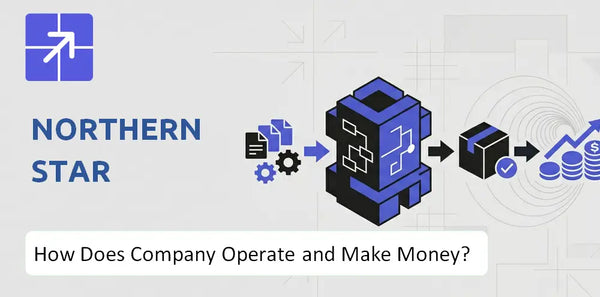
Northern Star focuses on steady free cash flow, reinvesting in brownfield extensions and returns via dividends; monitor 2026 unit costs for margin resilience.
What Does Northern Star Actually Sell?
Northern Star Resources sells refined gold bullion and related doré from high-grade mines; customers pay for physical gold exposure plus supply reliability and jurisdictional security. The product is a standardized, highly liquid metal used by refineries, bullion banks, and investors as a hedge and store of value.
 Core product: refined gold bullion and doré
Northern Star Company extracts, processes, and refines gold into market-grade bullion and doré bars from operations in Western Australia and Alaska. In the 2025/2026 fiscal cycle, production runs at roughly 1.7 to 1.85 million ounces of gold annually, sold into global bullion markets.
Main buyers: refineries, bullion banks, and institutional investors
Customers include international refineries that further refine doré, bullion banks that trade and store physical gold, and institutional investors seeking allocation to bullion. Sales focus on large, repeat contracts to minimize price and delivery friction.
Customer value: liquidity, hedge, and jurisdictional safety
Buyers get a liquid asset that hedges currency volatility and macro risk, backed by Northern Star business model scale and low-risk Australian and Alaskan jurisdictions. Operational scale, with mid-2025 output near 1.75 million ounces, supports predictable supply and contractual reliability.
Differentiator: high-grade deposits and low geopolitical risk
Northern Star stands out for mining high-grade ore in stable jurisdictions, driving lower unit costs and consistent product quality – key factors in Northern Star operational strategy and revenue streams. See Competitive Landscape of Northern Star Company for market positioning and peers.
Northern Star SWOT Analysis
- Complete SWOT Breakdown
- Fully Customizable
- Editable in Excel & Word
- Professional Formatting
- Investor-Ready Format

How Does Northern Star Run Its Business Day to Day?
Daily operations at Northern Star Company center on integrated mining, processing, and logistics across Kalgoorlie, Yandal, and Pogo, converting ore into gold dore on site and shipping refined bars to market. The operating model uses continuous exploration, onsite crushing and milling, and coordinated supply-chain and workforce management to sustain multi-decade mine life and meet AISC targets.

Integrated operating model across mine, mill, and logistics
Northern Star Company runs a vertically integrated model: mining, crushing, processing, and dore production occur on site. Control systems schedule equipment, processing throughput, and shipments so ore moves from pit or decline to refineries with minimal handoffs.
Gold delivery and customer access
Customers and refineries receive gold via contracted bullion shipments; bullion sales and hedge contracts convert metal into revenue. Institutional offtake and spot-market sales feed Northern Star revenue streams and cashflow.
Exploration, mining, and milling processes
Exploration teams drill continuously to define resources; Kalgoorlie's Super Pit supports large open-pit fleets while Pogo employs underground stoping. The Fimiston Mill expansion is raising processing toward 27 million tonnes per annum, increasing recovered ounces and lowering unit costs.
Sales channels and distribution
Metal is sold through a mix of spot-market sales, forward contracts, and bullion agents to global refiners and institutional buyers. Logistics teams manage secure road, rail and air shipments from Kalgoorlie and Alaska to minimize transit risk.
Key assets, systems, and partnerships
Primary assets: Kalgoorlie (Super Pit, Fimiston Mill), Yandal operations, and Pogo underground mine. Critical systems include mine planning software, fleet telematics, mill automation, and supply-chain platforms. Third-party refineries and logistics partners smooth market access.
Operational levers that make the model work
Efficiency relies on continuous resource replacement, mill throughput gains (Fimiston expansion), tight labour and contractor management across thousands of staff, and disciplined cost control to hit the All-In Sustaining Cost target of US$1,250 – 1,350 per ounce. See Sales and Marketing Strategy of Northern Star Company for commercial context.
Northern Star Business Model Canvas
- One-time Payment
- No Research Needed – Save Hours of Work
- Built by Experts, Trusted by Consultants
- Instant Download, Ready to Use
- 100% Editable, Fully Customizable

How Does Revenue Flow Through Northern Star?
Revenue at Northern Star Company flows mainly from selling gold at market spot prices; demand is effectively unlimited at market price, so revenue equals ounces sold times the gold price. Monetization depends on production volume and cost control, with cash allocated to operations, sustaining capital, major projects, and dividends.
Main revenue: gold sales at spot
Northern Star Company generates most revenue by selling mined gold at prevailing spot prices – above US$2,400 per ounce in the 2025/2026 period – so top-line equals ounces sold multiplied by price. This single stream drives the Northern Star business model and is the core of How Northern Star works.
Additional revenue: hedging and by-products
Northern Star revenue streams include occasional strategic hedging to lock margins on capital projects and sales of by-products or toll-processing credits. These are secondary to gold sales but can smooth cash flow and protect project returns.
Pricing and monetization model
The company monetizes by selling refined gold at spot market prices, occasionally using fixed-price contracts or hedges for specific projects; revenue = ounces sold × spot price minus treatment/refining fees. Demand converts instantly to revenue at market price; supply (production) is the constraint.
Primary revenue drivers
Revenue is driven most by production volume (net ounces sold) and All-In Sustaining Cost (AISC). With spot > US$2,400/oz in 2025/2026 and typical AISC materially lower, the spread creates high margins. Cash flow funds Opex, sustaining capex, the multi-billion dollar KCGM expansion, and a dividend policy returning 20 – 30% of cash flow from operating activities to shareholders; see operational detail in History and Background of Northern Star Company.
Northern Star Marketing Mix
- Complete Marketing Mix Analysis
- Effortlessly Communicate Your Business Strategy
- Investor-Ready Format
- 100% Editable and Customizable
- Clear and Structured Layout

What Makes Northern Star's Model Sustainable or Fragile?
Northern Star Company's model rests on a Tier-1 reserve base and stable jurisdictions, giving long production visibility but exposing margins to labor and energy cost shocks and large-project execution risk. Structural strengths include scale and high-grade assets; dependencies include Western Australia labor/energy and timely delivery of the Fimiston Mill expansion.
Scale and Reserve-backed Cash Flow
Northern Star Company generates predictable free cash flow from deep, long-life reserves such as KCGM, supporting steady revenue streams and reinvestment. In FY2025 the company reported consolidated gold production near 1.8 million ounces, underpinning margins as capital projects mature.
Assets, Systems and Operational Scale
Northern Star business model benefits from integrated operations in Australia and North America, centralized processing (including Fimiston), and scale advantages that lower unit costs. The company's operational strategy focuses on converting reserves to higher-margin production via mill expansions and optimization programs.
Key Dependencies and Concentration Risks
How Northern Star works depends heavily on Western Australia operations and the KCGM reserve; labor shortages, mining contractor capacity, and energy inflation in WA are acute constraints. Capital allocation and commodity-price sensitivity (gold price declines compress margins) amplify exposure.
Durability Assessment for 2025/2026
For 2025/2026 the model looks resilient: capital-intensive projects are starting to lift realized margins and cash flow, making Northern Star Company a stable cash generator relative to peers. Execution risk remains material – a delay in the Fimiston Mill expansion would push back the 2 million ounce production target and weaken near-term metrics; still, current projections show robust EBITDA generation and healthy operating cash flow.
Further reading on strategic culture and governance: Mission, Vision, and Values of Northern Star Company
Northern Star Boston Consulting Group Matrix
- Built by Experts, Trusted by Consultants
- Structured for Consultants, Students, and Founders
- 100% Editable in Microsoft Word & Excel
- Instant Digital Download – Use Immediately
- Compatible with Mac & PC – Fully Unlocked

Related Blogs
- What Is the History of Northern Star Company and How Did It Evolve?
- What Is the Competitive Landscape of Northern Star Company and How Does It Compete?
- What Is the Growth Outlook of Northern Star Company and Where Is It Heading?
- How Does Northern Star Company Reach Customers and Turn Demand into Sales?
- What Do the Mission, Vision, and Core Values of Northern Star Company Reveal?
- Who Are the Core Customers in Northern Star Company's Target Market?
- Who Owns Northern Star Company Today and Who Holds Control?
Frequently Asked Questions
Northern Star sells refined gold bullion and related doré from high-grade mines. Buyers get physical gold exposure along with supply reliability and jurisdictional security. The product is sold into global bullion markets and used by refineries, bullion banks, and institutional investors as a liquid hedge and store of value.
Disclaimer
All information, articles, and product details provided on this website are for general informational and educational purposes only. We do not claim any ownership over, nor do we intend to infringe upon, any trademarks, copyrights, logos, brand names, or other intellectual property mentioned or depicted on this site. Such intellectual property remains the property of its respective owners, and any references here are made solely for identification or informational purposes, without implying any affiliation, endorsement, or partnership.
We make no representations or warranties, express or implied, regarding the accuracy, completeness, or suitability of any content or products presented. Nothing on this website should be construed as legal, tax, investment, financial, medical, or other professional advice. In addition, no part of this site - including articles or product references - constitutes a solicitation, recommendation, endorsement, advertisement, or offer to buy or sell any securities, franchises, or other financial instruments, particularly in jurisdictions where such activity would be unlawful.
All content is of a general nature and may not address the specific circumstances of any individual or entity. It is not a substitute for professional advice or services. Any actions you take based on the information provided here are strictly at your own risk. You accept full responsibility for any decisions or outcomes arising from your use of this website and agree to release us from any liability in connection with your use of, or reliance upon, the content or products found herein.