
How does OceanaGold Corporation convert its multi-jurisdictional mining portfolio into profitable gold and copper production?
OceanaGold Corporation runs open-pit and underground mines across the United States, the Philippines, and New Zealand, turning ore into metals sold at market prices. This matters as elevated 2025 gold prices and operational uptime drive free cash flow and valuation. A 2025 signal: production stability at Macraes supported higher margins.
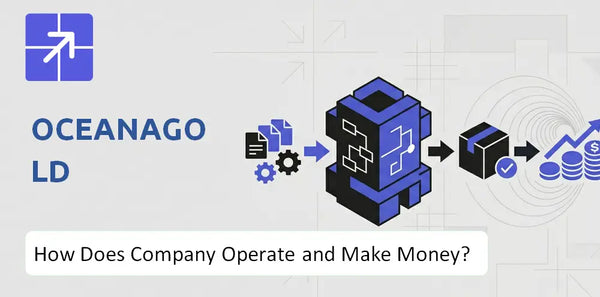
Focus on throughput, grade, and cost per ounce to protect margins; optimize capex timing to convert reserves into cash flow. See OceanaGold BCG Matrix Analysis
What Does OceanaGold Actually Sell?
OceanaGold sells mined gold and copper products: mainly gold dore bars sent to refineries and copper-gold concentrate from Didipio. Customers pay for physical precious metal supply and industrial copper feedstock that also hedges against inflation and currency risk.
 Core products: gold dore and copper concentrate
OceanaGold business model centers on producing gold dore bars and, at Didipio, a copper-gold concentrate sold to international smelters. In fiscal 2025, gold accounted for approximately 90 percent of revenue while copper provided a material byproduct credit reducing operating costs.
Who buys OceanaGold output
Buyers include global refiners and bullion dealers for dore bars, and smelters/traders for Didipio concentrate. Institutional investors and central banks indirectly drive demand through bullion markets that set prices for OceanaGold sales.
Value customers receive
Customers get a reliable physical supply of investment-grade gold after refinery purification and consistent copper concentrate for industrial use. For purchasers, OceanaGold operations in the Philippines and New Zealand translate to predictable production volumes and quality that support trading, manufacturing, and reserve-backed portfolios.
Why OceanaGold's offering stands out
OceanaGold works with established processing routes – dore to refinery and concentrate to smelters – keeping logistics and treatment terms market-standard. The dual gold-copper revenue streams enhance profitability resilience: gold drives top-line value while copper reduces per-ounce cash costs, improving margins under variable commodity price exposure; see company filings for FY2025 figures and the Mission, Vision, and Values of OceanaGold Company.
OceanaGold SWOT Analysis
- Complete SWOT Breakdown
- Fully Customizable
- Editable in Excel & Word
- Professional Formatting
- Investor-Ready Format

How Does OceanaGold Run Its Business Day to Day?
OceanaGold runs day-to-day operations around four mining hubs – Haile (US), Didipio (Philippines), Macraes and Waihi (New Zealand) – using open-pit and underground methods, continuous drilling/blasting/hauling/milling cycles, and integrated supply chains for fuel, reagents, and heavy equipment.

Operating model and site workflow
Daily operations follow a hub-and-spoke site model: mine planning drives a steady feed of ore to on-site mills; site teams schedule blasts, load and haul, then mill and float/gravimetric-process concentrates. Performance is tracked by mill throughput (tonnes/day) and metallurgical recovery (%), which directly link to OceanaGold business model metrics.
How product delivery works for metal sales
Metal is delivered as doré, concentrate or refined product to smelters and refineries under offtake and spot contracts; revenue streams come from gold and copper sales settled on LBMA/COMEX-linked prices. Physical dispatch follows assay confirmation and logistics coordination with port, shipping, and refinery partners.
Production, sourcing and on-site development
Sites use both open-pit and underground mining; 2025 focus is ramping Haile underground to raise ore grade, improving head grade fed to mills. Procurement secures energy, cyanide/reagents, explosives and OEM parts; stockpile and reagent management reduce interruptions and chemical costs.
Sales channels and distribution framework
Sales mix is direct to traders, smelters and refiners plus negotiated offtake contracts; hedging is occasional and price exposure remains largely to spot gold/copper. Investor-facing reporting links production volumes to quarterly revenue and realized metal prices.
Key assets, systems and partnerships
Major assets: Haile, Didipio, Macraes, Waihi mines; central systems include mine planning (geometallurgy), mill process control (SCADA), and ERP for supply-chain and maintenance. Partnerships with contractors, local governments and smelters underpin operational continuity.
What drives operational efficiency in practice
Efficiency hinges on maintaining high mill throughput and metallurgical recovery rates, steady head grade (improved in 2025 by Haile underground ramp-up), and minimizing downtime through preventative maintenance and spare-parts logistics. On-the-ground execution – drilling, blasting, hauling, milling – translates reserves into cash flow.
Latest operational numbers: in 2025 OceanaGold reported consolidated production of approximately 280,000 ounces of gold equivalent (YE 2025 operational guidance and Q4 2025 reports), mill throughput targets ranged near 100,000 tonnes per month at larger hubs, and site teams totaled several thousand employees and contractors across four hubs. Read more on sales and marketing at Sales and Marketing Strategy of OceanaGold Company
OceanaGold Business Model Canvas
- One-time Payment
- No Research Needed – Save Hours of Work
- Built by Experts, Trusted by Consultants
- Instant Download, Ready to Use
- 100% Editable, Fully Customizable

How Does Revenue Flow Through OceanaGold?
Revenue for OceanaGold Corporation flows from selling refined gold and payable copper after delivery to third-party refiners and smelters, settled to LBMA-linked spot prices; demand converts to cash when dore or concentrate is accepted and priced. The firm's 2025 target of 440,000 – 480,000 ounces and commodity pricing drive top-line receipts, with pricing and volumes the core revenue levers.
Main revenue: gold sales settled to LBMA spot
OceanaGold business model centers on gold sales; in 2025, management targeted 440,000 – 480,000 ounces, monetized when dore or concentrate is delivered to refiners and paid at LBMA-linked prices. With gold trading > $2,300/oz in 2025/2026, realised revenue per ounce far exceeds costs.
Additional revenue: copper, by-products, and concentrate premiums
Secondary revenue streams include payable copper in concentrate, saleable by-products, and treatment/transport adjustments; these complement core gold receipts and modestly boost realised margins from OceanaGold mining operations in the Philippines and New Zealand.
Pricing and monetization: spot settlement, smelter terms, and netback
Monetization follows spot settlement – dore/concentrate deliveries priced to LBMA gold and metal treatment terms; net revenue equals gross metal value minus treatment, refining charges, and provisional pricing adjustments. Hedging is limited; exposure to gold price creates direct P&L sensitivity.
Primary revenue drivers: production volumes, LBMA prices, and AISC spread
Revenue is driven most by ounces sold and prevailing LBMA gold price; with AISC at ~$1,550 – $1,650/oz in 2025/2026 and gold > $2,300/oz, operating margins are sizable. Cash flow is allocated to debt reduction, mine-life extensions, and dividends, linking OceanaGold financial drivers to capital allocation decisions. Read more on corporate ownership here: Ownership and Control of OceanaGold Company
OceanaGold Marketing Mix
- Complete Marketing Mix Analysis
- Effortlessly Communicate Your Business Strategy
- Investor-Ready Format
- 100% Editable and Customizable
- Clear and Structured Layout

What Makes OceanaGold's Model Sustainable or Fragile?
The OceanaGold business model is sustainable where operations sit in Tier-1 jurisdictions with stable permitting and Didipio's low-cost, copper-credited cash flows, but fragile from regulatory shifts in New Zealand, reserve depletion, and inflationary cost pressure. Structural strengths include high-margin assets and diversified metal revenue; risks center on permitting, environmental constraints, and heavy exploration and development capex needs.
Main strength: jurisdictional quality and high-margin assets
OceanaGold operations in the United States and New Zealand lower sovereign risk and support stable access to capital. Didipio remains a high-margin cash generator thanks to copper credits, keeping unit cash costs materially below peers in 2025.
Key assets or capabilities: low-cost mines and development pipeline
The company's Macraes and Waihi mines provide steady gold production while Didipio contributes copper-gold diversification; combined 2025 guidance targets production roughly in line with 2024 volumes and free cash flow supported by a gold price above US$1,900/oz. Ongoing underground transitions and exploration near-mine drill programs sustain reserve replacement prospects.
Dependencies or constraints: permitting, reserves, and cost inflation
How OceanaGold works depends on timely permits and social license in New Zealand and local approvals in the Philippines; legislative or environmental changes can limit mine-life extensions at Macraes and Waihi. Reserve depletion requires elevated capex for exploration and development, while wage and energy inflation threaten margins.
Durability in 2025 – 2026: robust but exposed
Professional judgment for 2025 and 2026 finds the OceanaGold business model robust due to a supportive gold price environment and successful underground transitions, yet exposed to New Zealand permitting risk and inflationary cost pressure; sensitivity analysis shows EBITDA falls sharply if gold drops below US$1,600/oz or energy costs rise >20%.
For deeper coverage of forecast drivers, reserves, and the company's growth outlook see the detailed report: Growth Outlook of OceanaGold Company
OceanaGold Boston Consulting Group Matrix
- Built by Experts, Trusted by Consultants
- Structured for Consultants, Students, and Founders
- 100% Editable in Microsoft Word & Excel
- Instant Digital Download – Use Immediately
- Compatible with Mac & PC – Fully Unlocked

Related Blogs
- What Is the History of OceanaGold Company and How Did It Evolve?
- What Is the Competitive Landscape of OceanaGold Company and How Does It Compete?
- What Is the Growth Outlook of OceanaGold Company and Where Is It Heading?
- How Does OceanaGold Company Reach Customers and Turn Demand into Sales?
- What Do the Mission, Vision, and Core Values of OceanaGold Company Reveal?
- Who Are the Core Customers in OceanaGold Company's Target Market?
- Who Owns OceanaGold Company Today and Who Holds Control?
Frequently Asked Questions
OceanaGold sells mined gold and copper products. Its main output is gold doré bars sent to refineries, along with copper-gold concentrate from Didipio. The article explains that gold drives most revenue, while copper helps reduce operating costs and supports the company's overall business model.
Disclaimer
All information, articles, and product details provided on this website are for general informational and educational purposes only. We do not claim any ownership over, nor do we intend to infringe upon, any trademarks, copyrights, logos, brand names, or other intellectual property mentioned or depicted on this site. Such intellectual property remains the property of its respective owners, and any references here are made solely for identification or informational purposes, without implying any affiliation, endorsement, or partnership.
We make no representations or warranties, express or implied, regarding the accuracy, completeness, or suitability of any content or products presented. Nothing on this website should be construed as legal, tax, investment, financial, medical, or other professional advice. In addition, no part of this site - including articles or product references - constitutes a solicitation, recommendation, endorsement, advertisement, or offer to buy or sell any securities, franchises, or other financial instruments, particularly in jurisdictions where such activity would be unlawful.
All content is of a general nature and may not address the specific circumstances of any individual or entity. It is not a substitute for professional advice or services. Any actions you take based on the information provided here are strictly at your own risk. You accept full responsibility for any decisions or outcomes arising from your use of this website and agree to release us from any liability in connection with your use of, or reliance upon, the content or products found herein.