
How does Pet Valu monetize neighborhood convenience and franchise-led retail in Canada?
Pet Valu runs a franchise-heavy, specialty pet retail chain focused on neighborhood stores, private-label products, and services. By 2025 it held leading market share in Canada, showing resilient same-store sales versus large e-commerce rivals. This matters for assessing pricing power and margins.
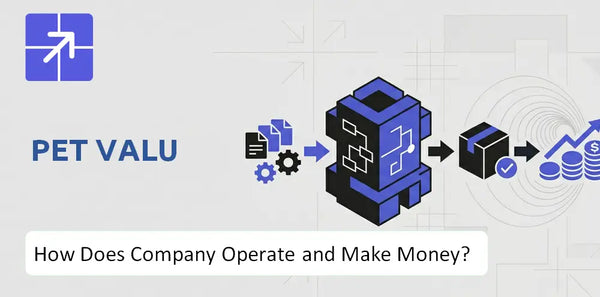
Focus on store-level profitability, loyalty programs, and proprietary SKUs; consider Pet Valu BCG Matrix Analysis for portfolio guidance.
What Does Pet Valu Actually Sell?
Pet Valu sells premium and super-premium pet foods, treats, supplies, and in-store services; customers pay for branded private-label nutrition, recurring consumables, and experiential services like grooming and self-serve dog wash.
 Product assortment and private labels
Pet Valu offers curated premium and super-premium pet foods, treats, toys, health supplies, and accessories, with private labels such as Performatrin and Lovett accounting for approximately 35% of total sales in fiscal 2025; these products drive higher gross margins and reduce direct comparison with mass-market retailers.
Who buys Pet Valu products and services
Primary buyers are urban and suburban pet owners who prioritize quality, specialty nutrition, and convenience – frequent purchasers include repeat grocery-style buyers and service users (grooming and washes); franchisees and wholesale accounts buy inventory through the Pet Valu franchise model.
Customer value delivered
Customers get tailored nutrition (private-label formulations), immediate availability of consumables, loyalty-program perks that boost retention, and convenient services – grooming and self-serve dog wash deliver repeat foot traffic and incremental service revenue, supporting same-store sales growth.
Why the offering stands out
Pet Valu's mix of exclusive private-label goods (35% of sales), franchise-led store footprint, in-store services, and omnichannel pickup capabilities creates a differentiated pet retail chain in Canada that competes on convenience and unique SKUs rather than price alone; see the company's culture and strategy in the Mission, Vision, and Values of Pet Valu Company.
Pet Valu SWOT Analysis
- Complete SWOT Breakdown
- Fully Customizable
- Editable in Excel & Word
- Professional Formatting
- Investor-Ready Format

How Does Pet Valu Run Its Business Day to Day?
Pet Valu runs day-to-day via a dual-track network of corporate and franchised stores, fed by regional distribution centers and a centralized supply chain that manages >10,000 SKUs; stores focus on expert, community-first retail and an omni-channel click-and-collect flow that drives in-store traffic and service-led sales.

Operating structure: dual-track retail and franchising
Daily operations split between corporate-owned and franchised locations, creating consistent brand standards while allowing local franchisee autonomy. By early 2026 the network exceeded 800 stores across Canada, each following standardized POS, inventory, and CRM processes for unified reporting and compliance.
Product and service delivery: click-and-collect plus in-store care
Customers order online or in-app and choose delivery or click-and-collect; same-day pickup drives foot traffic and ancillary purchases. Store teams provide nutritional advice, grooming referrals, and community events that convert digital intent into higher in-store average tickets.
Sourcing and inventory: centralized supply with regional DCs
A centralized supply chain sources national and private-label brands and replenishes regional distribution centers which manage a complex catalogue of over 10,000 SKUs. Automated replenishment and vendor-managed inventory reduce stockouts and optimize assortment by store format and region.
Sales channels: omnichannel retail and franchise reach
Main channels combine physical stores, a mobile app, and e-commerce; franchised locations expand local reach and licensing fees and royalties create recurring corporate revenue. The omni-channel strategy emphasizes store-led fulfillment to boost store visits and service revenue.
Key assets and systems: DCs, POS, and loyalty tech
Core infrastructure includes regional distribution centers, a unified POS/ERP, CRM-driven loyalty programs, and franchise support systems. Partnerships with major suppliers and private-label producers underpin margins and product exclusivity.
What drives practical efficiency: service + inventory precision
The model scales by combining high-touch in-store service that increases attach rates with tight supply-chain controls that minimize overstocks. Consistent training, localized assortment, and click-and-collect mechanics keep customer frequency high and drive profitable transactions.
See customer segmentation and market positioning in this linked resource: Target Customers and Market of Pet Valu Company
Pet Valu Business Model Canvas
- One-time Payment
- No Research Needed – Save Hours of Work
- Built by Experts, Trusted by Consultants
- Instant Download, Ready to Use
- 100% Editable, Fully Customizable

How Does Revenue Flow Through Pet Valu?
Revenue flows through Pet Valu Company via in-store retail, wholesale to franchisees, and recurring royalties; customer demand for pet food and supplies converts to steady cash through repeat purchases and subscription-like consumption patterns.
Main revenue: corporate and franchise retail sales
Retail sales at corporate stores and system-wide franchise locations drive the largest share of revenue; in fiscal 2025 system-wide sales reached $1.5 billion CAD, reflecting core demand for consumables like pet food and litter.
Additional revenue: wholesale, services, and private label
Wholesale product sales to franchisees, private label margins, grooming, and ancillary services add incremental revenue and higher-margin dollars, while loyalty program and e commerce upsells increase lifetime value.
Pricing and monetization model
Monetization mixes transaction sales, recurring royalty fees (about 5% of franchise gross sales), initial franchise fees, and margin capture on private label products; omnichannel pricing and promotions match competitive pet retail chain Canada dynamics.
What drives revenue most
Repeat consumption of pet food (subscription-like demand), store footprint expansion, franchise growth (which shifts capex to franchisees), and same-store sales mix towards higher-margin services drive revenue; franchise royalties let Pet Valu capture market growth without heavy capital spend. Read more on Ownership and Control of Pet Valu Company Ownership and Control of Pet Valu Company
Pet Valu Marketing Mix
- Complete Marketing Mix Analysis
- Effortlessly Communicate Your Business Strategy
- Investor-Ready Format
- 100% Editable and Customizable
- Clear and Structured Layout

What Makes Pet Valu's Model Sustainable or Fragile?
Pet Valu's model rests on a dense neighborhood store footprint and the defensive pet category, which supports steady spend even in downturns; risks include Canadian market saturation and pressure from US digital entrants. Structural strengths are logistics and loyalty, while inflation in labor and transport and aggressive online customer acquisition can erode margins.
Neighborhood density and category defensiveness
High store density in Canada drives convenience-led repeat purchases and steady basket sizes; pet food and care are inelastic, limiting downgrades in quality during recessions. This underpins the Pet Valu business model with consistent traffic and predictable unit economics.
Regional logistics and omnichannel reach
Owning a regional logistics footprint reduces last-mile costs and supports same-day store fulfillment for e-commerce orders, improving gross margins on omnichannel sales. The Pet Valu franchise model leverages localized inventory to keep stock turns high and shrink low.
Concentration and market saturation risks
Canada-focused store density creates geographic concentration risk; further expansion faces diminishing returns and cannibalization. Franchise dependence and limited international scale constrain bargaining power with suppliers compared with multinational chains.
Profitability resilience in 2025 and outlook for 2026
Pet Valu reported a 2025 EBITDA margin near 22 percent, supported by high-margin private-label and services revenue streams; loyalty covers over 75 percent of transactions, locking repeat business. Persistent inflation in logistics and wages is the main margin tail risk, but regional logistics advantage and loyalty make the model appear highly stable into 2026, barring aggressive US-based digital customer-acquisition campaigns.
Key metrics to watch: same-store sales growth, loyalty penetration, e-commerce mix, supply-chain inflation, and franchise openings versus closures; for deeper context see Growth Outlook of Pet Valu Company.
Pet Valu Boston Consulting Group Matrix
- Built by Experts, Trusted by Consultants
- Structured for Consultants, Students, and Founders
- 100% Editable in Microsoft Word & Excel
- Instant Digital Download – Use Immediately
- Compatible with Mac & PC – Fully Unlocked

Related Blogs
- What Is the History of Pet Valu Company and How Did It Evolve?
- What Is the Competitive Landscape of Pet Valu Company and How Does It Compete?
- What Is the Growth Outlook of Pet Valu Company and Where Is It Heading?
- How Does Pet Valu Company Reach Customers and Turn Demand into Sales?
- What Do the Mission, Vision, and Core Values of Pet Valu Company Reveal?
- Who Are the Core Customers in Pet Valu Company's Target Market?
- Who Owns Pet Valu Company Today and Who Holds Control?
Frequently Asked Questions
Pet Valu sells premium and super-premium pet foods, treats, supplies, and in-store services. Its mix includes private-label nutrition, recurring consumables, grooming, and self-serve dog wash services, which together support repeat purchases and higher-margin sales.
Disclaimer
All information, articles, and product details provided on this website are for general informational and educational purposes only. We do not claim any ownership over, nor do we intend to infringe upon, any trademarks, copyrights, logos, brand names, or other intellectual property mentioned or depicted on this site. Such intellectual property remains the property of its respective owners, and any references here are made solely for identification or informational purposes, without implying any affiliation, endorsement, or partnership.
We make no representations or warranties, express or implied, regarding the accuracy, completeness, or suitability of any content or products presented. Nothing on this website should be construed as legal, tax, investment, financial, medical, or other professional advice. In addition, no part of this site - including articles or product references - constitutes a solicitation, recommendation, endorsement, advertisement, or offer to buy or sell any securities, franchises, or other financial instruments, particularly in jurisdictions where such activity would be unlawful.
All content is of a general nature and may not address the specific circumstances of any individual or entity. It is not a substitute for professional advice or services. Any actions you take based on the information provided here are strictly at your own risk. You accept full responsibility for any decisions or outcomes arising from your use of this website and agree to release us from any liability in connection with your use of, or reliance upon, the content or products found herein.