
How does RadNet operate outpatient imaging centers and capture margin across volume-driven diagnostics?
RadNet runs a network of outpatient imaging centers that lower costs by spreading high fixed scanner costs over large volumes, selling services to patients and payers while partnering with referring physicians. This matters as Medicare rate changes in 2025 and growing AI reads reshape utilization and margins.
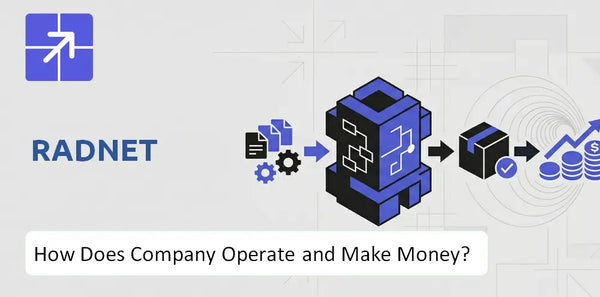
RadNet scales revenue via referral networks, high throughput, and service mix optimization; monitor 2025 outpatient imaging utilization and AI-read adoption for margin signals. See RadNet BCG Matrix Analysis
What Does RadNet Actually Sell?
RadNet sells outpatient diagnostic imaging services – MRI, CT, PET, mammography, and ultrasound – and AI-enabled diagnostic software and workflow tools via its DeepHealth unit; customers pay for image acquisition, interpretation (teleradiology), and software licenses that reduce cost and turnaround time.
 Scope of Imaging and Digital Solutions
RadNet business model centers on high-volume outpatient imaging centers and recurring software sales. Core services: MRI, CT, PET, mammography, ultrasound, plus DeepHealth AI tools and teleradiology services that hospitals and clinics license or contract.
Main Customer Groups
Buyers include individual patients (self-pay and insured), commercial payers seeking lower-cost imaging, health systems that outsource imaging, and other providers who buy DeepHealth AI and diagnostic software.
Practical Value to Customers
RadNet delivers equivalent clinical quality to hospital imaging at roughly 30 percent to 50 percent lower site-of-service costs, faster turnaround via teleradiology, and AI-assisted reads that can raise throughput and diagnostic consistency.
Why Customers Choose RadNet
RadNet stands out for scale – over 300 outpatient imaging centers as of fiscal 2025 – an integrated teleradiology network, and recurring revenue from software licensing; payers favor it for lower reimbursement rates versus hospital departments. Read more on commercial strategy in Sales and Marketing Strategy of RadNet Company.
RadNet SWOT Analysis
- Complete SWOT Breakdown
- Fully Customizable
- Editable in Excel & Word
- Professional Formatting
- Investor-Ready Format

How Does RadNet Run Its Business Day to Day?
RadNet runs a high-throughput outpatient imaging network, scheduling thousands of scans daily across over 370 centers in dense corridors; workflow spans intake, scanning, remote reads, and report delivery using shared IT, RIS/PACS, and centralized billing.

Hub-and-Spoke Operating Model
RadNet business model centers on a hub-and-spoke delivery where specialized radiologists read remotely from centralized hubs, routing studies from outpatient centers in California, New York, and Florida to maximize reader productivity and utilization.
Patient Access and Service Delivery
Patients access RadNet imaging centers by referral or direct scheduling; sites handle intake, perform CT, MRI, PET, X-ray, ultrasound, and mammography, then deliver reports electronically to referring physicians within hours to days.
Equipment, Staffing, and Clinical Sourcing
RadNet sources diagnostic equipment from major OEMs, staffs technologists at centers, and contracts or employs subspecialty radiologists; capital allocation prioritizes high-volume modalities and selective center acquisitions to expand outpatient imaging capacity.
Distribution: Channels and Referrals
Main channels include physician referrals, self-pay and insured patients, employer and health-plan networks, plus hospital joint ventures that funnel inpatient and outpatient referrals into RadNet imaging centers.
Key Assets, Systems, and Partnerships
Critical assets are 370+ outpatient imaging centers, enterprise RIS/PACS, centralized billing and scheduling platforms, teleradiology capabilities, and joint-venture contracts with major health systems that reduce unit cost and secure volume.
Technology, AI, and Workflow Efficiency
RadNet uses AI to triage urgent cases and flag mammography findings, improving turnaround and detection rates; remote reading and standardized protocols drive faster report delivery and higher radiologist throughput.
Revenue Drivers and Cost Mechanics
The daily model converts scan volume into revenue via fee-for-service imaging, contract JV management fees, and teleradiology reads; in 2025 outpatient imaging volume and reimbursement mix remain the core cash flow drivers for RadNet revenue streams.
What Makes the Model Work in Practice
Efficiency comes from scale, standardized protocols, remote radiology utilization, AI triage, and JV partnerships that steer referrals to lower-cost outpatient centers – this combination sustains high throughput and margins across the network.
For context on corporate evolution and partnerships, see History and Background of RadNet Company
RadNet Business Model Canvas
- One-time Payment
- No Research Needed – Save Hours of Work
- Built by Experts, Trusted by Consultants
- Instant Download, Ready to Use
- 100% Editable, Fully Customizable

How Does Revenue Flow Through RadNet?
Revenue flows largely from imaging services and growing digital health software; patient referrals and payor contracts convert demand into billable procedures and recurring SaaS fees.
Imaging Centers: Core Fee-for-Service Revenue
RadNet imaging centers generate roughly 95 percent of revenue via a fee-for-service model, billing private insurers, Medicare, and Medicaid per procedure; high outpatient volume and referral networks make this the primary cash engine.
Capitation and Contracted Imaging
Stable, secondary income comes from capitation contracts where RadNet receives fixed monthly payments per member from health groups to cover all imaging needs, smoothing revenue versus procedure volatility.
Digital Health: SaaS and AI Licensing
RadNet monetizes digital health through software-as-a-service licenses for AI tools and teleradiology platforms, selling subscriptions and seat licenses to hospitals and imaging centers as an add-on growth channel.
Pricing and Monetization Mechanics
Revenue comes from per-procedure billing, negotiated reimbursement rates, fixed capitation fees, and recurring SaaS license payments; AI-supported screenings have enabled improved reimbursement rates for certain codes.
Key Revenue Drivers and 2025 Metrics
For fiscal 2025 RadNet reported record revenue approaching $1.9 billion, driven by a 6 percent increase in procedure volume and higher reimbursements for AI-supported screenings; imaging center utilization, payor mix, and capitation penetration most strongly drive top-line performance. Read about target customers and market dynamics Target Customers and Market of RadNet Company.
RadNet Marketing Mix
- Complete Marketing Mix Analysis
- Effortlessly Communicate Your Business Strategy
- Investor-Ready Format
- 100% Editable and Customizable
- Clear and Structured Layout

What Makes RadNet's Model Sustainable or Fragile?
RadNet's model is sustained by scale, outpatient tailwinds, and AI-driven productivity gains but is fragile to Medicare reimbursement cuts and capital intensity; its margins hinge on successfully monetizing AI diagnostics while managing interest-rate and hardware-reinvestment risks.
Scale and Outpatient Demand
RadNet business model benefits from a national network of >350 RadNet imaging centers by 2025, capturing outpatient volume as hospitals shift care outside inpatient settings; aging US demographics (65+ population growth) drive higher imaging utilization, creating a structural demand tailwind.
AI Productivity and Margin Protection
How RadNet works today increasingly relies on AI to cut radiologist reading time; internal deployments and partnerships have reduced per-case reading time by an estimated 15 – 25% in pilots by 2025, protecting margins against rising labor costs.
Reimbursement Sensitivity
RadNet reimbursement model and Medicare impact are central risks: a meaningful cut to the Medicare Physician Fee Schedule or changes in imaging CPT valuations can compress margins immediately because Medicare/Medicaid patients represent a sizeable share of volumes and pricing benchmarks.
Capital Intensity and Rate Exposure
RadNet outpatient imaging center operations require continuous investment in MRI/CT hardware, IT, and AI infrastructure; with net debt and capex needs, the business is sensitive to interest-rate environments and refinancing costs in 2025/2026.
Monetization of AI Diagnostics
how does RadNet make money from imaging services is shifting: successful commercialization of AI-enabled diagnostics and teleradiology services (higher-value reads, decision-support subscriptions, and workflow fees) can lift per-study revenue and tilt RadNet revenue streams toward higher-margin tech offerings.
Overall Durability in 2025/2026
My assessment for 2025/2026 is that RadNet company overview shows resilience: demand tailwinds and AI-driven efficiency outweigh reimbursement and capital risks today, but the model remains exposed – particularly to Medicare changes and rising financing costs – so execution on AI monetization and cost discipline is decisive. Read more on structure and control in Ownership and Control of RadNet Company.
RadNet Boston Consulting Group Matrix
- Built by Experts, Trusted by Consultants
- Structured for Consultants, Students, and Founders
- 100% Editable in Microsoft Word & Excel
- Instant Digital Download – Use Immediately
- Compatible with Mac & PC – Fully Unlocked

Related Blogs
- What Is the History of RadNet Company and How Did It Evolve?
- What Is the Competitive Landscape of RadNet Company and How Does It Compete?
- What Is the Growth Outlook of RadNet Company and Where Is It Heading?
- How Does RadNet Company Reach Customers and Turn Demand into Sales?
- What Do the Mission, Vision, and Core Values of RadNet Company Reveal?
- Who Are the Core Customers in RadNet Company's Target Market?
- Who Owns RadNet Company Today and Who Holds Control?
Frequently Asked Questions
RadNet sells outpatient diagnostic imaging services and AI-enabled diagnostic software. Its core offerings include MRI, CT, PET, mammography, and ultrasound, plus DeepHealth tools and teleradiology services. Customers pay for image acquisition, interpretation, and software licenses that help reduce cost and turnaround time.
Disclaimer
All information, articles, and product details provided on this website are for general informational and educational purposes only. We do not claim any ownership over, nor do we intend to infringe upon, any trademarks, copyrights, logos, brand names, or other intellectual property mentioned or depicted on this site. Such intellectual property remains the property of its respective owners, and any references here are made solely for identification or informational purposes, without implying any affiliation, endorsement, or partnership.
We make no representations or warranties, express or implied, regarding the accuracy, completeness, or suitability of any content or products presented. Nothing on this website should be construed as legal, tax, investment, financial, medical, or other professional advice. In addition, no part of this site - including articles or product references - constitutes a solicitation, recommendation, endorsement, advertisement, or offer to buy or sell any securities, franchises, or other financial instruments, particularly in jurisdictions where such activity would be unlawful.
All content is of a general nature and may not address the specific circumstances of any individual or entity. It is not a substitute for professional advice or services. Any actions you take based on the information provided here are strictly at your own risk. You accept full responsibility for any decisions or outcomes arising from your use of this website and agree to release us from any liability in connection with your use of, or reliance upon, the content or products found herein.