
How does Rotork generate recurring revenue by selling actuators and digital services that control industrial flow?
Rotork sells electric, pneumatic, and hydraulic actuators plus digital monitoring to utilities and energy firms, creating recurring service and upgrade demand. This matters as Rotork reported continued installed-base growth in 2025, signaling steady aftermarket revenue and strong cash conversion.
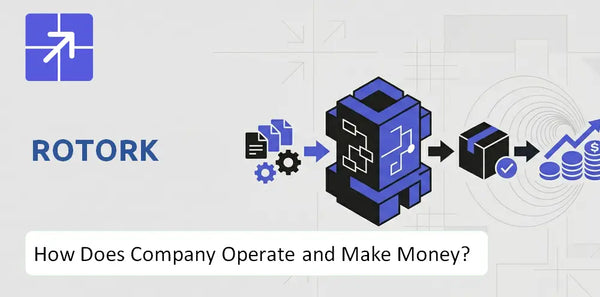
Focus on installed-base monetization: service contracts, retrofits, and software subscriptions drive high-margin revenue; see Rotork BCG Matrix Analysis.
What Does Rotork Actually Sell?
Rotork sells industrial valve actuators, gearboxes, and control systems plus cloud analytics; customers pay for hardware, reliability, regulatory compliance, and subscription-based predictive maintenance. The offering spans electric, pneumatic, hydraulic actuators and the Intelligent Asset Management (iAM) platform for condition monitoring and emissions reduction.
 Core product lines and solutions
Rotork company sells valve actuators (electric, pneumatic, hydraulic), gearboxes, motor controls, and system integration for industrial valve automation. It also sells aftermarket services, commissioning, and the iAM cloud platform – an IoT analytics subscription launched as a core 2025 offering.
Primary buyers and channels
Buyers include oil and gas operators, power utilities, water and wastewater authorities, chemical and petrochemical plants, and EPC contractors. Sales flow through direct OEM contracts, distributor/reseller networks, and long-term aftermarket service agreements.
Customer value and outcomes
Customers pay for uptime, safety, regulatory compliance, and lower total cost of ownership: actuators reduce manual intervention; iAM enables predictive maintenance that can cut unplanned downtime and methane leaks. In 2025 Rotork reported iAM subscribers reducing service calls and supporting identified emissions alerts across installations.
Differentiators and commercial model
Rotork actuators combine ruggedized hardware for extreme environments with digital IoT telemetry; aftermarket services and subscription iAM drive recurring revenue. Pricing mixes capital sales for actuators and recurring SaaS/service contracts – this hybrid model is central to the Rotork business model and how Rotork makes money and revenue streams.
For detailed go-to-market and customer acquisition tactics see Sales and Marketing Strategy of Rotork Company
Rotork SWOT Analysis
- Complete SWOT Breakdown
- Fully Customizable
- Editable in Excel & Word
- Professional Formatting
- Investor-Ready Format

How Does Rotork Run Its Business Day to Day?
Rotork runs daily through three end-market segments – Oil & Gas, Water & Power, and Chemical, Process & Industrial – using a global assembly model with centralized final assembly, in-house testing, and a field service network that supports commissioning, retrofits, and emergency repairs.

Operating structure and daily flow
Rotork company organizes operations by sector teams that manage order intake, engineering, and delivery pipelines. Each day sales, engineering, and operations sync to convert EPC specs into build and service schedules linked to ERP and QA systems.
Product and service delivery to customers
Customers buy Rotork actuators and turnkey solutions via direct sales, distribution partners, and OEM channels; aftermarket services are booked through Rotork Site Services for on-site commissioning and maintenance contracts.
Manufacturing, sourcing and development
Rotork follows a global assembly model: sourced components from vetted suppliers are shipped to regional assembly hubs for final build and type-testing to meet safety certifications. R&D focuses on digital and IoT actuator offerings and product line improvements.
Sales channels and distribution systems
Primary channels are direct EPC engagement, distributors, and reseller networks; sales teams work with EPCs to spec Rotork valve actuators into new projects, while aftermarket contracts drive recurring revenue.
Key assets, systems and partnerships
Core assets include regional assembly facilities, ERP/PLM systems, safety and type-test labs, and a global RSS field force of over 450 technicians; strategic supplier partnerships secure quality components and continuity.
Why the model works in practice
The service-heavy model – anchored by Rotork Site Services – turns sales into lifecycle relationships, increasing aftermarket penetration and margin stability; tight QA in final assembly preserves certifications crucial for oil, gas, water and power projects.
For context on ownership and strategic positioning see Ownership and Control of Rotork Company
Rotork Business Model Canvas
- One-time Payment
- No Research Needed – Save Hours of Work
- Built by Experts, Trusted by Consultants
- Instant Download, Ready to Use
- 100% Editable, Fully Customizable

How Does Revenue Flow Through Rotork?
Revenue flows through large capital-project sales and a resilient aftermarket stream; demand converts to revenue on delivery for hardware and over time for service contracts. In fiscal 2025, approximately 45 to 50 percent of total revenue came from the installed base via spare parts, maintenance, and upgrades.
Capital projects and actuator hardware
Large-scale orders for Rotork actuators and valve automation systems drive headline revenue; project deliveries are recognized on shipment or contract milestones, and they matter because they represent bulk ticket sales and OEM partnerships.
Aftermarket services and installed-base monetization
Aftermarket services – spare parts, maintenance contracts, upgrades – generated nearly 45 – 50 percent of 2025 revenue, providing recurring cash flow that cushions capital-expenditure cyclicality.
Pricing and monetization model
Monetization mixes upfront hardware sales, multi-year service contracts, and premium pricing for Eco-Smart high-efficiency electric actuators that replace pneumatic systems; revenue is booked on delivery or pro rata over service terms.
Primary revenue drivers
Revenue is driven most by large capital projects in oil & gas, water and power plus rapid growth in Eco-Smart electric actuators that command premiums for methane-emission reduction; adjusted operating margin held near 23 – 24 percent in 2025.
For context on competitive positioning and market dynamics, see Competitive Landscape of Rotork Company
Rotork Marketing Mix
- Complete Marketing Mix Analysis
- Effortlessly Communicate Your Business Strategy
- Investor-Ready Format
- 100% Editable and Customizable
- Clear and Structured Layout

What Makes Rotork's Model Sustainable or Fragile?
Rotork company's model is sustained by a vast global installed base of valve actuators and high aftermarket services penetration, creating strong switching costs and recurring revenue. Risks include supply chain concentration in specialized electronics, geopolitical delays to large energy projects, and competition on price in water markets.
Installed base and aftermarket moat
Rotork business model benefits from a global installed base of actuators that drives recurring aftermarket service contracts and spare-parts revenue. Aftermarket margins are higher than new equipment sales, supporting cash conversion and predictable revenue streams.
Technical expertise and product breadth
Rotork actuators span electric, pneumatic and hydraulic valve actuators plus digital IoT offerings, giving product-line diversity across oil & gas, power and water. R&D and engineering scale create a technical moat that supports premium pricing.
Supply-chain and concentration risks
Manufacturing model relies on specialized electronics and a network of regional factories; clusters in key suppliers create fragility if disruptions occur. Geopolitical tensions or shipping bottlenecks could delay large-scale electrification and carbon-capture projects that drive demand.
Resilience in 2025/2026 outlook
For 2026, Rotork looks durable: management reports cash conversion typically above 90 percent and steady aftermarket retention, while energy-transition capex – electrification and carbon capture – offers structural tailwinds for industrial valve automation. Still, price pressure in water markets and lower-cost competitors could erode share without ongoing innovation.
Evidence: Rotork's long-term service contracts and recurring spare-parts sales anchor revenues, while digital actuator offerings and IoT-enabled maintenance increase lifetime value; see related governance and strategy in Mission, Vision, and Values of Rotork Company.
Rotork Boston Consulting Group Matrix
- Built by Experts, Trusted by Consultants
- Structured for Consultants, Students, and Founders
- 100% Editable in Microsoft Word & Excel
- Instant Digital Download – Use Immediately
- Compatible with Mac & PC – Fully Unlocked

Related Blogs
- What Is the History of Rotork Company and How Did It Evolve?
- What Is the Competitive Landscape of Rotork Company and How Does It Compete?
- What Is the Growth Outlook of Rotork Company and Where Is It Heading?
- How Does Rotork Company Reach Customers and Turn Demand into Sales?
- What Do the Mission, Vision, and Core Values of Rotork Company Reveal?
- Who Are the Core Customers in Rotork Company's Target Market?
- Who Owns Rotork Company Today and Who Holds Control?
Frequently Asked Questions
Rotork sells industrial valve actuators, gearboxes, motor controls, and system integration for industrial valve automation. It also offers aftermarket services, commissioning, and the iAM cloud platform for condition monitoring and emissions reduction. The company's products serve customers that need reliability, safety, and regulatory compliance.
Disclaimer
All information, articles, and product details provided on this website are for general informational and educational purposes only. We do not claim any ownership over, nor do we intend to infringe upon, any trademarks, copyrights, logos, brand names, or other intellectual property mentioned or depicted on this site. Such intellectual property remains the property of its respective owners, and any references here are made solely for identification or informational purposes, without implying any affiliation, endorsement, or partnership.
We make no representations or warranties, express or implied, regarding the accuracy, completeness, or suitability of any content or products presented. Nothing on this website should be construed as legal, tax, investment, financial, medical, or other professional advice. In addition, no part of this site - including articles or product references - constitutes a solicitation, recommendation, endorsement, advertisement, or offer to buy or sell any securities, franchises, or other financial instruments, particularly in jurisdictions where such activity would be unlawful.
All content is of a general nature and may not address the specific circumstances of any individual or entity. It is not a substitute for professional advice or services. Any actions you take based on the information provided here are strictly at your own risk. You accept full responsibility for any decisions or outcomes arising from your use of this website and agree to release us from any liability in connection with your use of, or reliance upon, the content or products found herein.