
How does Sapiens International Corporation turn legacy insurance IT into a recurring SaaS revenue engine?
Sapiens International Corporation supplies core insurance platforms and migration services that replace legacy systems, enabling carriers to move to cloud-native operations. This matters as insurers accelerate digital spend – Sapiens reported growing cloud subscription bookings in 2025, signaling higher lifetime value.
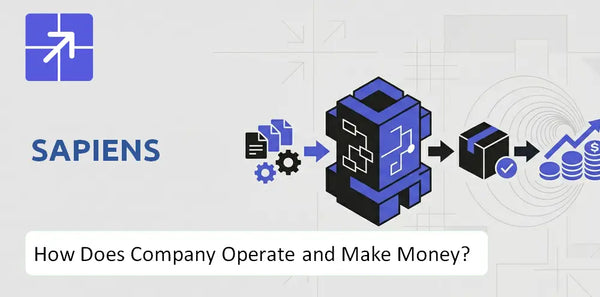
Sapiens monetizes via software licensing, cloud subscriptions, and implementation services; focus on renewals and large transformation deals drives margins and valuation. See product detail: Sapiens BCG Matrix Analysis
What Does Sapiens Actually Sell?
Sapiens International Corporation sells enterprise software platforms for Life, Pension, Annuity, and Property & Casualty insurers; customers pay for CoreSuite and IDITSuite policy administration, billing, claims, digital engagement, analytics, and the Sapiens Decision rules engine as licensed, cloud or SaaS solutions that replace fragmented manual processes.
 Core platforms and modules Sapiens sells
CoreSuite (life, pensions, annuities) and IDITSuite (property & casualty) handle policy administration, billing, and claims. Sapiens Decision automates underwriting and claims rules; digital engagement, analytics, and integration APIs round out Sapiens software solutions.
Who buys Sapiens solutions
Primary buyers are insurance carriers, reinsurers, MGAs, and large brokers seeking core transformation. IT leaders and product teams buy to accelerate product launches and reduce operational risk within the Sapiens business model.
What customers actually get
Customers receive unified policy administration, automated decisioning, omnichannel digital engagement, and analytics that cut manual workflows. Typical outcomes: faster product rollout and lower operating costs; Sapiens reported recurring software revenue growth contributing to its 2025 ARR momentum.
Why Sapiens stands out
Sapiens differentiates with industry-specific suites, configurable rules via Sapiens Decision, and cloud/SaaS deployment options that integrate with legacy systems. For pricing, insurers use a mix of perpetual licenses, subscription SaaS, and professional services – driving recurring revenue streams and predictable margins; see Competitive Landscape of Sapiens Company for context.
Sapiens SWOT Analysis
- Complete SWOT Breakdown
- Fully Customizable
- Editable in Excel & Word
- Professional Formatting
- Investor-Ready Format

How Does Sapiens Run Its Business Day to Day?
Sapiens International Corporation runs daily as a global delivery organization combining software engineering and professional services to implement and operate insurance platforms. Workflows move from consultative sales to multi-year implementations, then to cloud operations and managed services using continuous delivery and automated DevOps pipelines.

Global delivery operating model
Sapiens company uses regional delivery centers in Israel, India, Poland, and North America to balance local regulatory expertise with centralized engineering. Project teams of business consultants, QA, and architects coordinate across time zones on multi-year implementations for insurers.
Product and service delivery flow
Customers engage through a high-touch consultative sales process; contracts often combine license, implementation, and managed services with outcomes-based milestones. After sign-off, Sapiens engineers configure modules, run integration sprints, and hand over to cloud operations teams.
Development, configuration, and sourcing
Core development is in-house for Sapiens software solutions, while specialized components and integrations use partner-built connectors and third-party cloud services. Engineering uses agile sprints, automated testing, and versioned releases to tailor Sapiens core products and modules for insurers.
Sales channels and distribution
Sales mix includes direct enterprise sales, channel partners, and system integrators; deals typically bundle licensing, SaaS hosting, and professional services. Requesting a Sapiens software demo and sales contact starts via direct sales teams or partner referrals.
Key assets, systems, and partnerships
Key assets are the policy administration system, billing and claims modules, cloud deployment tooling, IP-based accelerators, and partner APIs. Strategic cloud partnerships and reseller channels expand deployments and support Sapiens digital transformation for insurers.
What makes the model work in practice
Efficiency comes from repeatable implementation patterns, a continuous delivery pipeline for security and updates, and recurring revenue from SaaS and managed services; staffed by over 5,000 employees across key regions. See Mission, Vision, and Values of Sapiens Company for context on strategy and culture.
Sapiens Business Model Canvas
- One-time Payment
- No Research Needed – Save Hours of Work
- Built by Experts, Trusted by Consultants
- Instant Download, Ready to Use
- 100% Editable, Fully Customizable

How Does Revenue Flow Through Sapiens?
Sapiens company converts demand into revenue via subscriptions, maintenance, and implementation fees; recurring cloud subscriptions now form the largest, fastest-growing cash flow while professional services and support convert one-time projects into extended customer lifetime value.
Primary revenue: SaaS subscriptions and cloud bookings
Sapiens business model centers on Sapiens software solutions sold as cloud subscriptions; by early 2026 new wins are predominantly SaaS, producing predictable, high-margin recurring revenue and driving ~45 percent of total turnover.
Additional revenue: maintenance, support, and professional services
Secondary Sapiens revenue streams include post-implementation maintenance and support with retention rates typically above 95 percent, plus professional services for implementations and upgrades that supply project-based cash inflows and cross-sell opportunities.
Pricing and monetization model: subscription plus service fees
Sapiens SaaS pricing and licensing model combines monthly/annual subscription fees for cloud deployments with one-time implementation fees, tiered licensing for modules (policy, billing, claims), and optional add-ons; this hybrid approach converts deal flow into recurring ARR and upfront professional services revenue.
What drives revenue most: cloud adoption and account retention
Revenue growth is driven primarily by migration of insurers to Sapiens cloud offerings and expansion within installed accounts; upsells of Sapiens insurance software modules and integrations with legacy systems boost average contract value and reduce churn, so recurring cloud bookings and high support retention lead performance. Read more on Sapiens history: History and Background of Sapiens Company
Sapiens Marketing Mix
- Complete Marketing Mix Analysis
- Effortlessly Communicate Your Business Strategy
- Investor-Ready Format
- 100% Editable and Customizable
- Clear and Structured Layout

What Makes Sapiens's Model Sustainable or Fragile?
Sapiens company's model is sustainable due to high customer switching costs and geographic diversification, yet fragile because long sales cycles and Tier-1 competition can cause implementation delays and quarterly revenue swings. Structural strengths include sticky core systems and European foothold; dependencies on large deals and timely SaaS migration pose the main risks.
High Switching Costs Keep Clients Sticky
Once insurers adopt Sapiens software solutions for core policy administration, integration, data migration, and workflow customizations create very high switching costs, reducing churn and supporting recurring license and maintenance revenue.
Key Assets: Breadth of Products and Regional Reach
Sapiens business model benefits from a diversified product portfolio – policy administration, billing, claims – and strong European market share, enabling cross-sell and upsell across property and casualty, life, and specialty lines.
Dependencies: Large Deals and Long Sales Cycles
Revenue depends on multi-year enterprise deals; lengthy procurement and pilot phases create concentration risk where a few delayed implementations can dent quarterly results and cash flow.
Durability in 2025/2026: Resilient but Exposed
Professional judgment for 2025/2026 projects Sapiens revenue near USD 600,000,000 and operating margins around 18% as SaaS transition scales; resilience comes from recurring revenue, but exposure remains to Guidewire and Duck Creek competition and implementation timing.
Mitigants include SaaS pricing and licensing model shifts that turn upfront license revenue into recurring streams, stronger cloud offerings and faster implementation templates, and partnership/reseller strategy to widen channels; still, any slowdown in large-scale implementations materially affects Sapiens revenue streams and quarterly volatility – see Sales and Marketing Strategy of Sapiens Company for related context: Sales and Marketing Strategy of Sapiens Company
Sapiens Boston Consulting Group Matrix
- Built by Experts, Trusted by Consultants
- Structured for Consultants, Students, and Founders
- 100% Editable in Microsoft Word & Excel
- Instant Digital Download – Use Immediately
- Compatible with Mac & PC – Fully Unlocked

Related Blogs
- What Is the History of Sapiens Company and How Did It Evolve?
- What Is the Competitive Landscape of Sapiens Company and How Does It Compete?
- What Is the Growth Outlook of Sapiens Company and Where Is It Heading?
- How Does Sapiens Company Reach Customers and Turn Demand into Sales?
- What Do the Mission, Vision, and Core Values of Sapiens Company Reveal?
- Who Are the Core Customers in Sapiens Company's Target Market?
- Who Owns Sapiens Company Today and Who Holds Control?
Frequently Asked Questions
Sapiens sells enterprise software platforms for Life, Pension, Annuity, and Property & Casualty insurers. Its main offerings include CoreSuite, IDITSuite, Sapiens Decision, digital engagement tools, analytics, and integration APIs, delivered as licensed, cloud, or SaaS solutions that replace fragmented manual processes.
Disclaimer
All information, articles, and product details provided on this website are for general informational and educational purposes only. We do not claim any ownership over, nor do we intend to infringe upon, any trademarks, copyrights, logos, brand names, or other intellectual property mentioned or depicted on this site. Such intellectual property remains the property of its respective owners, and any references here are made solely for identification or informational purposes, without implying any affiliation, endorsement, or partnership.
We make no representations or warranties, express or implied, regarding the accuracy, completeness, or suitability of any content or products presented. Nothing on this website should be construed as legal, tax, investment, financial, medical, or other professional advice. In addition, no part of this site - including articles or product references - constitutes a solicitation, recommendation, endorsement, advertisement, or offer to buy or sell any securities, franchises, or other financial instruments, particularly in jurisdictions where such activity would be unlawful.
All content is of a general nature and may not address the specific circumstances of any individual or entity. It is not a substitute for professional advice or services. Any actions you take based on the information provided here are strictly at your own risk. You accept full responsibility for any decisions or outcomes arising from your use of this website and agree to release us from any liability in connection with your use of, or reliance upon, the content or products found herein.